
Alaska Airlines, Inc. doubles cargo capacity with addition of four freighters
Alaska Air Group (NYSE: ALK), through Alaska Airlines, will add four 737-800 Boeing Converted Freighters under long-term leases, expanding its dedicated freighter fleet from five to nine aircraft and effectively doubling capacity.
Rhea-AI Summary
Alaska Air Group (NYSE: ALK), through Alaska Airlines, will add four 737-800 Boeing Converted Freighters under long-term leases, expanding its dedicated freighter fleet from five to nine aircraft and effectively doubling capacity. The new freighters are expected to enter service in the first half of 2027.
According to Alaska Airlines, the aircraft will be dedicated to the states of Alaska and Hawai'i, with Hawai'i-based cargo jets planned in Hawaiian Air Cargo livery. The expansion supports the Alaska Accelerate strategic plan, where integrated Alaska and Hawaiian cargo operations are targeted to generate $150 million of new annual profit and open additional international shipping opportunities.
Positive
- Freighter fleet expands from 5 to 9 aircraft, effectively doubling capacity
- Cargo business targeted to deliver $150 million of new annual profit
- New freighters expected in service in first half of 2027
- Increased dedicated cargo capacity for Alaska and Hawai'i routes
- Expanded international shipping opportunities for seafood and other commodities
Negative
- None.
Details
News Market Reaction – ALK
In the Jul 22 session, ALK declined 2.42%, reflecting a moderate negative market reaction. Argus tracked a trough of -5.9% from its starting point during tracking. Our momentum scanner triggered 9 alerts that day, indicating moderate trading interest and price volatility.
Data tracked by StockTitan Argus on the day of publication.
Key Figures
- Additional freighters
- 4 aircraft
- Long-term lease agreements
- Freighter fleet
- 5 to 9 aircraft
- 737 freighter fleet expansion
- Fleet capacity
- Double
- Dedicated freighter fleet capacity
- Service entry
- First half of 2027
- Additional freighters
- New annual profit
- $150 million
- Alaska Accelerate strategic plan
- Annual cargo volume
- More than 370 million pounds
- Alaska Air Cargo each year
- Destinations served
- More than 100 destinations
- North America, Europe, Asia and the Pacific
- Alaska communities served
- 19 communities
- Alaska Air Cargo freighter fleet
Historical Context
-
Strong holiday operations and first-half on-time performance leadership
-
Company scheduled discussion of second-quarter financial results and outlook
-
Hawaiian Airlines unveiled a special oneworld alliance aircraft livery
-
Partners launched an electric aircraft demonstration program in Hawaiʻi
-
Free Starlink Wi-Fi expanded across Alaska and Hawaiian aircraft
24h Move is the share-price change in the day after each event; other market factors may also have contributed.
Key Terms
cold-chain technical
belly-cargo technical
AI-generated analysis. How Rhea-AI works. Not financial advice.




- Additional Boeing 737-800BCF aircraft expand the airline's freighter fleet to nine, providing greater aircraft allocation flexibility
- More capacity provides communities increased reliability for critical goods while expanding the carrier's international shipping opportunities
- Cargo growth advances the company's Alaska Accelerate strategic plan, delivering
$150 million
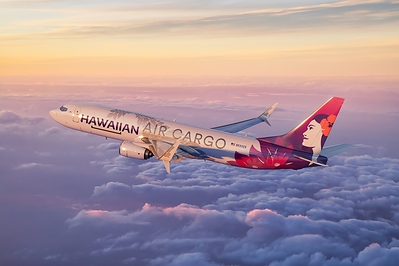
The four additional freighters will effectively double the capacity of our freighter fleet, while injecting more reliability into cargo service for communities we serve and providing more flexibility in aircraft allocation across the airline's cargo network.
The freighters are expected to enter service in the first half of 2027 and will be dedicated to the states of
These additional freighters help strengthen the network that connects communities across the states of
"Alaska Air Cargo has two very important goals: supporting our communities and customers and connecting them to the world," said Ian Morgan, Vice President of Cargo at Alaska Airlines. "Expanding our cargo fleet with dedicated aircraft helps us accomplish both goals, opening up new international shipping opportunities for seafood and other commodities, while making sure we can reliably ship time-sensitive goods that our communities need, such as medicine, household supplies and groceries."
"Transportation has always been one of the biggest challenges for agriculture in Hawaiʻi," said Jayson Watts, Chair of the Hawaiʻi Agribusiness Development Corporation and a member of the Alaska Airlines and Hawaiian Airlines Hawaiʻi Community Advisory Board. "Having more dedicated cargo capacity gives our farmers and ranchers another reliable, consistent way to get fresh products to market. That's a win for local agriculture, a win for our communities, and a critical step toward building a stronger, more resilient food system."
Alaska Air Cargo's growth underscores its importance to diversifying
As the only legacy passenger airline with a dedicated cargo fleet, Alaska Air Cargo carries more than 370 million pounds of cargo each year to more than 100 destinations across
About
About Alaska, Hawaiian and Horizon
Alaska Airlines, Hawaiian Airlines and Horizon Air are subsidiaries of Alaska Air Group, and McGee Air Services is a subsidiary of Alaska Airlines. We are a global airline with hubs in Seattle, Honolulu, Portland, Anchorage, Los Angeles, San Diego and San Francisco. We deliver remarkable care as we fly our guests to more than 140 destinations throughout North America, Latin America, Asia, the Pacific and Europe. Guests can book travel at alaskaair.com and hawaiianairlines.com. Alaska and Hawaiian are members of the oneworld alliance. Members of our Atmos Rewards loyalty program can earn and redeem points with oneworld airlines and our additional global partners that serve over 1,000 worldwide destinations. Learn more about what's happening at Alaska and Hawaiian at news.alaskaair.com. Alaska Air Group is traded on the New York Stock Exchange (NYSE) as "ALK."
 View original content to download multimedia:https://www.prnewswire.com/news-releases/alaska-airlines-inc-doubles-cargo-capacity-with-addition-of-four-freighters-302831266.html
SOURCE Alaska Airlines
FAQ
AI-generated questions and answers. How Rhea-AI works. Not financial advice.