
Alzamend Neuro Reports Positive Topline Data from Phase II Clinical Trial of AL001 "Lithium in Brain" Study; AL001 Achieves Bioequivalence and Demonstrates Superior Brain Delivery Across All Measured Brain Regions
Alzamend Neuro (Nasdaq: ALZN) reported positive Phase II topline data for AL001 on March 26, 2026.
Rhea-AI Summary
Alzamend Neuro (Nasdaq: ALZN) reported positive Phase II topline data for AL001 on March 26, 2026. AL001 achieved bioequivalence to lithium carbonate (101% total exposure; 97% peak) and showed ~7.8% higher whole-brain lithium with faster peak brain uptake (6.7h vs. 8.4h).
Six subjects per arm produced directional, non‑definitive results; a second Phase II in bipolar disorder is underway with topline data expected Q3 2026. Further trials depend on capital raising.
Positive
- Bioequivalence achieved: 101% total exposure and 97% peak versus lithium carbonate
- Whole-brain lithium exposure increased by ~7.8% for AL001
- Faster brain uptake: peak at 6.7 hours vs. 8.4 hours (≈1.7-hour advantage)
- 505(b)(2) pathway enabled potential due to demonstrated systemic bioequivalence
Negative
- Small sample size: 6 subjects per arm, results directional but not statistically definitive
- Next studies contingent on raising sufficient capital to start remaining Phase II trials
- Reported brain increases are numerical trends without reported statistical significance yet
Details
News Market Reaction – ALZN
In the Mar 26 session, ALZN declined 22.28%, reflecting a significant negative market reaction.
Data tracked by StockTitan Argus on the day of publication.
Key Figures
- Total lithium exposure
- 101%
- AL001 vs standard lithium carbonate blood exposure
- Peak lithium levels
- 97%
- AL001 vs standard lithium carbonate Cmax in blood
- FDA bioequivalence range
- 80%–125%
- Required systemic exposure range for new formulations
- Brain exposure increase
- ~7.8%
- Increase in maximum whole-brain lithium exposure vs lithium carbonate
- Peak brain time AL001
- 6.7 hours
- Time to peak brain lithium concentration
- Peak brain time comparator
- 8.4 hours
- Time to peak brain lithium for standard lithium carbonate
- Sample size per arm
- 6 subjects
- Healthy-subject brain tissue measurements in first Phase II trial
- Planned Phase II patients
- 30 patients
- Total across five planned Phase II "Lithium in Brain" trials
Previous Clinical trial Reports
-
Completion of clinical portion of Phase II AL001 brain/blood PK study at MGH.
-
Dosing of first patient in Phase II AL001 trial with strong efficacy potential messaging.
-
Enrollment of first patient in Phase II AL001 healthy-subject trial at MGH.
-
Initiation of first Phase II AL001 trial comparing brain and blood PK to lithium carbonate.
-
Announcement of planned Phase II AL001 Alzheimer’s trial start at MGH in Q4 2025.
24h Move is the share-price change in the day after each event; other market factors may also have contributed.
Key Terms
bioequivalence medical
magnetic resonance imaging ("MRI") medical
magnetic resonance spectroscopy ("MRS") medical
section 505(b)2 new drug application regulatory
therapeutic drug monitoring ("TDM") medical
AI-generated analysis. How Rhea-AI works. Not financial advice.




- Bioequivalence Confirmed: AL001 delivered
101% of total lithium blood exposure and97% of peak lithium levels vs. standard lithium carbonate - Superior Brain Penetration: AL001 showed numerically higher lithium concentrations in all measured brain regions, including whole brain
- Faster Brain Uptake: AL001 reached peak brain concentration in 6.7 hours vs. 8.4 hours for standard lithium carbonate
Phase II Topline Results
- AL001 Achieves Bioequivalence with Standard Lithium Carbonate:
- The
U.S. Food and Drug Administration (the "FDA") requires a new formulation to deliver between80% to125% of the reference drug to the bloodstream to support equivalent systemic safety. AL001 delivered101% of total lithium exposure and97% of peak lithium levels compared to standard lithium carbonate, which are both squarely within the required FDA range. Achieving bioequivalence supports a Section 505(b)2 new drug application submission for safety, potentially mitigating non-clinical requirements.
- The
- Superior Brain Penetration Across all 26 Measured Regions, Including Whole Brain:
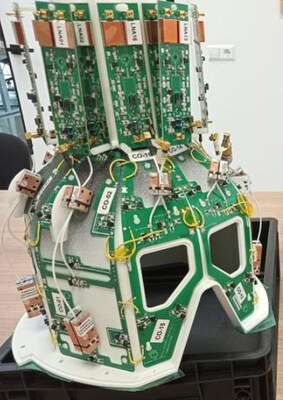
- Using a one-of-a-kind Tesla head coil that provides advanced magnetic resonance imaging ("MRI") and magnetic resonance spectroscopy ("MRS") neuroimaging, researchers quantified lithium in 25 discrete brain regions as well as the whole brain. AL001 showed numerically higher lithium concentrations in every single region vs. standard lithium carbonate, including the hippocampus (memory), entorhinal cortex (early Alzheimer's target), cingulate gyrus (cognition), amygdala and accumbens regions. Maximum whole-brain lithium exposure increased ~
7.8% for AL001 compared to lithium carbonate. A consistent directional increase across all measured brain regions is a compelling signal, and confirmation is already underway; the second of five planned Phase II trials, enrolling a total of 30 patients across the full program, is already underway at MGH.
- Using a one-of-a-kind Tesla head coil that provides advanced magnetic resonance imaging ("MRI") and magnetic resonance spectroscopy ("MRS") neuroimaging, researchers quantified lithium in 25 discrete brain regions as well as the whole brain. AL001 showed numerically higher lithium concentrations in every single region vs. standard lithium carbonate, including the hippocampus (memory), entorhinal cortex (early Alzheimer's target), cingulate gyrus (cognition), amygdala and accumbens regions. Maximum whole-brain lithium exposure increased ~
- Faster Brain Uptake Results in Earlier Peak Concentration:
- AL001 achieved peak brain lithium concentrations at 6.7 hours compared to 8.4 hours for standard lithium carbonate, resulting in a potential ~1.7-hour advantage. Faster brain uptake could have meaningful implications for therapeutic onset and dosing optimization, which will be evaluated in subsequent studies.
- Second Phase II Clinical Trial Already Underway at MGH:
- In this first study, brain tissue measurements were conducted in six subjects per arm, which is a sample size that produces directionally meaningful, but not yet statistically definitive, results. The ~
7.8% whole-brain lithium trend is worthy of further investigation. To that end, Alzamend has initiated its second Phase II "Lithium in Brain" clinical trial at MGH, this time in patients with BD, with topline data expected in the third quarter of 2026. The third, fourth, and fifth studies in the program enrolling patients with MDD, PTSD and Alzheimer's, respectively, are anticipated to begin in the latter half of 2026, subject to raising sufficient capital. Alzamend believes that results across all five studies, totaling 30 patients, will be adequate to establish statistical significance and advance AL001 toward further regulatory milestones.
- In this first study, brain tissue measurements were conducted in six subjects per arm, which is a sample size that produces directionally meaningful, but not yet statistically definitive, results. The ~
"These data mark a pivotal advancement in the development of AL001," said Stephan Jackman, CEO of Alzamend. "We have clinical evidence that AL001 shows equivalent delivery of lithium in the bloodstream compared to standard lithium carbonate capsules, which is a key regulatory safety measure. And the brain data, while preliminary, show a consistent increase providing higher lithium in every brain region we measured. This can permit lower systemic doses to achieve efficacy thereby providing an enhanced safety profile. Combined with the faster brain uptake, we believe AL001 has a meaningfully differentiated profile compared to conventional lithium; one that could benefit the 43+ million Americans afflicted with Alzheimer's, BD, MDD and PTSD."
AL001: A Differentiated Lithium Therapy for a Large Unmet Need
Although lithium has remained the gold standard treatment for BD for more than 55 years, its clinical utility is constrained by a narrow therapeutic window and the need for regular therapeutic drug monitoring ("TDM") to manage renal, thyroid, and other systemic toxicity risks. AL001 is Alzamend's patented ionic cocrystal formulation of lithium combined for delivery with L-proline and salicylate, which is designed to deliver a full therapeutic amount of lithium to the brain with less systemic exposure than lithium carbonate, potentially enabling a safer, better-tolerated therapy across Alzheimer's, BD, MDD and PTSD.
About this Study
The study employed a randomized crossover design with multiple six-subject cohorts. Participants were assigned to one of two sequences: AB (AL001 then lithium carbonate) or BA (lithium carbonate then AL001). Each treatment period consisted of 14 days of three-times-daily ("TID") dosing, separated by a 14-day washout.
On Days 14–15, participants underwent 24-hour pharmacokinetic blood sampling alongside advanced MRI and MRS neuroimaging, a first-of-its-kind methodology. The MRI and MRS neuroimaging methods were developed by the lab of Dr. Ovidiu Andronesi, the study's principal investigator, Associate Professor of Radiology at Harvard University and the Director of Multinuclear Metabolic Imaging, Martinos Center for Biomedical Imaging, Department of Radiology, MGH, Harvard Medical School. The study also incorporated a specialized, engineered head coil developed by Tesla Dynamic Coils BV, designed to enable high-resolution, whole-brain lithium imaging. This approach enabled simultaneous quantification of lithium concentrations in blood and brain including individual structures, as well as assessment of brain and individual brain structure chemistry, metabolism, and biomarker effects.
The study specifically evaluated AL001's ability to enhance lithium delivery to targeted brain regions while reducing systemic exposure, an approach designed to address the long-standing safety and tolerability limitations associated with traditional lithium salts. The results from the study confirmed that AL001 matches blood levels of standard lithium carbonate, the reference drug, addressing FDA regulatory requirements for a new drug formulation, as well as providing a differentiated, potential dose-sparing benefit profile for patients.
About Alzamend Neuro
Alzamend is a clinical-stage biopharmaceutical company developing novel therapies for Alzheimer's, BD, MDD and PTSD. Our mission is to rapidly develop and market safe and effective treatments. Our current pipeline consists of two novel therapeutic drug candidates, AL001, a patented ionic cocrystal delivering lithium with salicylate and L-proline designed to improve brain delivery and safety compared to conventional lithium, and ALZN002, a patented cell-based therapeutic vaccine designed to restore the immune system's ability to clear beta-amyloid. The latter is a next-generation active-immunity approach offering potential advantages in dosing frequency and cost compared to approved passive-immunity antibody therapies. Both candidates are exclusively licensed from the University of South Florida Research Foundation under royalty-bearing worldwide licenses.
Forward-Looking Statements
This press release contains "forward-looking statements" within the meaning of Section 27A of the Securities Act of 1933, as amended, and Section 21E of the Securities Exchange Act of 1934, as amended. These forward-looking statements generally include statements that are predictive in nature and depend upon or refer to future events or conditions, and include words such as "believes," "plans," "anticipates," "projects," "estimates," "expects," "intends," "strategy," "future," "opportunity," "may," "will," "should," "could," "potential," or similar expressions. Statements that are not historical facts are forward-looking statements. Forward-looking statements are based on current beliefs and assumptions that are subject to risks and uncertainties. Forward-looking statements speak only as of the date they are made, and Alzamend undertakes no obligation to update any of them publicly in light of new information or future events. Actual results could differ materially from those contained in any forward-looking statement as a result of various factors. More information, including potential risk factors, that could affect Alzamend's business and financial results are included in Alzamend's filings with the


 View original content to download multimedia:https://www.prnewswire.com/news-releases/alzamend-neuro-reports-positive-topline-data-from-phase-ii-clinical-trial-of-al001-lithium-in-brain-study-al001-achieves-bioequivalence-and-demonstrates-superior-brain-delivery-across-all-measured-brain-regions-302725991.html
SOURCE Alzamend Neuro, Inc.
FAQ
AI-generated questions and answers. How Rhea-AI works. Not financial advice.