
Ansys and Cognata Enable Robust ADAS/AV Sensor Testing on Microsoft Azure
Ansys (NASDAQ: ANSS) announced a collaboration with Cognata and Microsoft to enhance ADAS/AV sensor testing capabilities through the Automated Driving Perception Hub (ADPH) platform.
Sentiment and the balance of points
Rhea-AI Sentiment reads the wording of the document, how positive or negative its language is on a 1 to 5 scale. The balance of points shown with the takes weighs what the document actually discloses, so the two can disagree, for example when a trial that missed its main goal is described in upbeat language.
Rhea-AI Summary
Ansys (NASDAQ: ANSS) announced a collaboration with Cognata and Microsoft to enhance ADAS/AV sensor testing capabilities through the Automated Driving Perception Hub (ADPH) platform. The integration of Ansys AVxcelerate Sensors into ADPH, which runs on Microsoft Azure and AMD hardware, provides OEMs with access to certified virtual sensor models for testing autonomous vehicle functions.
The platform features high-fidelity radar and electromagnetic wave propagation simulation capabilities, allowing manufacturers to validate sensors against industry standards like NHTSA and NCAP. The system includes various sensor models for thermal cameras, LiDAR, and RGB cameras, enhanced by Deep Neural Network technology for photorealistic simulations.
Cognata's platform, powered by AMD Radeon PRO V710 GPUs, utilizes generative AI transfer technology to deliver precise virtual sensor simulations, while Ansys' contribution focuses on physics-based radar models that accurately reproduce electromagnetic wave propagation for improved signal strength and accuracy.
Positive
- Partnership with major tech companies Microsoft and AMD enhances product offering
- Integration into ADPH platform expands market reach for Ansys' sensor simulation technology
- Provides validated testing capabilities for automotive industry compliance standards
Negative
- None.
Details
News Market Reaction – ANSS
The recorded move for ANSS in the trading session of this news was -0.38%.
Data tracked by StockTitan Argus. Session date unavailable.
AI-generated analysis. How Rhea-AI works. Not financial advice.




Ansys is collaborating with Cognata and Microsoft on a web-based platform enabling users to test and validate ADAS/AV automotive sensors in a virtual environment that mimics real-world conditions
/ Key Highlights
- Ansys AVxcelerate Sensors™ simulation software will bolster the Automated Driving Perception Hub (ADPH) platform, managed by Cognata and running on Microsoft Azure, with high-fidelity radar and electromagnetic (EM) wave propagation simulation capabilities
- The platform is powered by AMD EPYC™ central processing units (CPUs) and Radeon™ PRO graphics processing units (GPUs) for machine learning inference and visualization workload
- ADPH hosts a library of manufacturer-certified virtual sensor models, including thermal camera, radar, and LiDAR systems
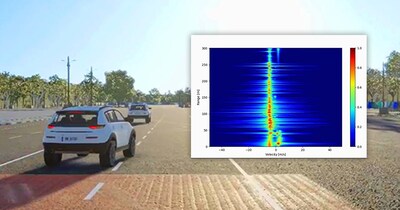
The ADPH allows OEMs and sensor manufacturers to test and validate certified sensors against diverse industry standards, including those put forth by the National Highway Traffic Safety Administration (NHTSA) and the New Car Assessment Program (NCAP). The platform currently includes Cognata sensor models for thermal cameras, LiDAR, RGB cameras with varying lens distortions, and leverages Deep Neural Network (DNN) technology that enables photorealistic images and simulations.
With the addition of Ansys AVxcelerate Sensors, users have access to physics-based radar models that reproduce EM wave propagation — accounting for material properties within high frequencies — to enhance signal strength and accuracy. The radar simulation provides raw data that can be used to test and improve the algorithms that process radar signal interference, like small changes in frequency caused by moving objects (doppler effect). When connected to a virtual model from a radar supplier, AVxcelerate Sensors produces a virtual twin of the sensor, enabling OEMs to evaluate its performance with enhanced predictive accuracy.
"We are excited to integrate Ansys' radar simulation technology into the ADPH platform, bringing OEMs and tier-one suppliers an unmatched level of accuracy in sensor validation," said Danny Atsmon, founder and CEO at Cognata. "Ansys' ability to simulate complex EM wave interactions enhances our platform's ability to deliver precise, real-world insights for radar-based ADAS and AV systems. This collaboration significantly advances the industry's ability to test and refine sensor performance under diverse conditions."
Cognata's generative AI transfer technology, enabled by AMD Radeon PRO V710 GPUs, enhances the RGB camera simulation platform by delivering high-fidelity virtual sensors. It accurately captures and replicates the real-world behavior of sensors within the simulation.
"Ansys' AVxcelerate Sensors platform includes real-time radar capabilities for accurate modeling of radar interactions in complex environments," said Shane Emswiler, vice president of products at Ansys. "By offering the solution on Cognata's ADPH platform, we are enabling customers to design for real-world operations to meet strict regulatory standards. As the industry works toward fully autonomous driving, safety validation is paramount, and the joint effort between Ansys and Cognata streamlines this typically long and complicated process."
"We're pleased to collaborate with Ansys and Cognata to enhance automated driving validation and simulation on Microsoft Azure," said Nidhi Chappell, Vice President, Azure AI Infrastructure at Microsoft. "By integrating Ansys' advanced radar simulation technology, we're empowering OEMs and tier-one suppliers with high levels of accuracy in sensor validation. This collaboration underscores our commitment to providing leading-edge cloud infrastructure that supports the development and validation of ADAS and autonomous vehicle technologies."
/ About Ansys
Our Mission: Powering Innovation that Drives Human Advancement™
When visionary companies need to know how their world-changing ideas will perform, they close the gap between design and reality with Ansys simulation. For more than 50 years, Ansys software has enabled innovators across industries to push boundaries by using the predictive power of simulation. From sustainable transportation to advanced semiconductors, from satellite systems to life-saving medical devices, the next great leaps in human advancement will be powered by Ansys.
Ansys and any and all ANSYS, Inc. brand, product, service and feature names, logos and slogans are registered trademarks or trademarks of ANSYS, Inc. or its subsidiaries in
/ About Cognata
Cognata provides cutting-edge autonomous driving technologies with its end-to-end solutions for autonomous platforms. Other than an advanced engine creating a photorealistic simulation platform, Cognata offers the know-how of the market offerings, product integration, and a comprehensive V&V walkthrough, end-to-end. Working with some of the largest autonomous vehicle makers tier 1's in the world, Cognata accelerates the autonomous and ADAS engineering capabilities, and brings the unique power and expertise of artificial intelligence and computer vision, taking off years of the development process.
ANSS–T
/ Contacts | |
Media | Mary Kate Joyce |
724.820.4368 | |
Investors | Kelsey DeBriyn |
724.820.3927 | |
 View original content to download multimedia:https://www.prnewswire.com/news-releases/ansys-and-cognata-enable-robust-adasav-sensor-testing-on-microsoft-azure-302340829.html
SOURCE Ansys
FAQ
AI-generated questions and answers. How Rhea-AI works. Not financial advice.