
American Rare Earths Commences 2026 Drilling at Halleck Creek to Underpin Feasibility Study
American Rare Earths (ADR: AMRRY) has started its 2026 exploration drilling program at the Cowboy State Mine within the Halleck Creek project in Wyoming.
Rhea-AI Summary
American Rare Earths (ADR: AMRRY) has started its 2026 exploration drilling program at the Cowboy State Mine within the Halleck Creek project in Wyoming. The program underpins a Definitive Feasibility Study at what is described as one of the largest US rare earth deposits on a TREO basis.
The campaign plans up to 3,050 meters of HQ core across 19 holes, generating about 1,045 core samples for assays and extensive geotechnical, hydrological, environmental and metallurgical test work. Drilling began May 13, 2026, and is scheduled to finish by mid-July.
Positive
- Up to 3,050 meters of HQ core drilling across 19 holes at Cowboy State Mine
- Program designed to support a Definitive Feasibility Study for Halleck Creek
- Approximately 1,045 core samples expected for assay and additional test work
- Nine holes target higher-grade zones planned for first five years of mining
- Ten holes aim to delineate additional higher-grade mineralization around Red Mountain base
- Drilling scheduled from May 13, 2026 to mid-July, providing near-term data flow
Negative
- None.
Details
News Market Reaction – ARRNF
On May 27, the day this news came out, ARRNF closed 2.21% above the previous close.
Data tracked by StockTitan Argus for the May 27 session.
Key Figures
- Planned drilling length
- 3,050 meters
- 2026 exploration drilling program at Cowboy State Mine
- Planned drilling length (feet)
- 10,000 feet
- 2026 exploration drilling program at Cowboy State Mine
- Number of drill holes
- 19 holes
- HQ core drilling on Red Mountain at CSM
- Core samples for assay
- 1,045 samples
- Expected core samples from 2026 drilling program
- Top-of-mountain holes
- 9 holes
- Targeting higher-grade zones for first five years of planned mining
- Base-of-mountain holes
- 10 holes
- Delineating additional higher-grade mineralization around Red Mountain base
- Average hole depth
- 125 meters
- Expected average depth of planned drill holes
- Deeper test holes
- 200–300 meters
- Selected holes testing deeper mineralization
Historical Context
-
New Wyoming-focused leadership roles to support Halleck Creek advancement.
-
Defined three-stage pilot plant pathway for pre-production rare earth oxide.
-
Awarded Whole of Property Development Assessment for Halleck Creek project.
-
Accelerated pilot plant after test work showing strong TREO recovery and enrichment.
-
Commissioned study on converting heavy rare earth oxides to metals.
24h Move is the share-price change in the day after each event; other market factors may also have contributed.
Key Terms
definitive feasibility study technical
pre-feasibility study technical
measured and indicated technical
ore reserve technical
geomechanical technical
hydrological technical
metallurgical technical
televiewer technical
AI-generated analysis. How Rhea-AI works. Not financial advice.




DENVER, May 27, 2026 (GLOBE NEWSWIRE) -- American Rare Earths (ASX: ARR | OTCQX: ARRNF | ADR: AMRRY) (“ARR” or the “Company”) is pleased to announce that the 2026 exploration drilling program has commenced at the Cowboy State Mine (“CSM”) within the Halleck Creek Rare Earths Project in Wyoming. The program marks the start of feasibility-level drilling at what is believed to be the largest known rare earth deposit in the United States on a total rare earth oxide (TREO) basis1, and is designed to provide the geological and geotechnical foundation for a Definitive Feasibility Study (DFS).
“Commencing this drilling program is an important and exciting step as we continue to accelerate Halleck Creek,” said Mark Wall, CEO of American Rare Earths. “While we are actively reviewing and optimizing the Pre-Feasibility Study, we are moving ahead in parallel with feasibility-stage drilling so that we do not lose time. This campaign is one of several workstreams underway to advance what we believe is the largest domestic rare earths project in the United States, on a TREO basis, towards production.”
Program summary
ARR has engaged Boart Longyear to drill up to approximately 3,050 meters (10,000 feet) of HQ core across 19 holes on Red Mountain at the CSM. Dahrouge Geological Consulting has been retained to manage the exploration program and to provide on-site geological logging and sample preparation services for the duration of the campaign.
Drilling commenced on May 13, 2026, and is scheduled to conclude by mid-July. The program is expected to generate roughly 1,045 core samples for assay, with remaining core retained for further geotechnical, hydrological, environmental and metallurgical testwork. All holes will be geophysically logged, including optical and/or acoustic televiewer surveys, to support detailed geomechanical analysis for mine design.
Resource and feasibility objectives
Nine of the proposed core holes are located on the top of Red Mountain, targeting higher-grade zones within the first five years of planned mining as outlined in the CSM pre-feasibility study pit shells. These holes are designed to support potential future ore reserve estimation as part of the DFS.
A further ten core holes will be drilled around the base of Red Mountain to delineate additional higher-grade mineralization identified through previous channel sampling and recent geological mapping. Collectively, the program aims to:
- Upgrade the current resource, targeting conversion of a majority of tonnes within planned early-mining phases to Measured and Indicated classifications
- Test extensions of the mineralization at depth and to the west of existing drilling
- Provide core for geomechanical testing, informing pit slope design and mine planning
- Generate material for hydrogeological and baseline environmental studies
- Supply additional samples for metallurgical test work to further de-risk and optimize the processing flowsheet
Operational details
Approximately twelve of the nineteen planned holes will be drilled from platforms constructed on outcrop near the crest of Red Mountain, Figure 2. Due to the rugged terrain, helicopter support will be used to transport platform materials, the drill, and core boxes to and from these sites, Figure 1. Average hole depth is expected to be approximately 125 meters, with selected holes extending to 200–300 meters to test deeper mineralization.
On site, core will be photographed, logged and split by field geologists before being dispatched to ALS Global for assay, Figure 3. Residual core will be stored for future confirmatory or specialized testing as required during the DFS.
Figure 1- Exploration Staging Area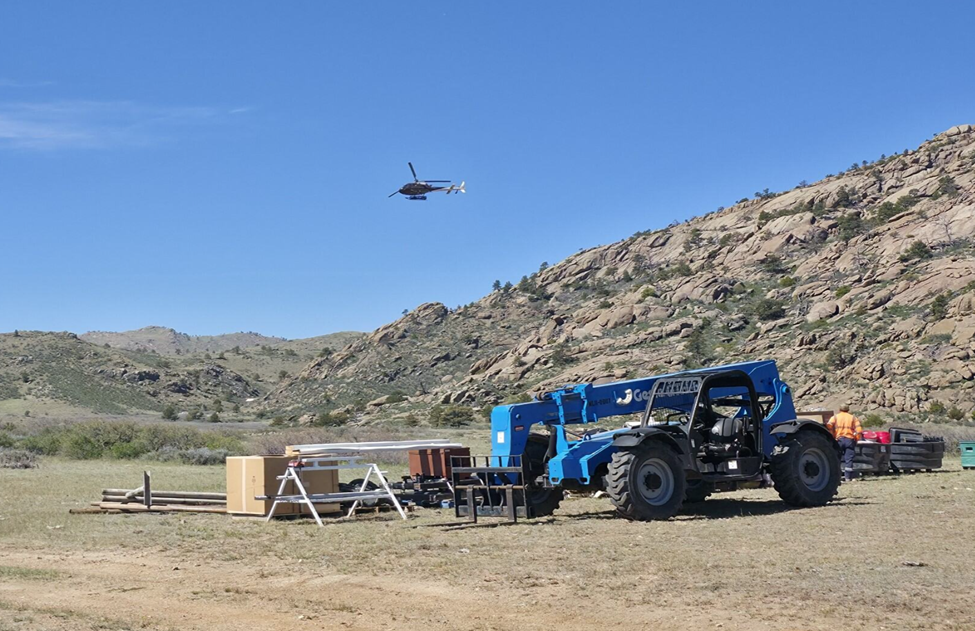
Figure 2- Proposed Hole Locations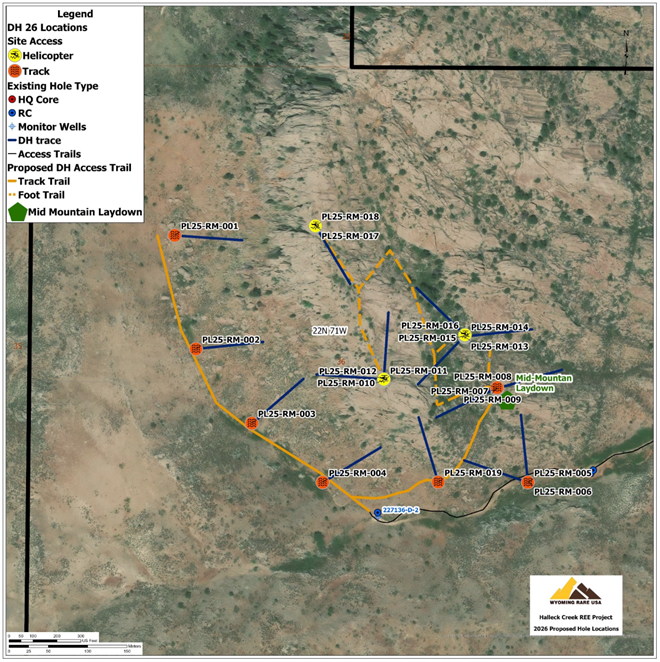
Figure 3- Core from initial drill hole location PL5-RM-005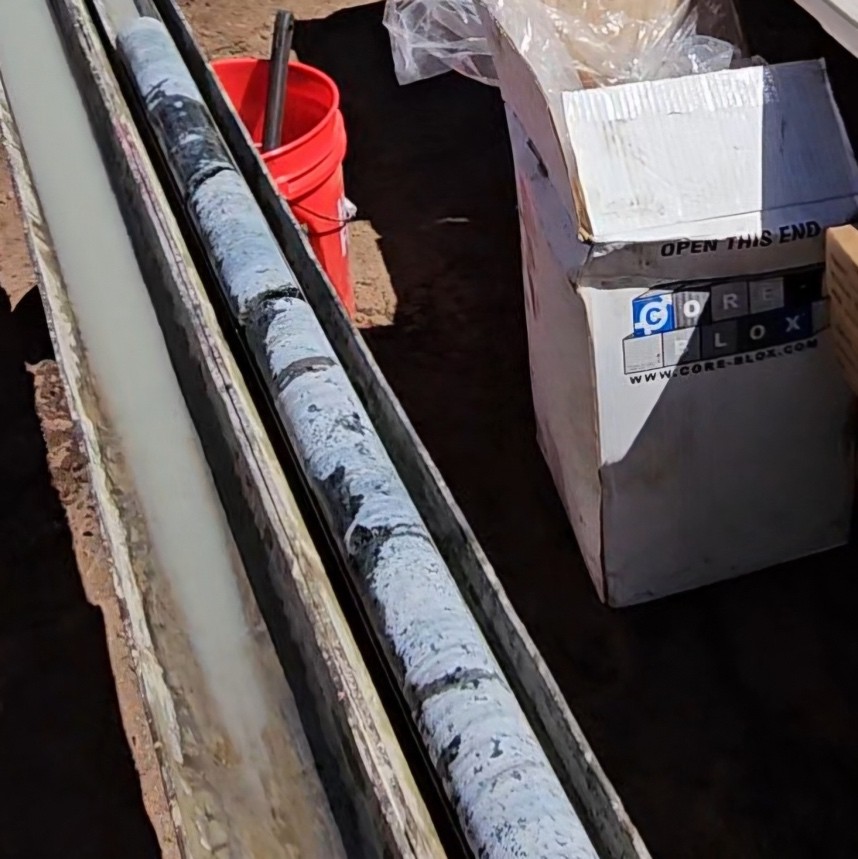
This release was authorized by the Board of American Rare Earths.
About American Rare Earths Limited:
American Rare Earths (ASX: ARR | OTCQX: ARRNF | ADR: AMRRY) is a critical minerals company at the forefront of reshaping the U.S. rare earths industry. Through its wholly owned subsidiary, Wyoming Rare (USA) Inc. (“WRI”), the company is advancing the Halleck Creek Project in Wyoming—a world-class rare earth deposit with the potential to secure America’s critical mineral independence for generations. Located on Wyoming State land, the Cowboy State Mine within Halleck Creek offers cost-efficient open-pit mining methods and benefits from streamlined permitting processes in this mining-friendly state.
With plans for onsite mineral processing and separation facilities, Halleck Creek is strategically positioned to reduce U.S. reliance on imports—predominantly from China—while meeting the growing demand for rare earth elements essential to defense, advanced technologies, and economic security. As exploration progresses, the project’s untapped potential on both State and Federal lands further reinforces its significance as a cornerstone of U.S. supply chain security. In addition to its resource potential, American Rare Earths is committed to environmentally responsible mining practices and continues to collaborate with U.S. Government-supported R&D programs to develop innovative extraction and processing technologies for rare earth elements.
Investors can follow the Company’s progress at www.americanree.com
For more information:
Nick Lissolo, Vice President, Corporate Development and Strategy
nlissolo@americanree.com
Media Contact:
Susan Assadi
sassadi@americanree.com
347 977 7125
Investor Relations US Contact:
Beverly Jedynak
Beverly.jedynak@viriathus.com
312 943 1123
1 Refer ASX announcement dated 4 February 2025
Photos accompanying this announcement are available at
https://www.globenewswire.com/NewsRoom/AttachmentNg/54b78834-534c-45a3-aaf7-24d7241af0e2
https://www.globenewswire.com/NewsRoom/AttachmentNg/63bbe8d6-f90f-4415-9764-0dcb1e35f30a
https://www.globenewswire.com/NewsRoom/AttachmentNg/be6e46f8-5913-4a5e-9a77-68815e182c5a

FAQ
AI-generated questions and answers. How Rhea-AI works. Not financial advice.