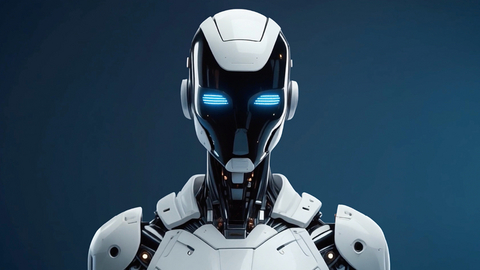
Physical AI Emerges as the Next Major Industrial Growth Wave
LONDON--(BUSINESS WIRE)--
Barclays Research today released a new Impact Series report The Future of Work: AI Gets Physical, highlighting humanoid robots as the next frontier for artificial intelligence. Designed in human form, these robots are moving from labs into real-world settings, with the potential to reshape sectors from manufacturing to healthcare.
Humanoid Robot
Breakthroughs in AI reasoning, actuator technology and battery systems have cut production costs 30-fold over the past decade, paving the way for commercial adoption. As ageing populations and labour shortages intensify, humanoids could take on repetitive, physically demanding tasks — augmenting rather than replacing human workers in labour-intensive industries.
Barclays Research estimates the global humanoid robotics market, currently $2–3 billion, could reach $200 billion by 2035 under the most optimistic scenarios. Europe may hold a competitive edge in the supply chain thanks to its expertise in precision engineering and automotive manufacturing, particularly in actuator systems, which account for around half of production costs. China is also emerging as a major force, accounting for the majority of new humanoid robot models and rapidly scaling its innovation and manufacturing footprint.
“Humanoid robots represent a structural shift in automation,” said Zornitsa Todorova, Head of Thematic FICC Research Barclays. “As they move from concept to commercial reality, the implications for labour markets and industrial strategy are profound.”
Barclays’ Impact Series uses data-driven analysis to explore economic, demographic and disruptive changes affecting markets, sectors and society at large. The key findings of today’s report include:
Why now: Demographic pressures and labour shortages are creating demand for humanoids in manufacturing, logistics, healthcare and other sectors struggling to fill critical roles.
The ‘three Bs’: Advances in brains (software), brawn (physical motion capabilities), and batteries are driving cost declines. Actuators — the robotic “muscles” — are the largest cost component, accounting for roughly 50% of humanoid production costs.
Industrial overlap: Humanoids share complexity with automotive manufacturing, offering Europe a natural advantage.
Investment opportunity: As humanoid production scales, physical AI is emerging as the next major industrial theme — shifting value creation from software to hardware. This opens new upside for actuator makers, precision‑component suppliers and automation leaders who were largely absent from AI’s first wave.
Our vision is to be the UK-centred leader in global finance. We are a diversified bank with comprehensive UK consumer, corporate and wealth and private banking franchises, a leading investment bank and a strong, specialist US consumer bank. Through these five divisions, we are working together for a better financial future for our customers, clients and communities. For further information about Barclays, please visit our website home.barclays
Machines built with human-like bodies or features—such as a head, arms, and legs—designed to perform tasks, interact with people, or navigate environments similarly to a person. Investors care because these robots can change labor needs, create new markets for products and services, and affect costs and productivity in industries like manufacturing, logistics, healthcare and retail; think of them as programmable workers that can reshape how businesses operate and compete.
actuator technologytechnical
Actuator technology is the hardware and systems that convert power into controlled movement or force—think of them as the muscles that make machines, robots or valves move. For investors, actuators matter because they determine how fast, precise and energy-efficient a product or process can be; better actuator designs can lower operating costs, enable automation, improve product performance and create competitive advantage in industries from manufacturing to transportation.
actuatorstechnical
Mechanical or electronic components that convert energy into movement or action, like the muscles in a machine that make valves open, robot arms move, or medical devices deliver precise doses. Investors care because the choice and quality of actuators affect a product’s performance, durability, manufacturing cost and scalability, which in turn influence revenue, margins and competitive position in hardware-heavy industries.
automationtechnical
Automation is the use of technology to perform tasks with minimal human intervention, often replacing manual work with machines or software. It matters to investors because it can increase efficiency, reduce costs, and enable faster decision-making, potentially leading to higher profits and competitive advantages for businesses.