
Bombardier Completes Global 8000 Environmental Product Declaration (EPD)
Rhea-AI Summary
Bombardier (OTC:BDRBF) announced that its Global 8000 business jet has obtained an Environmental Product Declaration (EPD), joining the Challenger 650, Challenger 3500, Global 5500, Global 6500 and Global 7500 in carrying EPDs. According to Bombardier, this makes it the only business jet manufacturer disclosing scientifically analyzed environmental impacts for all in-production aircraft through EPDs.
The Global 8000 EPD, a Type III declaration under ISO 14025, details lifecycle indicators such as CO2 emissions, noise and water use from raw material extraction to end-of-life. Bombardier highlights this as part of its broader sustainability strategy and lifecycle-focused product development approach.
Positive
- None.
Negative
- None.
AI-generated analysis. How Rhea-AI works. Not financial advice.




- Environmental Product Declarations (EPDs)(1), which assess the full environmental footprint of the aircraft throughout its lifecycle, are an integral part of Bombardier’s sustainability strategy
- The Global 8000 joins Bombardier’s Challenger 650, Challenger 3500, Global 5500, Global 6500 and Global 7500 as the only business jets in the world to carry an EPD(1)(2) – a key aspect of Bombardier’s leadership in lifecycle assessment and disclosure
- The Global 8000 EPD further illustrates the steadfast commitment, pride and investment Bombardier is making to ensure it is fully transparent about our product lifecycle while continuing to innovate and identify opportunities for improvement across the value chain
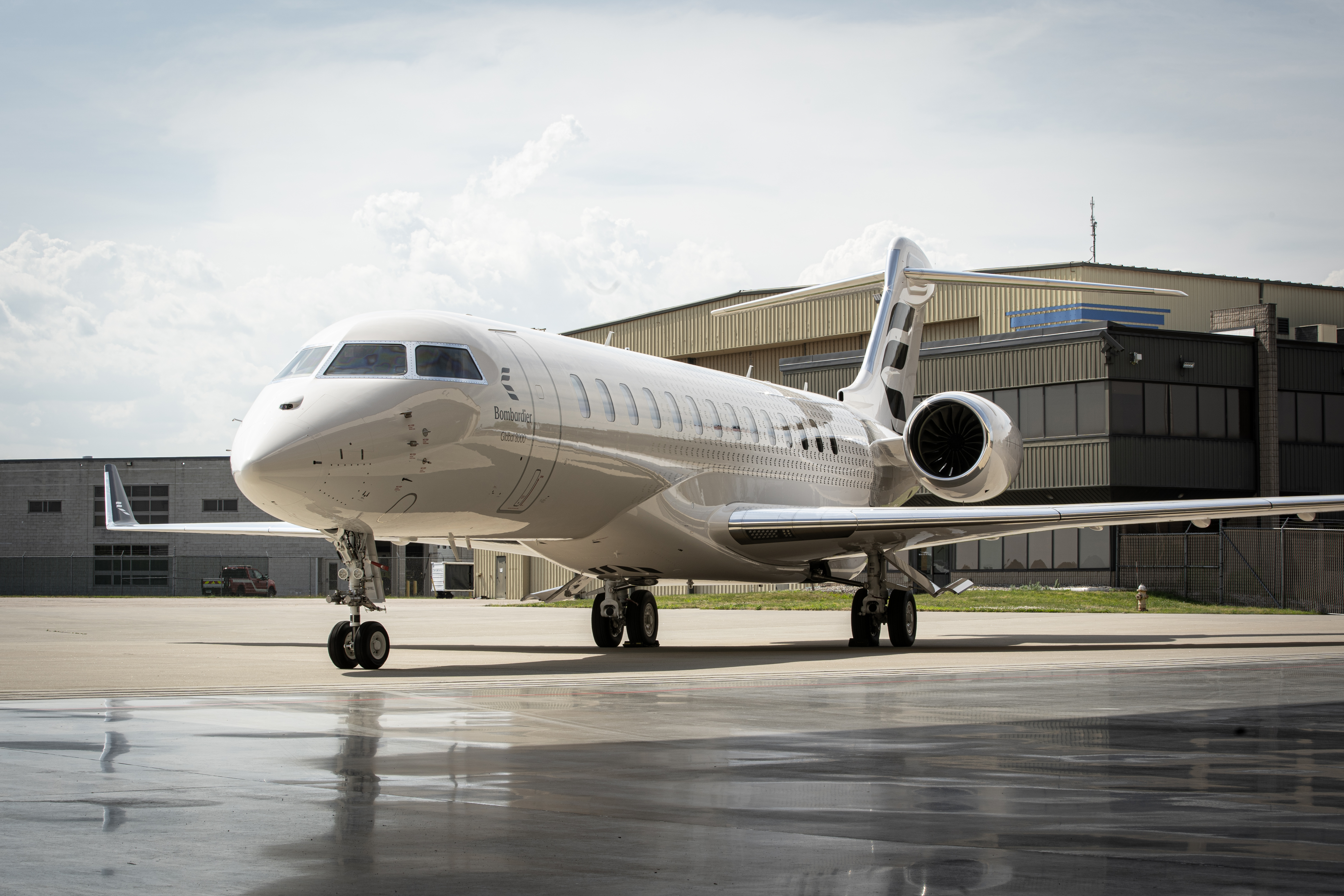
MONTREAL, July 21, 2026 (GLOBE NEWSWIRE) -- Bombardier today announced that the world’s fastest civilian aircraft, the Global 8000 jet has obtained its Environmental Product Declaration (EPD), joining several other Bombardier aircraft already with EPDs, including the Challenger 650, Challenger 3500, Global 5500, Global 6500, and Global 7500 aircraft (1).
With this important designation, Bombardier becomes the only business jet manufacturer to ever disclose the scientifically-analyzed environmental impact of its in-production aircraft via the publication of EPDs (2). All of Bombardier’s business jets EPDs are publicly available on the company’s website and display, amongst other information, the aircraft CO2 emissions generated at each of the steps of the value chain: from raw material extraction until aircraft end-of-life.
“This is an important milestone for Global 8000, as EPDs transparently disclose the environmental impact they generate. The development of EPDs is in line with Bombardier’s objective to advance sustainable business aviation by making environmentally responsible choices in the full life cycle of aircraft design, from sourcing raw materials right up to assembly and operations. For us, it’s all about continuous improvement in every stage of aircraft development,” said Stephen McCullough, Executive Vice President, Engineering, Product Development and Bombardier Defense. “From its recent speed records, to its stellar performance during demonstration flights at the Farnborough International Airshow, this is yet another important milestone for this incredible aircraft. The Global 8000 offers so much promise for both our civil and defense customers in region due to its incredible performance attributes and mission flexibility.”
At Bombardier, integrating environmental sustainability into the product development function is a fundamental aspect of the process to design state-of-the-art aircraft, and is a core value. Applying a complete life cycle perspective to aircraft design is central to a product’s responsibility strategy.
As the fastest civil aircraft in the skies with a top speed of Mach 0.95 and a range of 8,000 NM(3), the Global 8000 aircraft can enable passengers to fly faster and farther than ever before. With its long-range capabilities, low cabin altitude and exceptionally smooth ride and agile, takeoff and landing performance capabilities, it’s the ideal platform to support customers for the duration of their mission.
About Bombardier
At Bombardier (BBD-B.TO), we design, build, modify and maintain the world’s best performing aircraft for the world’s most discerning people and businesses, governments and militaries. That means not simply exceeding standards, but understanding customers well enough to anticipate their unspoken needs.
For them, we are committed to pioneering the future of aviation—innovating to make flying more reliable, efficient and sustainable. And we are passionate about delivering unrivaled craftsmanship and care, giving our customers greater confidence and the elevated experience they deserve and expect. Because people who shape the world will always need the most productive and responsible ways to move through it.
Bombardier customers operate a fleet of more than 5,200 aircraft, supported by a vast network of Bombardier team members worldwide and 10 service facilities across six countries. Bombardier’s performance-leading jets are proudly manufactured in aerostructure, assembly and completion facilities in Canada, the United States and Mexico. In 2024, Bombardier was honoured with the prestigious “Red Dot: Best of the Best” award for Brands and Communication Design.
For Information
For corporate news and information, including Bombardier’s Sustainability report, as well as the company’s initiative to cover all its flight operations with a Sustainable Aviation Fuel (SAF) blend utilizing the Book-and-Claim system visit bombardier.com.
Learn more about Bombardier’s industry-leading products and customer service network at bombardier.com. Follow us on X @Bombardier.
Media Contacts
General media contact webform
Mark Masluch
+1-514-855-7167
Mark.Masluch@aero.bombardier.com
Bombardier, Challenger, Challenger 650, Challenger 3500, Global, Global 5500, Global 6500, Global 7500 and Global 8000 are registered or unregistered trademarks of Bombardier Inc. or its subsidiaries.
___________________
(1) The Global 8000 carries a Type III declaration in accordance with the ISO 14025 and is registered with the International EPD System, an environmental declaration program based in Sweden. It discloses fully transparent environmental information about the product’s life cycle, such as CO2 emissions, noise, water consumption and other key environmental impact indicators. The other Bombardier aircraft listed have Type II declarations in accordance with the ISO 14021, and following ISO 14044:2006 for science-based Life Cycle Assessment (LCA).
(2) Based on Bombardier's analysis of publicly available data.
(3) All specification and data are subject to certain operating rules, assumptions and other conditions, when compared to commercial and business aircraft currently in service.
A photo accompanying this announcement is available at https://www.globenewswire.com/NewsRoom/AttachmentNg/afc17925-e336-4390-839a-25a303234380
