
BD Strengthens Leadership in Peripheral Vascular Innovation with Positive AGILITY Trial Results
The nine-month endpoint failure rate was 2.8%, significantly below the trial's prespecified 19% performance goal.
Sentiment and the balance of points
Rhea-AI Sentiment reads the wording of the document, how positive or negative its language is on a 1 to 5 scale. The balance of points shown with the takes weighs what the document actually discloses, so the two can disagree, for example when a trial that missed its main goal is described in upbeat language.
Rhea-AI Summary
BD (NYSE: BDX) announced nine-month AGILITY trial results showing its Revello Vascular Covered Stent met the primary endpoint in iliac artery disease.
The cohort enrolled 120 patients at 28 sites. The combined safety and effectiveness endpoint had a 2.8% failure rate, significantly below the prespecified 19% performance goal. Primary patency, meaning treated arteries remained open, was 97.2%; freedom from clinically driven repeat treatment of the target lesion was 98.3%. There were no device- or procedure-related deaths, target limb major amputations or unanticipated serious adverse device effects. Mean Rutherford disease-severity category improved from 3.0 to 0.3, and the mean walking impairment questionnaire score rose 31.7 points from baseline.
Follow-up continues through 36 months. Enrollment in a separate leg-artery cohort finished in August. Revello is CE marked but remains limited to investigational use in the United States.
How this balance works
Rhea-AI gives every point it takes from this document a weight. Minor counts 1, Moderate 3 and Major 9, so one Major point outweighs several Minor ones. The bar adds up the weights on each side, and when neither side holds more than 65% of the total the balance reads Mixed.
It reads the document as published, with the same rules for every company, and it does not look at what the market expected or at how the stock traded, so a point can be objectively good on a day the stock falls.
Rhea-AI Sentiment measures something else, the tone of the wording.
Positive
- Major pointPrimary composite endpoint met with 2.8% failure through nine months, significantly below the 19% prespecified performance goal.
- Minor point97.2% primary patency through nine months showed treated arteries remained open.
- Minor point98.3% freedom from clinically driven target lesion revascularization through nine months indicated limited repeat treatment.
- Minor pointNo device- or procedure-related deaths, target limb major amputations or unanticipated serious adverse device effects through nine months.
- Minor pointMean Rutherford category improved from 3.0 at baseline to 0.3 at nine months.
3 minor points
- Minor pointMean walking impairment questionnaire score improved by 31.7 points from baseline to nine months.
- Minor pointSuperficial femoral and proximal popliteal artery cohort enrollment completed in August.
- Minor pointRevello Vascular Covered Stent is CE marked.
Negative
- None.
Key Figures
- Iliac cohort enrollment
- 120 patients; 28 sites
- AGILITY iliac cohort
- Composite endpoint failure rate
- 2.8% vs. 19%
- Nine-month results; prespecified performance goal was 19%
- Primary patency
- 97.2%
- Through nine months
- Freedom from target lesion revascularization
- 98.3%
- Clinically driven; through nine months
- Specified safety events
- 0
- No device- or procedure-related deaths, target limb major amputations, or unanticipated serious adverse device effects
- Mean Rutherford category
- 3.0 at baseline to 0.3
- Through nine months
- Mean WIQ score change
- 31.7 points
- Improvement from baseline to nine months
Key Terms
investigational device exemption regulatory
primary patency medical
target lesion revascularization medical
nitinol technical
peripheral artery disease medical
AI-generated analysis. How Rhea-AI works. Not financial advice.




Data through 9 months of follow-up from this ongoing 36-month study demonstrate high vessel patency, low reintervention rates and meaningful improvements in mobility and symptoms, providing evidence supporting the treatment of complex iliac artery disease.
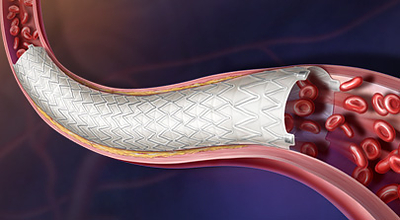
The study met its primary composite endpoint for the treatment of iliac artery disease and adds to the growing body of clinical evidence supporting the continued evaluation of the Revello™ Vascular Covered Stent. The device is designed to combine the flexibility of a nitinol self-expanding stent with the radial resistive force tailored for the iliac arteries.
Iliac artery disease can reduce blood flow to the legs and feet and potentially cause symptoms such as leg pain, cramping, impaired mobility and reduced quality of life. As treatment options evolve, physicians continue to seek durable solutions that provide sustained vessel patency and favorable long-term outcomes, particularly for patients with complex iliac artery anatomy.
The AGILITY iliac cohort enrolled 120 patients at 28 investigational sites in
- Composite safety and effectiveness endpoint met with a failure rate of
2.8% , significantly below the19% prespecified performance goal 97.2% primary patency98.3% freedom from clinically driven target lesion revascularization- No device- or procedure-related deaths, target limb major amputations (at or above the ankle), or unanticipated serious adverse device effects
Patients experienced meaningful gains in daily function and mobility, with mean Rutherford category improving from 3.0 at baseline to 0.3 and mean WIQ score improving by 31.7 points from baseline to 9 months. Women represented approximately
"These latest data showed high primary patency and low clinically driven target lesion revascularization in a patient population that included both straightforward and complex iliac lesions," said Sean Lyden, M.D., chairman of the Department of Vascular Surgery at Cleveland Clinic and global lead principal investigator for AGILITY. "Results showed the treated arteries remained open in a high percentage of patients, and at nine months, patients also showed changes in disease severity and walking ability."
"These results reflect the continued commitment of BD to advance evidence-based innovation in peripheral vascular care," said Rob Righi, vice president and general manager of the Vascular Platform, Peripheral Intervention at BD. "As follow-up continues, the AGILITY study will help further characterize the Revello™ Vascular Covered Stent's performance across patients with peripheral artery disease."
Clinical follow-up in the iliac cohort is ongoing through 36 months. BD also completed enrollment in the study's superficial femoral and proximal popliteal artery cohort this past August, marking another milestone in the AGILITY study.
The Revello™ Vascular Covered Stent is CE marked. In
About BD
BD is one of the world's largest pure-play medical technology companies with a Purpose of advancing the world of health™ by driving innovation across medical essentials, connected care, biopharma systems and interventional. The company supports those on the frontlines of healthcare by developing transformative technologies, services and solutions that optimize clinical operations and improve care for patients. Operating across the globe, with more than 60,000 employees, BD delivers billions of products annually that have a positive impact on global healthcare. By working in close collaboration with customers, BD can help enhance outcomes, lower costs, increase clinical efficiency, improve safety and expand access to healthcare. For more information on BD, please visit bd.com or connect with us on LinkedIn at www.linkedin.com/company/bd1/, X @BDandCo or Instagram @becton_dickinson.
|
Contacts: |
|
|
Media |
Investors |
|
Matt Marcus |
Shawn Bevec SVP, Investor Relations |

 View original content to download multimedia:https://www.prnewswire.com/news-releases/bd-strengthens-leadership-in-peripheral-vascular-innovation-with-positive-agility-trial-results-302900377.html
SOURCE BD (Becton, Dickinson and Company)
FAQ
AI-generated questions and answers. How Rhea-AI works. Not financial advice.
What did BD's AGILITY iliac artery trial show at nine months?
The trial met its primary composite safety and effectiveness endpoint, with a 2.8% failure rate versus the prespecified 19% performance goal. Primary patency was 97.2%, and freedom from clinically driven target lesion revascularization was 98.3% through nine months.
How many patients with complex lesions participated in BD's AGILITY iliac cohort?
Slightly more than half of lesions showed moderate-to-severe calcification. The iliac cohort enrolled 120 patients across 28 investigational sites in the United States, Europe, Australia and New Zealand; women represented approximately 41% of enrolled patients.