
BETA Technologies Builds Out Autonomous Capabilities
BETA Technologies (NYSE:BETA) is accelerating autonomous capabilities through a collaboration with Near Earth Autonomy to integrate perception and guidance into BETA’s fly-by-wire ALIA aircraft.
Sentiment and the balance of points
Rhea-AI Sentiment reads the wording of the document, how positive or negative its language is on a 1 to 5 scale. The balance of points shown with the takes weighs what the document actually discloses, so the two can disagree, for example when a trial that missed its main goal is described in upbeat language.




BETA and Near Earth Autonomy collaborating on autonomy systems designed for dual-use aircraft
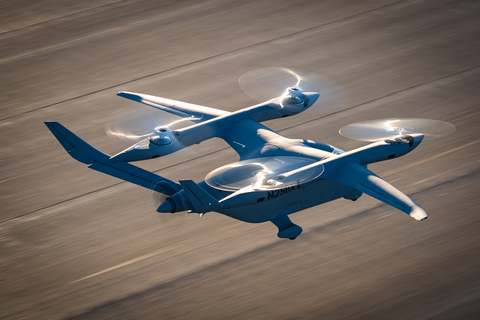
BETA’s simple and reliable electric and hybrid VTOL aircraft are designed with fly-by-wire (FBW) flight control technology, providing an ideal platform to enable both crewed and uncrewed operations. BETA has been developing and flying autonomous capabilities for the past several years, conducting more than 1,000 hours of uncrewed flights on a fleet of subscale aircraft with a demonstrated range of more than 158 nautical miles (182 statute miles) on a single charge. Near Earth adds expertise in perception, guidance, path planning and certifiable autonomous systems designed for a range of mission sets from its experience supplying autonomous systems with the
BETA has successfully completed initial integration of the perception and guidance suite into the FBW flight control system with support from Near Earth. BETA anticipates flight testing will begin in the first half of 2026.
“Increasing our autonomy capabilities will deliver even greater optionality to operators, including faster speed, higher payload, longer range, and optional piloting,” said Shawn Hall, BETA’s Chief Revenue Officer. “In order to meet the demands of the defense and civil sectors today, mobility platforms must be smarter, more flexible, and ready to operate where traditional systems can’t. Recent announcements from the Department of Transportation and Department of War both point towards the accelerated fielding of autonomous aircraft. We are excited to be at the center of this effort with both civil and military customers.”
BETA’s continued development of autonomous capabilities enables expansion of BETA’s offering to military customers and commercial cargo logistics customers such as UPS, Bristow, and e-Smart Logistics, among others.
“This collaboration builds on Near Earth’s proven work of bringing Responsive Uncrewed Capability (RUC) to helicopters, such as converting the UH-60L Black Hawk to RUC-60 enabling helicopters operations without onboard pilots. By leveraging the technology foundation, operational experience, and certification groundwork established through the RUC-60 program, we will help integrate advanced autonomy into ALIA to enable safe, efficient, and scalable operations across a wide range of missions,” said Sanjiv Singh, CEO of Near Earth Autonomy. “Partnering with BETA Technologies is a natural extension of our experience and expertise in bringing autonomy to a variety of missions and aircraft. Working with a pioneer in electric aviation allows us to combine high-assurance autonomy with cutting-edge electric propulsion to help unlock sustainable, scalable autonomous air mobility.”
BETA aircraft are optimized for range, payload, and high-cadence operations across defense, cargo and logistics, medical, and passenger applications. Engineered for all-weather performance, with IFR and FIKI capability on the near-term roadmap, BETA’s piloted aircraft can carry up to 1,240 pounds or five passengers and nearly double without a pilot. Over the past several years, BETA has conducted extensive real-world operations — with flights across the
The Advanced Air Mobility industry has seen recent tailwinds of support from the current administration, including an executive order announcing the
ABOUT BETA TECHNOLOGIES
BETA is an aerospace company designing, manufacturing and selling high-performance electric aircraft, advanced electric propulsion systems, components and charging systems to top operators worldwide. BETA has built and flown its family of ALIA aircraft, consisting of both conventional fixed-wing electric aircraft (the “ALIA CTOL”) and electric vertical takeoff and landing aircraft (“ALIA VTOL”), including multiple trips across
ABOUT NEAR EARTH AUTONOMY
Near Earth Autonomy develops high-assurance autonomy systems that enable aircraft to take off, fly, and land without onboard pilots, even in GPS-denied or degraded visual environments. By bridging aerospace and robotics, Near Earth enhances safety, performance, and efficiency across platforms ranging from small drones to helicopters. Near Earth is leading
FORWARD-LOOKING STATEMENTS
This press release contains “forward-looking statements” within the meaning of federal securities laws. These statements include, but are not limited to, statements regarding BETA’s development of autonomy capabilities, and plans and anticipated benefits from collaborations with Near Earth. These forward-looking statements are only predictions and may differ materially from actual results due to a variety of factors. The risks and uncertainties that could cause actual results to differ from the results predicted are more fully detailed in BETA’s filings with the Securities and Exchange Commission (the “SEC”), including its prospectus filed with the SEC on November 4, 2025. Please note that any forward-looking statements contained herein are based on assumptions that BETA believes to be reasonable as of the date hereof. BETA undertakes no obligation to update these statements as a result of new information or future events, except as required by law.
View source version on businesswire.com: https://www.businesswire.com/news/home/20251120459793/en/
BETA Technologies
PA@BETA.team
Near Earth Autonomy
PR@nearearth.aero
Source: BETA Technologies, Inc.