
Biohaven Advances a New Class of Precision Immunology Therapies: First MoDE Extracellular Protein Degrader, BHV-1300, Begins Phase 3 Pivotal Trial in Graves' Disease
Biohaven (NYSE:BHVN) enrolled the first patient in its pivotal Phase 3 trial of BHV-1300 for Graves' disease, the first MoDE extracellular protein degrader in a pivotal study.
Rhea-AI Summary
Biohaven (NYSE:BHVN) enrolled the first patient in its pivotal Phase 3 trial of BHV-1300 for Graves' disease, the first MoDE extracellular protein degrader in a pivotal study. BHV-1300 targets disease-driving TSHR-IgG1 autoantibodies, not the thyroid gland.
Phase 1b data showed >80% TSHR autoantibody reduction, rapid free T4/T3 normalization, symptom improvements, preservation of other immunoglobulins, and favorable tolerability. The randomized, double-blind, placebo-controlled trial (≈300 adults) assesses restoration of normal thyroid function at 26 weeks without antithyroid drugs, using a self-administered subcutaneous autoinjector.
Positive
- First patient enrolled in pivotal Phase 3 BHV-1300 Graves’ trial (~300 adults)
- Phase 1b showed >80% reduction of pathogenic TSHR autoantibodies
- Rapid normalization of free T4 and free T3 in Graves’ hyperthyroidism
- Preservation of IgG3, IgA, IgM, and IgE in Phase 1b
- Favorable safety and tolerability observed with BHV-1300 and other MoDE/TRAP degraders
- Self-administered subcutaneous autoinjector designed for at-home dosing
Negative
- Graves’ Phase 1 expansion data based on preliminary ongoing study (n=3)
Details
News Market Reaction – BHVN
In the Jun 29 session, BHVN declined 5.56%, reflecting a notable negative market reaction.
Data tracked by StockTitan Argus on the day of publication.
Key Figures
- TSHR antibody reduction
- >80% reduction
- Phase 1b Graves' disease expansion with BHV-1300
- Dose level
- 1,000 mg SC weekly
- BHV-1300 Phase 1 patient expansion regimen
- Sample size
- n=3
- Preliminary Phase 1 Graves' expansion data set
- Phase 3 enrollment
- approximately 300 adults
- Planned pivotal Graves' disease trial population
- Primary endpoint timing
- 26 weeks
- Restoration of normal thyroid function without antithyroid drugs
- Graves' prevalence
- ~1% of global population
- Estimated share of population affected by Graves' disease
- MoDE/TRAP exposure
- nearly 200 individuals
- Phase 1 testing across MoDE and TRAP degraders
Previous Clinical trial Reports
-
New epilepsy data for opakalim showed seizure control with favorable tolerability.
-
Phase 2 obesity study with taldefgrobep alfa completed enrollment across US sites.
-
Phase 2 BHV-7000 MDD study did not meet its primary efficacy endpoint.
-
Phase 1 BHV-1510 ADC data showed high ORR and favorable safety in solid tumors.
-
FDA Complete Response Letter for VYGLXIA NDA in spinocerebellar ataxia.
24h Move is the share-price change in the day after each event; other market factors may also have contributed.
Key Terms
extracellular protein degrader medical
autoantibody medical
randomized, double-blind, placebo-controlled clinical
autoinjector technical
AI-generated analysis. How Rhea-AI works. Not financial advice.




- BHV-1300 is the first MoDE™ extracellular protein degrader to enter a pivotal trial, pioneering a new class of precision immunology medicines that eliminate the disease-driving antibodies at the root of autoimmune disease.
- BHV-1300 targets the TSHR-IgG1 autoantibody that drives Graves' disease, not the thyroid gland itself. This is a fundamental shift from existing treatment approaches.
- Exclusively licensed from Yale University, Biohaven's BHV-1300's pivotal trial marks the vanguard of a broader platform: multiple next-generation MoDE and TRAP™ extracellular protein degraders advancing across the pipeline to address immunologic disease.
Beth Emerson, MD, MBA, Executive Medical Director at Biohaven and Lead for the Graves' disease clinical trial, commented, "The enrollment of the first patient in this pivotal trial marks an important moment for the Graves' disease community. For decades, physicians have relied on treatments that either suppress thyroid function or destroy the gland. BHV-1300 represents an opportunity to bring forward a disease modifying therapy, targeting the underlying cause of Graves' disease, thyroid eye disease, and pretibial myxedema rather than addressing the downstream complications."
BHV-1300 is the lead molecule from Biohaven's MoDE platform — exclusively licensed from Yale University where the technology originated in the Spiegel Lab and advanced by the Biohaven discovery and clinical teams — which directs disease-driving proteins to the body's own natural clearance pathways for selective elimination. The Phase 3 program is grounded in Phase 1b data demonstrating:
- Greater than
80% reduction of pathogenic TSHR autoantibodies - Rapid normalization of free T4 and free T3 in patients with Graves' hyperthyroidism
- Improvements in hallmark symptoms of Graves' disease
- Preservation of IgG3, IgA, IgM, and IgE
- Favorable safety and tolerability
BHV-1300 is the first extracellular degrader to reach a pivotal trial, opening the door to an entirely new therapeutic modality in precision immunology.
Graves' disease is the most common cause of hyperthyroidism, driven by a TSHR-IgG1 autoantibody that overstimulates the TSH receptor. It affects ~
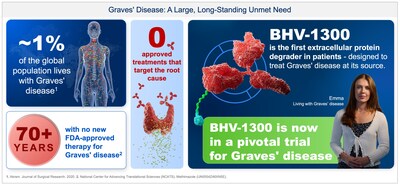
Figure 1: Graves' disease represents a large, long-standing unmet need — affecting approximately
Tova Gardin, MD, MPP, Chief Translational Officer of Biohaven, commented, "Enrollment of the first patient in our pivotal Graves' disease trial is a landmark moment for patients and for the future treatment of Graves' disease. With a precision therapeutic designed to be self-administered at home in a patient-friendly autoinjector, BHV-1300 integrates groundbreaking high-science with life-centric solutions."
Every generation of science is defined by breakthroughs that change how physicians think about treating disease. Biohaven believes that MoDE and TRAP extracellular protein degraders have the potential to be one of those breakthroughs, opening the door to a new class of medicines designed to treat disease precisely at its core and offering new possibilities and renewed hope to patients who have long awaited options that address the root of their condition, rather than their symptoms alone.
Dr. Gardin added, "We look forward to investigating BHV-1300 for the treatment of Graves' disease and follow-on IgG-mediated indications. This is more than a single trial or a single molecule; it potentially represents a new paradigm of precision immunology, one in which we move beyond managing disease toward precisely eliminating the proteins that drive it, unlocking this potentially groundbreaking platform."
Nearly 200 individuals have been dosed with MoDE and TRAP extracellular protein degraders in Phase 1 testing with favorable tolerability to date - most adverse events were mild and self-resolving. In the Graves' Phase 1 expansion, BHV-1300 produced deep, rapid reductions in TSHR-IgG1 (TRAb) and normalized thyroid hormones, directly linking target engagement to clinical response (see Figure 2).
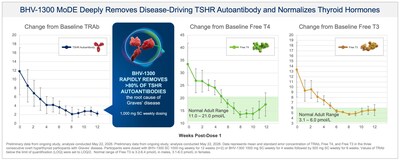
Figure 2: In a Phase 1 patient expansion study, BHV-1300 (1,000 mg SC weekly) rapidly removed more than
The pivotal trial (NCT07661056) is a randomized, double-blind, placebo-controlled study evaluating BHV-1300 in approximately 300 adults with Graves' disease. The trial's primary objective is to assess restoration of normal thyroid function at 26 weeks in the absence of an antithyroid drug. BHV-1300 is administered subcutaneously using a patient-friendly autoinjector designed for self-administration at home. Additional information is available at www.clinicaltrials.gov.
About Graves' Disease
Graves' disease is the most common cause of hyperthyroidism, driven by autoantibodies stimulating the TSH receptor. A relapsing and remitting condition, Graves' disease affects
The TSHR-IgG1 autoantibody drives not only hyperthyroidism but also thyroid eye disease, neonatal Graves' disease, and pretibial myxedema. None of today's treatments - antithyroid drugs, radioactive iodine, or thyroidectomy - target this root cause. Among patients on antithyroid drugs,
About BHV-1300
BHV-1300, the first MoDE, is a small-molecule extracellular IgG1,2,4 degrader that leverages the body's natural hepatic clearance pathways to selectively eliminate disease-driving IgG subclasses. Critically differentiated from FcRn inhibitors: BHV-1300 spares IgG3 (which protects against bacteria, viruses, and parasites), does not accelerate clearance of co-administered biologic therapies, and avoids the class effects of cholesterol elevation, albumin reduction, and headache. Delivered via self-administered autoinjector, BHV-1300 degrades the TSHR-IgG1 autoantibody that drives Graves' disease at its source (see Figure 3).
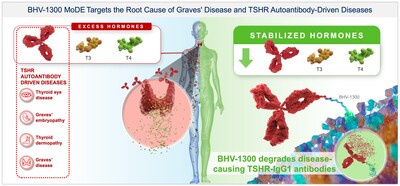
Figure 3: BHV-1300 degrades the disease-causing TSHR-IgG1 autoantibody that drives Graves' disease, stabilizing thyroid hormone levels and targeting the root cause of Graves' disease and associated TSHR autoantibody-driven conditions, including thyroid eye disease, thyroid dermopathy, and Graves' embryopathy.
About Biohaven's Extracellular Degrader Platform
Biohaven's MoDE and TRAP platforms represent a new class of medicines that selectively remove disease-driving extracellular proteins (such as antibodies) by directing them to the body's natural clearance pathways. Designed to target the cause of disease while preserving healthy immunity, the platform has been evaluated across nearly 200 individuals dosed to date and has demonstrated the potential to deeply, rapidly, and selectively lower the pathogenic antibodies that drive autoimmune disease. BHV-1300 is the lead MoDE degrader advancing in Graves' disease.
About Biohaven
Biohaven is a biopharmaceutical company focused on the discovery, development, and commercialization of life-changing treatments in key therapeutic areas, including immunology, neuroscience, and oncology. The Company is advancing its innovative portfolio of therapeutics, leveraging its proven drug development experience and multiple proprietary drug development platforms. Biohaven's extensive clinical and preclinical programs include Kv7 ion channel modulation for epilepsy; MoDE and TRAP extracellular protein degradation for immunological diseases; and myostatin inhibition for neuromuscular and metabolic diseases, including obesity. For more information, visit www.biohaven.com.
Forward-Looking Statements
This news release includes forward-looking statements within the meaning of the Private Securities Litigation Reform Act of 1995. The use of certain words, including "continue", "plan", "will", "believe", "may", "expect", "potentially", "potentially groundbreaking" and similar expressions, is intended to identify forward-looking statements. Investors are cautioned that any forward-looking statements, including statements regarding the future development, timing and potential marketing approval and commercialization of development candidates, are not guarantees of future performance or results and involve substantial risks and uncertainties. Actual results, developments and events may differ materially from those in the forward-looking statements as a result of various factors including: the expected timing, commencement and outcomes of Biohaven's planned and ongoing clinical trials, including the pivotal study of BHV-1300; the timing of planned interactions and filings with the FDA; the timing and outcome of expected regulatory filings; complying with applicable US regulatory requirements; the potential commercialization of Biohaven's product candidates; and the effectiveness and safety of Biohaven's product candidates. Additional important factors to be considered in connection with forward-looking statements are described in Biohaven's filings with the Securities and Exchange Commission, including within the sections titled "Risk Factors" and "Management's Discussion and Analysis of Financial Condition and Results of Operations". The forward-looking statements are made as of the date of this news release, and Biohaven does not undertake any obligation to update any forward-looking statements, whether as a result of new information, future events or otherwise, except as required by law.
MoDE and TRAP are trademarks of Biohaven Therapeutics Ltd.
Investor Contact:
Jennifer Porcelli
Vice President, Investor Relations
jennifer.porcelli@biohavenpharma.com
+1 (201) 248-0741
Media Contact:
Mike Beyer
Sam Brown Inc.
mikebeyer@sambrown.com
+1 (312) 961-2502

 View original content to download multimedia:https://www.prnewswire.com/news-releases/biohaven-advances-a-new-class-of-precision-immunology-therapies-first-mode-extracellular-protein-degrader-bhv-1300-begins-phase-3-pivotal-trial-in-graves-disease-302812720.html
SOURCE Biohaven Ltd.
FAQ
AI-generated questions and answers. How Rhea-AI works. Not financial advice.