A 510(k) clearance is a U.S. regulatory approval that lets a medical device be sold because it is shown to be substantially similar to an already-legal device; think of it as a passport saying the new product is close enough to a known item to enter the market without a full, lengthy review. For investors, 510(k) clearance signals faster, lower-cost market access and reduced regulatory risk compared with new, untested device pathways, which can materially affect timelines, costs and revenue prospects.
vitrectomymedical
Vitrectomy is a surgical procedure that removes the eye’s clear, gel-like substance (the vitreous) to treat problems such as bleeding, retinal tears, or detached tissue. Think of it like removing and replacing a cloudy windowpane or the fluid inside a camera to restore a clear picture. Investors care because the procedure drives demand for surgical instruments, implants, drugs and hospital services and its prevalence, cost and reimbursement shape revenue and regulatory risk for medical device and healthcare companies.
intraocular pressure (IOP)medical
Intraocular pressure (IOP) is the fluid pressure inside the eye, like the air pressure inside a tire that keeps the eye’s shape and function stable. IOP matters to investors because persistently high pressure is the main risk factor for glaucoma and other vision problems, so IOP readings drive demand for medicines, devices and clinical trials, influence regulatory decisions, and can materially affect a healthcare company’s revenue outlook.
IOPmedical
Intraocular pressure (IOP) is the fluid pressure inside the eye, like the air pressure in a tire that keeps the eye’s shape. For investors, IOP is a key clinical measurement for eye drugs and devices—changes in IOP show whether a treatment for conditions such as glaucoma is working or causing harm, and study results based on IOP can strongly influence regulatory approval, market potential, and a company’s valuation.
anterior vitrectomymedical
Anterior vitrectomy is a surgical procedure that removes some of the clear, jelly-like material from the front part of the eye when it has moved forward or been disturbed during eye surgery. Think of it as clearing a spill so the rest of a repair can proceed safely; it matters to investors because the need for the procedure affects demand for specialized surgical tools, disposable supplies, training, reimbursement levels, and the perceived safety and marketability of related ophthalmic products.
bench testingtechnical
Bench testing is laboratory-based evaluation of a product, part or prototype carried out on a workbench or test rig to measure performance, durability and safety before it is used in the real world. For investors, bench tests reveal whether a technology works as claimed, expose early design problems and reduce the risk of costly recalls or regulatory delays — like running a car engine on a stand before putting it into a vehicle.
restricted share unitsfinancial
Restricted share units (RSUs) are a promise from a company to give an employee or service provider actual shares or cash equal to the shares after certain conditions are met, typically staying with the company for a set time or hitting performance targets. Think of them like a time-locked gift card that becomes usable only after you’ve earned it. For investors, RSUs matter because they align employee incentives with company performance and can increase the number of shares outstanding over time, diluting existing ownership and affecting earnings per share.
See more from StockTitan in Google Search and AI answers.Adds StockTitan as a preferred source · opens Google
Increased cutting speed of 25,000 cuts per minute1 is designed to minimize retinal traction,2 increase vitreous flow,1 and reduce infusion pressure fluctuations when used with Adaptive Fluidics.3*
Bi-Blade+ provides an average flow rate increase of 25%, enabling more efficient vitreous removal compared to Bi-Blade®.1*†
The resulting stability, efficiency and control help boost confidence for retina surgeons to deliver exceptional patient outcomes.
VAUGHAN, Ontario--(BUSINESS WIRE)--
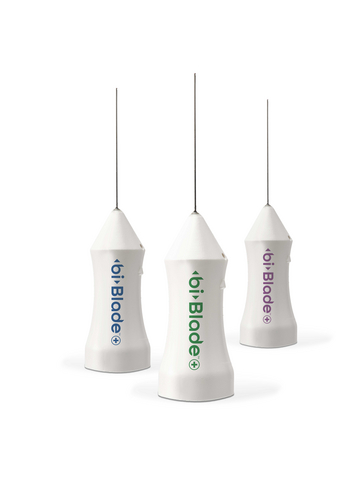
Bausch + Lomb Corporation (NYSE/TSX: BLCO), a leading global eye health company dedicated to helping people see better to live better, today announced that the U.S. Food and Drug Administration has granted 510(k) clearance for the Bi-Blade+ advanced dual-port vitrectomy cutter and the Adaptive Fluidics advanced update on the Stellaris Elite® Vision Enhancement System.
“Retinal surgeons who are familiar with our Bi-Blade technology understand the benefits of its dual-port design, 100% open duty cycle and cutting speed of 15,000 cuts per minute,” said Wayne Caulder, vice president and general manager, North America Surgical, Bausch + Lomb. “Bi-Blade+ offers these features along with an increased cutting speed of 25,000 cuts per minute. When combined with Adaptive Fluidics, surgeons will experience stability, efficiency and control that will help streamline procedures and deliver exceptional patient outcomes.”
Bi-Blade+ provides an increased flow rate of 25%, enabling more efficient vitreous removal compared to Bi-Blade.1* At maximum speed, Bi-Blade+ also demonstrates a 62% reduction in cutter vibration compared to Bi-Blade, offering the surgeon optimized feel and comfort toward a stable surgical experience.4
The Adaptive Fluidics update automates fluid infusion to the eye in response to real-time vacuum commands from the surgeon, delivering precise and responsive fluidics infusion at every step of a vitrectomy procedure.
These two technologies combine to support and maintain IOP stability and control. When combined with Adaptive Fluidics, Bi-Blade+ demonstrated a 62% reduction in average infusion pressure compared to surgeries in which Adaptive Fluidics was not used.3 Continuous aspiration also provides consistent intraocular pressure (IOP) stability.3** In one study, use of Bi-Blade+ with Adaptive Fluidics resulted in a significant improvement in chamber IOP at a range closer to physiologic IOP (10 – 20 mmHg) even during high vacuum levels.3***
“Bi-Blade has been an essential tool for me in a variety of surgeries, including core vitrectomies, vitreous shaving near mobile retina, removal of intraocular tissues and dissections,” said Professor Marco Mura, MD, University of Ferrara, Ferrara, Italy. “The increased cut speed that Bi-Blade+ offers paired with the additional control of Adaptive Fluidics promises to further promote stability and efficiency during surgery.”
*Based on bench and animal testing.
** Based on bench testing.
***Based on bench testing comparing original Bi-Blade to single-port cutter.
†Bi-Blade® is a trademark of Medical Instrument Development Laboratories, Inc. and is used by Bausch + Lomb under license.
Bi-Blade™+ Indications and Important Safety Information
Indications and Intended Use: The Bausch + Lomb vitrectomy cutter pouches are intended to cut and remove vitreous from the eye. They are indicated for any ocular condition requiring anterior vitrectomy during anterior segment surgery and for any vitreoretinal condition requiring vitrectomy during posterior or combined surgery.
Compatible Equipment: Stellaris Elite Bi-Blade+ accessories are only intended to operate with Bausch + Lomb Stellaris Elite vision enhancement systems with Bi-Blade+ procedure pack compatibility.
Known residual risks and complications include but are not limited to: infection; inflammation; ocular damage; trauma; cataract formation (not applicable in cataract removal procedures); foreign body/particulates in eye; intraocular pressure (IOP) variance that may cause damage to patient’s eye; visual impairment; ischemia; allergic reaction; edema.
ATTENTION: See the Instructions for Use for detailed directions, proper use, and full risk and safety information.
CAUTION: Federal (U.S.) Law restricts this device to sale, by or on the order of a physician.
About Bausch + Lomb
Our mission is simple – we help people see better to live better, all over the world. For nearly two centuries we’ve evolved with the changing needs of patients and customers, and our commitment to innovation and improving the standard of care in eye health has never been stronger. From contact lenses to prescription products, over-the-counter options, surgical devices and more, we’re turning bold ideas into better outcomes through passion, perseverance and purpose. Learn more at www.bausch.com and connect with us on Facebook, Instagram, LinkedIn, X and YouTube.
Forward-looking Statements
This news release may contain forward-looking information and statements within the meaning of applicable securities laws (collectively, “forward-looking statements”). Forward-looking statements may generally be identified by the use of the words “anticipates,” “seeks,” “expects,” “plans,” “should,” “could,” “would,” “may,” “will,” “believes,” “potential,” “pending” or “proposed” and variations or similar expressions. These statements are based upon the current expectations and beliefs of management and are subject to certain risks and uncertainties that could cause actual results to differ materially from those described in the forward-looking statements. These risks and uncertainties include, but are not limited to, the risks and uncertainties discussed in Bausch + Lomb’s filings with the U.S. Securities and Exchange Commission and the Canadian Securities Administrators, which factors are incorporated herein by reference. Readers are cautioned not to place undue reliance on any of these forward-looking statements. These forward-looking statements speak only as of the date hereof. Bausch + Lomb undertakes no obligation to update any of these forward-looking statements to reflect events or circumstances after the date of this news release or to reflect actual outcomes, unless required by law.
References
1.
Heuer R, Papour A, Higgins G. Vitrectomy flow performance and optimized system settings for retina shaving with 25g, 25,000cpm dual-action vitrectomy probes. Poster presented at: ARVO conference; May 2025; Salt Lake City, UT.
2.
Higgins G, Papour A. Comparison of traction, sphere of influence, and pulsatile flow in-vitro vitrectomy using 25 ga 25,000 CPM dual action vitrectomy probes and 25ga 7,500 CPM single action vitrectomy probes. Poster presented at: ARVO conference; May 2025; Salt Lake City, UT.
3.
Papour A, Hosten L. Intraocular pressure (IOP) optimized performance settings with posterior adaptive fluidics (PAF), and 25 gauge 25,000 cpm dual-action vitrectomy cutters. Invest Ophthalmol Vis Sci. 2024;65(7). Association for Research in Vision and Ophthalmology 2024 abstract 914.