
STOCK TITAN

HI-PEITHO trial demonstrates Boston Scientific EKOS™ Endovascular System is superior to standard of care for treatment of acute pulmonary embolism

(Moderate)
(Neutral)
Tags

Boston Scientific (NYSE: BSX) reported that the randomized HI-PEITHO trial met its primary endpoint: EKOS plus anticoagulation was superior to anticoagulation alone for intermediate-risk pulmonary embolism (4.0% vs. 10.3%; P=0.005), a 61% relative reduction in events.

Trial enrolled 544 patients across 59 U.S. and European sites; no intracranial bleeding through 30 days; patients will be followed to one year.

Loading...
Loading translation...

Positive

  • Primary endpoint events reduced by 61% (4.0% vs 10.3%; P=0.005)
  • Lower rate of cardiorespiratory decompensation: 3.7% vs 10.3%
  • No intracranial bleeding reported through 30 days
  • 544 patients enrolled across 59 sites, supporting randomized evidence

Negative

  • Primary composite endpoint measured within 7 days; longer-term clinical impact pending
  • Moderate trial size (544 patients) may limit precision for some subgroups

Market Context

This announcement highlights robust HI‑PEITHO data showing the EKOS system plus anticoagulation outp...
Analysis

This announcement highlights robust HI‑PEITHO data showing the EKOS system plus anticoagulation outperformed anticoagulation alone in intermediate‑risk pulmonary embolism, with primary endpoint events of 4.0% versus 10.3% and no intracranial bleeding through 30 days. In context of recent legal actions, governance updates, and the planned Penumbra acquisition, investors may watch for longer‑term outcomes from the trial’s one‑year follow‑up and how these results influence physician adoption and future clinical or regulatory milestones.

Key Figures

Primary endpoint events: 4.0% vs. 10.3% Event reduction: 61% reduction P-value: P=0.005 +5 more
8 metrics
Primary endpoint events 4.0% vs. 10.3% Composite primary endpoint within seven days, EKOS plus anticoagulation vs anticoagulation alone
Event reduction 61% reduction Reduction in primary endpoint events with EKOS plus anticoagulation vs anticoagulation alone
P-value P=0.005 Superiority of EKOS plus anticoagulation on primary endpoint
Trial enrollment 544 patients Intermediate-risk pulmonary embolism patients enrolled in HI-PEITHO trial
Trial sites 59 sites United States and Europe centers participating in HI-PEITHO trial
Primary endpoint window 7 days Timeframe for composite primary endpoint events after treatment
Intracranial bleeding 0 events in 30 days No episodes of bleeding within the brain through 30 days
Follow-up duration 1 year Patients to be followed to one year post procedure

Historical Context

5 past events · Latest: Mar 12 (Negative)
Pattern 5 events
Date Event Sentiment 24h Move Catalyst
Mar 12 Litigation update Negative -1.6% Lawsuit alleging executives misrepresented U.S. electrophysiology volumes.
Mar 06 Investor event Positive -2.3% Announcement of investor event to discuss key ACC clinical data.
Feb 25 M&A and earnings Positive -2.2% Strong Penumbra revenue growth alongside planned acquisition by Boston Scientific.
Feb 23 Board changes Neutral -0.3% Election of two new directors and planned retirement of two incumbents.
Feb 13 Conference participation Neutral +0.8% Participation in TD Cowen health care conference with leadership Q&A session.

24h Move is the share-price change in the day after each event; other market factors may also have contributed.

Pattern Detected

Recent BSX news, including legal and strategic updates, has often coincided with modest negative price reactions, even when headlines appeared neutral or constructive.

Recent Company History

Over the last several weeks, Boston Scientific news has spanned legal, strategic, and governance themes. A lawsuit on Mar 12, 2026 and an ACC-related investor event on Mar 6, 2026 both saw shares decline. Earlier, the planned Penumbra acquisition highlighted portfolio expansion but was followed by a -2.22% move. Board refresh and conference participation in February drew only mild price changes, suggesting investors react cautiously even to potentially positive developments.

Key Terms

pulmonary embolism, anticoagulation, ultrasound-facilitated catheter-directed thrombolysis, thrombolysis, +4 more
8 terms
pulmonary embolism medical
"pulmonary embolism (PE). The study met the composite primary endpoint"
A pulmonary embolism is a sudden blockage in a lung blood vessel, usually caused by a blood clot that traveled from elsewhere in the body; think of it like a kink in a hose that prevents water from reaching its destination. It matters to investors because it can create urgent medical costs, affect workforce availability, trigger safety concerns in clinical trials or products, and prompt regulatory scrutiny or liability claims that may influence a company’s finances and stock price.
anticoagulation medical
"EKOS system plus anticoagulation was superior to the current standard of care – anticoagulation alone"
Anticoagulation is the use of medicines or treatments that reduce the blood’s ability to form clots, like adding a slow-down to a plumbing system so debris doesn’t block the pipes. For investors, it matters because anticoagulant drugs and devices are large, regulated markets with trade-offs between preventing dangerous clots and causing bleeding complications, so safety, approval status, and prescription trends can materially affect sales, liabilities, and valuation.
ultrasound-facilitated catheter-directed thrombolysis medical
"impact of intervention via ultrasound-facilitated catheter-directed thrombolysis with the EKOS system"
A minimally invasive medical procedure that breaks up dangerous blood clots by threading a thin tube (catheter) to the clot, delivering a clot‑dissolving drug locally, and using low‑power ultrasound waves to help the drug penetrate and act faster. Investors should care because it involves specialized devices and hospital procedures whose safety, effectiveness, reimbursement and adoption rates directly affect sales, regulatory risk and long‑term revenue potential for makers of the technology.
thrombolysis medical
"ultrasound-facilitated catheter-directed thrombolysis with the EKOS system"
Thrombolysis is a medical treatment that dissolves dangerous blood clots blocking arteries or veins, using drugs or catheter-delivered devices — think of it as unclogging a blocked pipe in the body to restore blood flow. Investors watch thrombolysis because new drugs, devices or guideline changes can shift patient care, regulatory approval, reimbursement and hospital use, which affects sales, valuations and the competitive landscape of health-care and biotech firms.
hemodynamic medical
"non-fatal hemodynamic cardiorespiratory decompensation or collapse and non-fatal symptomatic recurrence"
Relating to blood flow and the forces that move it through the body, hemodynamic describes how blood pressure, volume and circulation behave in vessels and organs. Investors pay attention because changes in hemodynamics are key measures of whether a drug, device or procedure is safe and effective—think of it like plumbing and traffic: blockages or pressure spikes can signal big risks or benefits that affect a product’s regulatory approval, market adoption and reimbursement.
cardiorespiratory decompensation medical
"lower rate of cardiorespiratory decompensation or collapse (3.7% vs. 10.3%)"
Cardiorespiratory decompensation is a sudden or worsening failure of the heart and lungs to supply enough oxygen and blood to the body, often requiring urgent medical intervention such as breathing support or medications. For investors, it matters because it can drive higher hospital stays, affect outcomes in clinical trials, influence drug or device safety profiles, and change regulatory or reimbursement decisions — similar to an engine and fuel pump failing together and halting a machine.
randomized, controlled technical
"The randomized, controlled HI-PEITHO trial enrolled 544 patients"
A randomized, controlled study is a type of clinical test where participants are assigned by chance to different groups—one gets the treatment and another (the control) gets a placebo or standard care—so results can be compared fairly. Like flipping a coin to avoid favoritism, this design reduces bias and gives investors more trustworthy evidence about whether a medicine or intervention actually works and is safe, which influences regulatory approval, market potential, and company value.
endovascular medical
"HI-PEITHO trial demonstrates Boston Scientific EKOS™ Endovascular System"
Endovascular describes medical procedures performed inside blood vessels using thin tubes, wires, and implantable devices guided by imaging—like repairing a broken pipe from the inside rather than opening the wall. It matters to investors because these less-invasive techniques can shorten hospital stays, lower complication rates and create demand for specialized devices and imaging equipment, so changes in adoption, regulation or reimbursement can materially affect healthcare company revenues and margins.

AI-generated analysis. How Rhea-AI works. Not financial advice.

See more from StockTitan in Google Search and AI answers. Adds StockTitan as a preferred source · opens Google
Add on Google

Global randomized trial demonstrated statistically significant reduction in clinical event rates in patients with intermediate-risk PE when treated with the EKOS device plus anticoagulation vs. anticoagulation alone

Late breaking findings presented at ACC.26 and simultaneously published in The New England Journal of Medicine
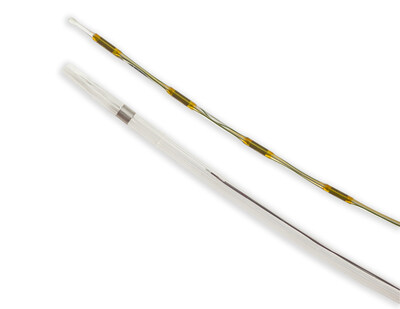
MARLBOROUGH, Mass. and NEW ORLEANS, March 28, 2026 /PRNewswire/ -- Boston Scientific Corporation (NYSE: BSX) today announced positive data from the HI-PEITHO global randomized clinical trial evaluating the use of the EKOS™ Endovascular System in patients with intermediate-risk pulmonary embolism (PE). The study met the composite primary endpoint, with data demonstrating that the EKOS system plus anticoagulation was superior to the current standard of care – anticoagulation alone – for the treatment of acute PE. Findings from the trial were presented in a late-breaking science session at the American College of Cardiology's Annual Scientific Session & Expo and simultaneously published in The New England Journal of Medicine.

PE is a blood clot that causes a blockage in one or more pulmonary arteries that bring blood to the lungs, and is the third leading cause of cardiovascular mortality.1 Current medical guidelines for treating PE recommend medical management with anticoagulation as the standard of care for patients at all risk levels. A minimally invasive intervention, the EKOS system delivers a low dose of clot-dissolving medication directly to the blood clot and uses ultrasound energy to facilitate the dispersion of the medication deep into the clot to dissolve it.

"The data presented today offer clinicians a greater understanding of the impact of intervention via ultrasound-facilitated catheter-directed thrombolysis with the EKOS system," said Dr. Stavros Konstantinides, MD, PhD, FESC, principal investigator of the HI-PEITHO trial and medical director, Center for Thrombosis and Hemostasis, University Medical Center Mainz, Germany.* "These highly anticipated findings underscore the clinical efficacy for patients treated with this therapy, while also demonstrating that treatment was not accompanied by an increased risk of major bleeding and offered the added benefit of a shorter hospital stay compared to patients treated with anticoagulation alone."

The trial met the combined primary endpoint of PE-related mortality, non-fatal hemodynamic cardiorespiratory decompensation or collapse and non-fatal symptomatic recurrence of PE within seven days. The EKOS system plus anticoagulation demonstrated superiority to anticoagulation alone (4.0% vs. 10.3%; P=0.005), representing a 61% reduction in primary endpoint events. Data from patients treated with the EKOS system also demonstrated a lower rate of cardiorespiratory decompensation or collapse (3.7% vs. 10.3%), in which inability of the heart to maintain adequate blood flow can lead to serious complications, often requiring emergency intervention. These results were achieved with no episodes of bleeding within the brain through 30 days.

"The HI-PEITHO trial evaluated clear, clinically meaningful endpoints using rigorous patient enrollment criteria and demonstrated a definitive impact with the EKOS system over the standard of care for treating acute PE," said Dr. Michael R. Jaff, vice president and chief medical officer, Vascular Therapies, Boston Scientific. "For the first time, we have robust randomized clinical trial data available to inform treatment decisions by interventionalists and referring physicians and support consideration of EKOS plus anticoagulation as a first-line therapy."

The randomized, controlled HI-PEITHO trial enrolled 544 patients with intermediate-risk PE across 59 sites in the United States and Europe. The trial is a joint research study led by Boston Scientific in partnership with The PERT Consortium® and the University Medical Center of Mainz and in collaboration with the PEITHO International Study Network. Patients will be followed to one year post procedure.

For more information on the HI-PEITHO trial, visit https://www.bostonscientific.com/hi-peitho.

About Boston Scientific
Boston Scientific transforms lives through innovative medical technologies that improve the health of patients around the world. As a global medical technology leader for more than 45 years, we advance science for life by providing a broad range of high-performance solutions that address unmet patient needs and reduce the cost of healthcare. Our portfolio of devices and therapies helps physicians diagnose and treat complex cardiovascular, respiratory, digestive, oncological, neurological and urological diseases and conditions. Learn more at www.bostonscientific.com and follow us on LinkedIn.  

Cautionary Statement Regarding Forward-Looking Statements

This press release contains forward-looking statements within the meaning of Section 27A of the Securities Act of 1933 and Section 21E of the Securities Exchange Act of 1934.  Forward-looking statements may be identified by words like "anticipate," "expect," "project," "believe," "plan," "estimate," "intend" and similar words. These forward-looking statements are based on our beliefs, assumptions and estimates using information available to us at the time and are not intended to be guarantees of future events or performance. These forward-looking statements include, among other things, statements regarding our business plans, product performance and impact, and clinical trials. If our underlying assumptions turn out to be incorrect, or if certain risks or uncertainties materialize, actual results could vary materially from the expectations and projections expressed or implied by our forward-looking statements. These factors, in some cases, have affected and in the future (together with other factors) could affect our ability to implement our business strategy and may cause actual results to differ materially from those contemplated by the statements expressed in this press release. As a result, readers are cautioned not to place undue reliance on any of our forward-looking statements. 

Factors that may cause such differences include, among other things: economic conditions, including the impact of foreign currency fluctuations; future U.S. and global political, competitive, reimbursement and regulatory conditions, including changing trade and tariff policies; geopolitical events, conflicts and tensions; manufacturing, distribution and supply chain disruptions and cost increases; disruptions caused by cybersecurity events; disruptions caused by public health emergencies or extreme weather or other climate change-related events; labor shortages and increases in labor costs; variations in outcomes of ongoing and future clinical trials and market studies; new product introductions; expected procedural volumes; the closing and integration of acquisitions; demographic trends; intellectual property; litigation; financial market conditions; the execution and effect of our business strategy, including our cost-savings and growth initiatives; and future business decisions made by us and our competitors. All of these factors are difficult or impossible to predict accurately and many of them are beyond our control. For a further list and description of these and other important risks and uncertainties that may affect our future operations, see Part I, Item 1A – Risk Factors in our most recent Annual Report on Form 10-K filed with the Securities and Exchange Commission, which we may update in Part II, Item 1A – Risk Factors in Quarterly Reports on Form 10-Q we have filed or will file hereafter.  We disclaim any intention or obligation to publicly update or revise any forward-looking statements to reflect any change in our expectations or in events, conditions or circumstances on which those expectations may be based, or that may affect the likelihood that actual results will differ from those contained in the forward-looking statements, except as required by law. This cautionary statement is applicable to all forward-looking statements contained in this document.

CONTACTS:
Blake Rouhani
Media Relations
+1 (763) 494-2268
Blake.rouhani@bsci.com

Lauren Tengler
Investor Relations
+1 (508) 683-4479
BSXInvestorRelations@bsci.com

* Dr. Stavros Konstantinides is a paid consultant of Boston Scientific Corporation. He has not been compensated in connection with this press release.

1 Wendelboe, A.M, et al. Global Burden of Thrombosis: Epidemiologic Aspects. Circulation Research.2016 Apr 29; 118(9): 1340-1347. doi: 10.1161/CIRCRESAHA.115.306841.
Cision View original content to download multimedia:https://www.prnewswire.com/news-releases/hi-peitho-trial-demonstrates-boston-scientific-ekos-endovascular-system-is-superior-to-standard-of-care-for-treatment-of-acute-pulmonary-embolism-302727904.html

SOURCE Boston Scientific Corporation

FAQ

What did the HI-PEITHO trial announce about EKOS and anticoagulation for intermediate-risk PE (BSX) on March 28, 2026?

The trial found EKOS plus anticoagulation superior to anticoagulation alone, reducing primary events to 4.0% versus 10.3%. According to Boston Scientific, this represents a 61% relative reduction with P=0.005 and no intracranial bleeding through 30 days.

How large was the HI-PEITHO trial that tested EKOS for pulmonary embolism (BSX)?

HI-PEITHO randomized 544 patients across 59 sites in the U.S. and Europe. According to Boston Scientific, the trial used rigorous enrollment criteria and randomized controlled design with one-year follow-up planned.

What was the HI-PEITHO trial's primary endpoint and result for EKOS (BSX)?

The primary composite endpoint combined PE-related death, non-fatal hemodynamic decompensation, or recurrent symptomatic PE within seven days. According to Boston Scientific, EKOS plus anticoagulation achieved 4.0% versus 10.3% for anticoagulation alone (P=0.005).

Did the HI-PEITHO trial report bleeding safety for EKOS treatment (BSX)?

The trial reported no episodes of intracranial bleeding through 30 days. According to Boston Scientific, the EKOS-treated group showed clinical benefit without increased major brain bleeding in the short term.

What clinical benefit beyond the primary endpoint did EKOS show in HI-PEITHO (BSX)?

EKOS-treated patients had a lower rate of cardiorespiratory decompensation or collapse (3.7% vs 10.3%). According to Boston Scientific, this suggests reduced need for emergency interventions in the early period.

Will HI-PEITHO provide longer-term results for EKOS and anticoagulation (BSX)?

Yes; patients are being followed to one year post-procedure. According to Boston Scientific, longer-term outcomes will be reported after ongoing follow-up to assess durability and safety beyond seven days and 30 days.
