Constellation to Acquire Rhode Island State Energy Center (RISEC) from Shell
Constellation to Acquire Rhode Island State Energy Center (RISEC) from Shell
Constellation plans a $715 million acquisition of a 609 MW New England gas plant, targeting immediate operating-earnings accretion and >10% unlevered returns.
Acquisition to expand Constellation’s ISO New England portfolio with 609 megawatts of flexible, dispatchable generation that supports regional grid reliability
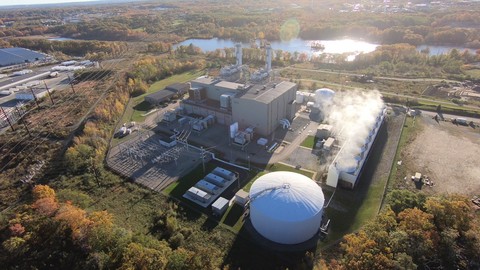
The Rhode Island State Energy Center in Johnston, R.I.
Located in Johnston, R.I., the Rhode Island State Energy Center is a combined-cycle electric generation facility, fueled by natural gas. The facility has two combustion turbines and one steam turbine and is capable of generating up to 609 megawatts of electricity. The facility sells electricity and capacity into the competitive ISO New England wholesale power market and is expected to become part of Constellation’s merchant generation portfolio.
“The Rhode Island State Energy Center is a high-performing asset that perfectly complements Constellation’s extraordinarily successful customer business in New England,” said Joe Dominguez, chairman, president and chief executive officer, Constellation. “As Constellation’s business in New England grows, we need a reliable asset that is well-positioned on both the electric grid and the natural gas pipeline system. RISEC checks all of these boxes and will be immediately accretive to Constellation’s business plan. We look forward to closing the transaction and to begin working with the fantastic team at RISEC to build on the plant's strong operating record as we power families and businesses across New England.”
RISEC has served the New England power grid since 2002. Its combined-cycle technology captures and reuses heat from the plant’s gas turbines to generate additional electricity, allowing it to operate more efficiently and with lower emissions than a traditional single-cycle natural gas plant.
The $715 million purchase price is equivalent to approximately $580 million net of expected first year tax benefits.The transaction is expected to be immediately accretive to Constellation’s operating earnings, deliver returns above the company’s 10% unlevered return threshold, and will not impact its ability to execute $5 billion of authorized share repurchases by the end of 2027.
The transaction is expected to close following receipt of customary regulatory approvals and satisfaction of other closing conditions. Until closing, RISEC will continue to operate under its current ownership.
Day Pitney LLP is serving as lead transaction counsel to Constellation.
About Constellation
Constellation Energy Corporation (Nasdaq: CEG), a Fortune 200 company headquartered in Baltimore, is the largest private-sector power producer in the world and the nation's largest producer of clean and reliable energy. With 55 gigawatts of capacity from nuclear, natural gas, oil, geothermal, hydro, wind and solar facilities, our fleet has the generating capacity to power the equivalent of 27 million homes, providing about 10% of the nation's clean energy and delivering the around-the-clock reliability needed to power America's growing economy. We are also the largest nuclear energy company in the U.S. and a leading competitive retail supplier, serving approximately 2.5 million customer accounts nationwide, including 80% of the Fortune 100. We are committed to investing in innovation and new technologies to drive the transition to a reliable, sustainable and secure energy future. Follow Constellation on LinkedIn and X.
A combined-cycle power plant uses two linked systems—typically a gas turbine and a steam turbine—so waste heat from the first is captured to run the second, boosting overall electricity output from the same fuel. For investors, that higher efficiency means lower fuel costs per megawatt, smaller emissions per unit of power and generally better operating margins, but it also involves larger upfront construction costs and technical complexity.
combustion turbinestechnical
A combustion turbine is a large rotating machine that burns fuel—typically natural gas, oil, or other hydrocarbons—to produce high‑pressure hot gases that spin a turbine shaft, which usually drives an electrical generator. Think of it like a jet engine on the ground connected to a power plant: it converts fuel into electricity quickly and is used for regular or peak power generation. Investors care because combustion turbines are major capital assets whose fuel costs, efficiency, maintenance needs and emissions profiles affect a power producer’s operating costs, revenue potential and regulatory exposure.
steam turbinetechnical
A steam turbine is a machine that uses high-pressure steam to spin blades on a shaft, converting heat from boiling water into rotating power to drive electrical generators or heavy machinery—like a windmill turned by steam instead of wind. Investors care because a turbine’s efficiency, reliability and upkeep affect how much energy a plant produces, the cost to operate, capital spending needs and emissions exposure, all of which influence profits and risk.
unlevered returnfinancial
Unlevered return is the rate of profit an investment would generate if it were bought entirely with cash and no borrowed money, showing the asset’s pure operating performance before interest and financing costs. It matters to investors because it lets you compare the underlying strength and risk of different investments on an even footing—like judging two cars’ fuel efficiency without considering different loan payments—so you can see whether using debt would likely help or hurt overall returns.