
CRRC Launches Two Innovative Green Intelligent Trains at InnoTrans 2024
CRRC unveiled two groundbreaking products at InnoTrans 2024 in Berlin: the CINOVA H2 New Energy Intelligent Intercity Train and the Autonomous Rail Rapid Transit (ART) 2.0.
Rhea-AI Summary
CRRC unveiled two groundbreaking products at InnoTrans 2024 in Berlin: the CINOVA H2 New Energy Intelligent Intercity Train and the Autonomous Rail Rapid Transit (ART) 2.0. The CINOVA H2 is a zero-carbon hydrogen-powered train with a top speed of 200 km/h, carrying over 1,000 passengers in a four-car formation. It boasts a 1,200 km range at 160 km/h and can reduce annual CO2 emissions by 730 tons. The ART 2.0 features rubber wheels and virtual tracks, eliminating the need for physical tracks and catenary. It offers versatile power options and fully autonomous driving capabilities. CRRC has already deployed nine ART lines in China, serving over 35 million passengers and reducing carbon emissions by 24,500 tons. The company aims to promote sustainable and intelligent rail transit solutions globally.
Positive
- CINOVA H2 train offers zero-carbon emissions and a 1,200 km range at 160 km/h
- CINOVA H2 can reduce annual CO2 emissions by 730 tons per train
- ART 2.0 eliminates need for physical tracks, reducing construction and maintenance costs
- ART systems have been successfully deployed in China, UAE, and Malaysia
- CRRC's ART lines have served over 35 million passengers and reduced carbon emissions by 24,500 tons
Negative
- None.
Details
News Market Reaction – CRCCY
In the trading session that priced this news, CRCCY gained 100.25%, reflecting a significant positive market reaction.
Data tracked by StockTitan Argus on the day of publication.
AI-generated analysis. How Rhea-AI works. Not financial advice.




Revolutionizing Rail Transit with Zero-Emission, Ultra-Long Range, and Autonomous Driving Solutions
BERLIN, Sept. 24, 2024 /PRNewswire/ -- CRRC Corporation Limited ("CRRC", SHA: 601766) unveiled two groundbreaking products at InnoTrans 2024 in Berlin, Germany: the CINOVA H2 New Energy Intelligent Intercity Train ("CINOVA H2") and the Autonomous Rail Rapid Transit (ART) 2.0, showcasing its commitment to pioneering eco-friendly and smart transportation solutions.
CINOVA H2 New Energy Intelligent Intercity Train: A Marathoner in Zero-Carbon Mobility
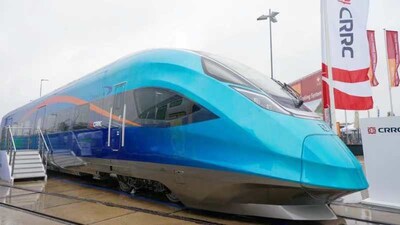
CINOVA H₂, the latest green zero-carbon passenger intercity train from CRRC, boasts world-class technical specifications in terms of speed, passenger capacity, and range. Technical expert Liang Caiguo from CRRC explains that the train is powered by hydrogen, which generates electricity through a chemical reaction with oxygen, producing only water as a byproduct, ensuring zero carbon emissions throughout operation. With an estimated annual operation of 300,000 kilometers, each train can cut down carbon dioxide emissions by about 730 tons annually.
"Its design emphasizes a green and sustainable approach," said Liang Caiguo. "The water emitted from the hydrogen fuel cell reaction is purified and recycled to meet passenger water needs. Additionally, the waste heat from cooling the hydrogen fuel cell is repurposed for heating the air conditioning system during winter."
CINOVA H₂ can reach a top speed of 200 kilometers per hour, with a four-car formation carrying over 1,000 passengers. It has a continuous running range of 1,200 kilometers at 160 km/h, exceeding the distance from Berlin to London, consuming less than 0.3 grams of hydrogen per passenger per kilometer.
Utilizing the CRRC's SmartCare intelligent operation and maintenance (O&M) system, CINOVA H₂ integrates the data from vehicle and ground, offering users comprehensive lifecycle intelligent operation & maintenance services that enhance operational safety and reduce maintenance costs. The hydrogen system has undergone rigorous safety verification under all scenarios and conditions, featuring multiple safety protection systems, such as intelligent detection and isolation protection to ensure safety.
CINOVA H₂ is versatile and can be used on non-electrified railways worldwide, replacing traditional internal combustion engine powered vehicle, effectively reducing carbon dioxide and air pollutant emissions, and promoting green upgrades in the railway industry.
ART 2.0: Harmonious Fusion of Eco-Innovation and Oriental Elegance
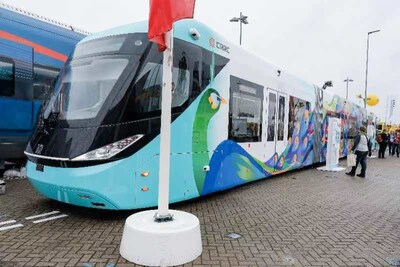
The ART 2.0, presented in a "Green Peacock" livery, features vibrant emerald and golden motifs, symbolizing prosperity and hope. " It combines green technology with oriental aesthetics, providing both a stunning visual experience and top-tier performance," noted Dr. Xiao Lei, an engineer from CRRC. Designed for medium-to-low passenger volumes, the ART blends the benefits of trams and road-based vehicles, adapting to the needs of urban transportation.
The ART employs rubber wheels and virtual tracks, eliminating the need for tracks and catenary, with the groundbreaking design that drastically slashes track construction and maintenance costs.
The ART employs rubber wheels and virtual tracks, eliminating the need for tracks and catenary with the groundbreaking design that drastically slashes track construction and maintenance costs.
"The ART 2.0 embraces versatility in power sources, accommodating fast-charging lithium batteries, supercapacitors, hydrogen energy, and overhead catenary systems, tailored to diverse operational needs," emphasized Dr. Xiao Lei. The hydrogen-fueled ART 2.0 boasts a maximum driving range of 500 kilometers. Its rapid charging capability is also impressive, adding 20 kilometers of range in just 5 minutes."
ART 2.0 showcases unparalleled intelligence and safety, pioneering fully autonomous driving capabilities. Its core system reaches the highest functional safety level, SIL4, assuring passengers of a safe and reliable journey.
Data from CRRC reveals that China has built nine ART lines, collectively traversing over 15 million kilometers, accommodating more than 35 million passengers, and slashing carbon emissions by over 24,500 tons. Furthermore, ART systems have been deployed in the United Arab Emirates and Malaysia.
"We are committed to empowering the world with a myriad of rail transit system solutions, driven by sustainable technological innovation," remarked Ma Yunshuang, President of CRRC Corporation. "Our vision is to foster a global ecosystem where CRRC solutions are universally embraced."
Looking ahead, CRRC is committed to advancing global sustainable development by driving the digital, intelligent, and environmentally responsible transformation of rail transit equipment. The company aims to deliver more intelligent, convenient and comfortable transportation options, enhancing the travel experience for passengers worldwide.
FAQ
AI-generated questions and answers. How Rhea-AI works. Not financial advice.