
Critical Metals Corp (Nasdaq: CRML) Achieves Breakthrough Tanbreez Heavy Rare Earth Results: >99% Dissolution of Eudialyte Concentrate Into 19 Ultra-High-Purity Rare Earth Products; Refinery Study Projects US$1.8–2.2b in Annual Refinery Revenue
CRML details a high-value Romanian refinery concept for Tanbreez, projecting multi-billion-dollar revenue and strong returns from modeled mine-to-metals economics.
Rhea-AI Summary
Critical Metals Corp (CRML) outlined mine-to-metals plans for the Tanbreez rare earth project, including breakthrough test work achieving >99% dissolution of eudialyte concentrate into 19 ultra-high-purity rare earth products and a proposed Romanian joint venture refinery expected to receive 50% of concentrate output.
The planned CRML Romania refinery is being designed to process up to 100,000 tons per year of eudialyte concentrate and, based on current modelling, to produce about 27,943 tons per year of rare earth and critical metal products, plus 25,670 tons per year of high-purity SiO2. The silica by-product is modelled to generate roughly US$600 million in annual revenue and, together with reduced acid use, contribute US$400–600 million per year in combined value. Preliminary estimates indicate refinery CAPEX of about US$1.85 billion, projected annual revenue of about US$2.2 billion, an NPV10 of about US$4.5 billion, an IRR of about 55% and a payback period of roughly two years, all subject to further engineering, test work, permitting and final investment decisions.
Positive
- Projected annual refinery revenue of approximately US$2.2 billion before costs
- Preliminary CAPEX of about US$1.85 billion with modelled payback of ~2 years
- Modelled NPV10 of approximately US$4.5 billion and IRR of ~55%
- Silica by-product projected to generate about US$600 million annually
- Silica recovery and acid savings together modelled at US$400–600 million per year
- Refinery model uplifts concentrate value from about US$4,000 to up to ~US$24,000 per ton
Negative
- Refinery requires large upfront CAPEX of about US$1.85 billion
- Economic projections depend on commodity prices, recoveries and operating costs
- Project remains subject to permitting, further engineering, test work and final investment decisions
- Refinery design is expected to need up to 150 MW of energy input
News Explained
The release adds process and pricing assumptions to a proposed refinery; construction, funding and final investment remain unresolved.
Critical Metals has provided further design and economic details for a proposed Romanian refinery; the existing term sheet contemplates transferring 50% of concentrate production to the joint venture, but the project remains subject to development work, permitting and a final investment decision.
The newly described process targets recovery of
On the company’s per-ton-of-concentrate basis, the model assumes a transfer or sales value of about
The material resolution points are completion of feasibility studies, further metallurgical and engineering work, market conditions, permitting and a final investment decision.
Details
Market Reaction – CRML
Following this news, CRML has gained 4.25%, reflecting a moderate positive market reaction. Our momentum scanner has triggered 4 alerts so far, indicating moderate trading interest and price volatility. The stock is currently trading at $6.62.
Data tracked by StockTitan Argus (15 min delayed). Upgrade to Gold for real-time data.
Key Figures
- Refinery capacity
- 100,000 tons per year
- Proposed Romanian refinery eudialyte concentrate feed capacity
- Annual refinery output
- 27,943 tons per year
- Rare earth and critical metal products
- Annual refinery revenue
- US$2.2 billion
- Current modelling before operating costs, taxes and capital recovery
- Preliminary CAPEX
- US$1.85 billion (+/-25%)
- Class 4 estimate for the proposed refinery
- NPV10
- US$4.5 billion
- Current refinery modelling
- IRR
- 55%
- Current refinery modelling
- Silica by-product revenue
- US$600 million per year
- Projected annual revenue from high-purity SiO2 powder
- Dissolution
- >99%
- Eudialyte concentrate dissolution
Key Terms
eudialyte technical
capex financial
npv10 financial
irr financial
lyophilisation technical
ion-exchange technical
AI-generated analysis. How Rhea-AI works. Not financial advice.




The CRML Mines to Metals begins marking a significant move in the rare earth industry to full supply chain control
NEW YORK, Sept. 16, 2026 (GLOBE NEWSWIRE) -- Critical Metals Corp. (Nasdaq: CRML) (“Critical Metals” or the “Company”), a leading critical minerals mining company, today announced further details of its mine-to-metals strategy aimed at maximizing supply-chain security and the potential value derived from the Tanbreez Rare Earth Project in Greenland.
The proposed CRML Romanian joint venture refinery, which is expected to receive
- Multistage mixed-acid reactor additions designed to prevent silica gel formation, a challenge encountered in other eudialyte processing routes. (Patent pending)
- Complete silica recovery through off-gas recovery, designed to produce
99.99% SiO2 powder, reduce tailings to less than1.5% of feed material and recycle acid, potentially reducing fresh acid consumption by approximately85% while generating an additional high-value product stream; - Vacuum freeze-drying (lyophilisation) of all 19 chloride salts, designed to produce anhydrous, ultra-low-moisture powders that may command price premiums over conventionally dried material.
The proposed CRML Romania Process Refinery is being designed with capacity to process up to 100,000 tons per year of eudialyte concentrate feed and based on current modelling, produce approximately 27,943 tons per year of rare earth and critical metal products in the form of chloride salts and other ultra-pure products.
Projected by-products include 25,670 tons per year of high purity SiO2 powder.
Based on current modelling and assumed market pricing, projected annual revenue from the silica by-product could reach approximately US
The current preliminary CAPEX estimate is US
Current modelling projects annual revenue of approximately US
Current modelling indicates an NPV10 of approximately US
The silicate recovery system is projected to contribute approximately US
The proposed CRML Romania Process Refinery uses a multistage, mixed-acid leach process operating at elevated temperatures, followed by cascading recovery steps designed to produce high-purity rare earth salts, metals and critical metal salts for advanced industrial, aerospace, technology and defense applications.
A key feature of the proposed process is the recovery of materials that would traditionally report to tailings, including silica and potentially alumina, iron and copper. Current process modelling targets a tailings stream of approximately
The proposed process route then through a multistage ion-exchange system, with multiple recovery stages for individual elements, designed to achieve high-purity products in the 99.9
The proposed production route for high-purity hafnium products utilizes established processing technologies. Based on current modelling, CRML Romania could produce approximately 50-70 tons per annum of high-purity hafnium metal during its first five years, together with approximately 20-30 tons per annum of high-purity hafnium chloride. These projections remain subject to further engineering, metallurgical test work, market conditions, permitting and final investment decisions.
The proposed CRML Romania Process Refinery is currently estimated to require up to 150 MW of energy input from gas and/or electricity. Current design assumptions contemplate approximately 60
The proposed CRML Romania Process Refinery is being designed as a low-wastewater and low-tailings operation. Current modelling targets refinery tailings of approximately
Multiple acids and ammonia are expected be generated onsite, with certain high-purity feed materials to be sourced from suppliers in Europe or the United States. The proposed supply strategy is intended to support a secure Western supply chain.
Locating the proposed refinery in Romania, an EU and NATO member state, is intended to support a secure Western supply chain. Current planning contemplates multiple shipping and rail routes for the movement of Tanbreez concentrate from Greenland to the proposed refinery location in Romania.
If developed as currently contemplated, CRML Romania has the potential to become a significant Western supplier of rare earths and critical metals.
The following tables present projected refinery product values based on current modelling, assumed market prices and estimated market demand. These projections are preliminary and remain subject to further engineering, test work, market conditions and completion of feasibility studies.
Current modelling assumes a Tanbreez eudialyte concentrate transfer or sales value of approximately US
For the base-case economic analysis, current modelling assumes revenue of approximately US
The higher-price case uses 2025-2026 market pricing assumptions of approximately US
Tony Sage, Executive Chairman and CEO of Critical Metals Corp., commented:
“This represents a significant evolution in the Tanbreez value proposition and reinforces our commitment to a true mine-to-metals strategy. By combining Tanbreez’s exceptional eudialyte resource with advanced processing in Romania, we have the potential to capture substantially more value from every ton of material while producing the high-purity rare earths and critical metals that Western markets increasingly require.
Importantly, our proposed process is designed to recover valuable by-products such as high-purity silica rather than treating them as waste, potentially improving both the economic and environmental profile of the operation. We believe this integrated approach has the potential to establish Critical Metals Corp. as an important non-Chinese supplier of critical materials to the European and U.S. markets, with Tanbreez providing the resource foundation and the proposed Romanian refinery delivering the downstream value.”
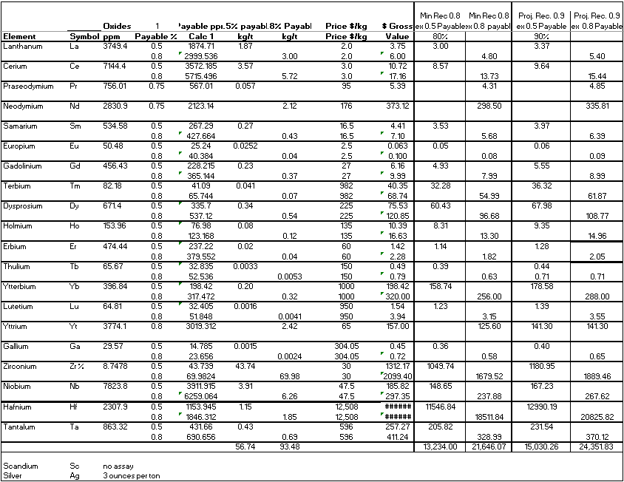
Fig. 1. Projected Revenue Table and Rare Earth and Critical Metal Production, Excluding By-products
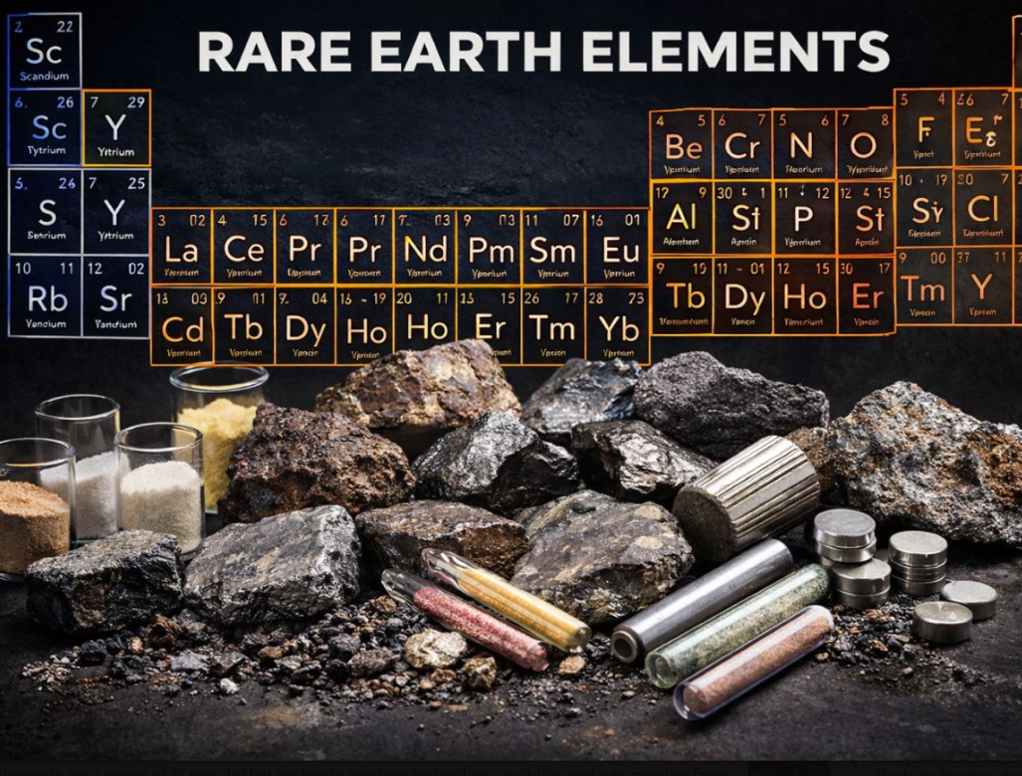
Fig. 2. Rare Earth Element Distribution
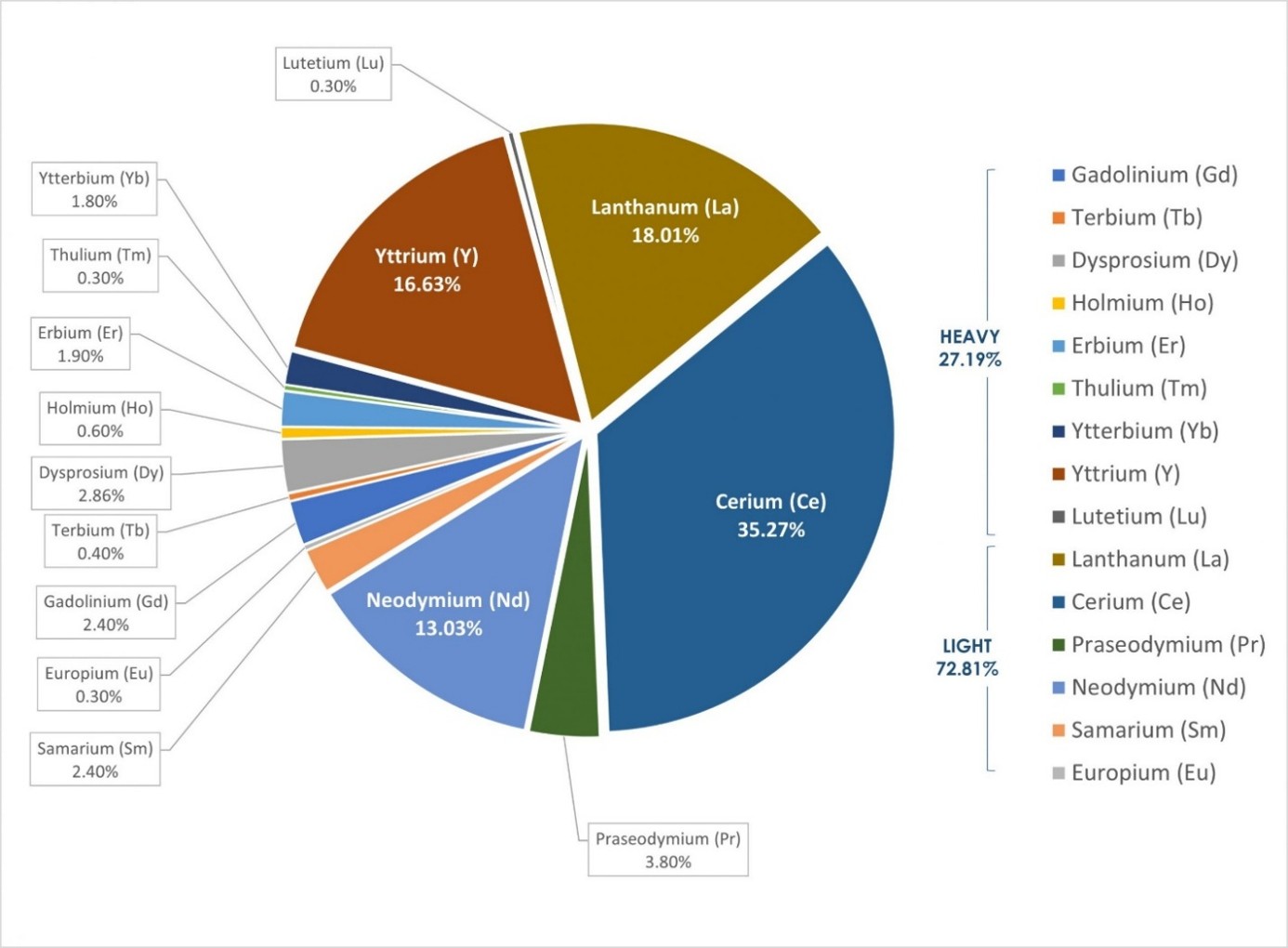
Fig. 3. Rare Earth Distribution in Tanbreez Concentrate
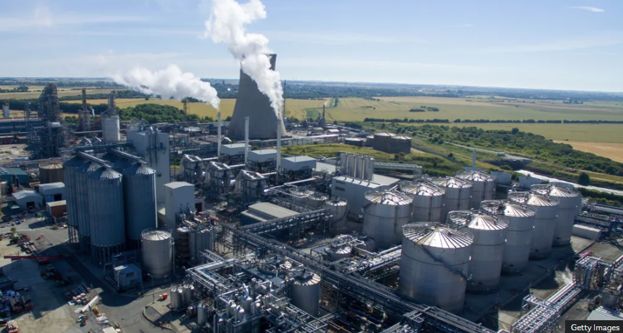
Fig. 4. Illustrative Example of a Rare Earth Processing Plant
Source: Getty Images - Pensana's rare earth refinery at Saltend Chemicals Park. Image is illustrative only and is not the proposed CRML Romania refinery.
About Critical Metals Corp.
Critical Metals Corp (Nasdaq: CRML) is a leading mining development company focused on critical metals and minerals, and producing strategic products essential to electrification and next generation technologies for Europe and its western world partners. Its flagship Project, Tanbreez, is one of the world's largest, rare earth deposits and is located in Southern Greenland. The deposit is expected to have access to key transportation outlets as the area features year-round direct shipping access via deep water fjords that lead directly to the North Atlantic Ocean.
Another key asset is the Wolfsberg Lithium Project located in Carinthia, 270 km south of Vienna, Austria. The Wolfsberg Lithium Project is the first fully permitted mine in Europe and is strategically located with access to established road and rail infrastructure and is expected to be the next major producer of key lithium products to support the European market. Wolfsberg is well positioned with offtake and downstream partners to become a unique and valuable asset in an expanding geostrategic critical metals portfolio.
With this strategic asset portfolio, Critical Metals Corp is positioned to become a reliable and sustainable supplier of critical minerals essential for defense applications, the clean energy transition, and next-generation technologies in the western world.
For more information, please visit https://www.criticalmetalscorp.com/.
Cautionary Note Regarding Forward Looking Statements
This news release contains forward-looking statements within the meaning of Section 27A of the Securities Act of 1933, as amended, and Section 21E of the Securities Exchange Act of 1934, as amended (the “Exchange Act”). Forward-looking statements may include expectations of our business and the plans and objectives of management for future operations. These statements constitute projections, forecasts and forward-looking statements, and are not guarantees of performance. Such statements can be identified by the fact that they do not relate strictly to historical or current facts. When used in this news release, forward-looking statements may be identified by the use of words such as “estimate,” “plan,” “project,” “forecast,” “intend,” “will,” “expect,” “anticipate,” “believe,” “seek,” “target,” “designed to” or other similar expressions that predict or indicate future events or trends or that are not statements of historical facts. In addition, any statements that refer to projections, forecasts or other characterizations of future events or circumstances, including any underlying assumptions, are forward-looking statements.
Forward-looking statements are subject to known and unknown risks and uncertainties and are based on potentially inaccurate assumptions that could cause actual results to differ materially from those expected or implied by the forward-looking statements. Actual results could differ materially from those anticipated in forward-looking statements for many reasons, including the factors discussed under the “Risk Factors” section in the Company’s Annual Report on Form 20-F filed with the U.S. Securities and Exchange Commission. These forward-looking statements are based on information available as of the date of this news release, and expectations, forecasts and assumptions as of that date, involve a number of judgments, risks and uncertainties. Accordingly, forward-looking statements should not be relied upon as representing our views as of any subsequent date, and we do not undertake any obligation to update forward-looking statements to reflect events or circumstances after the date they were made, whether as a result of new information, future events or otherwise, except as may be required under applicable securities laws.
Critical Metals Corp.
Investor Relations: ir@criticalmetalscorp.com
Media: pr@criticalmetalscorp.com
Photos accompanying this announcement are available at
https://www.globenewswire.com/NewsRoom/AttachmentNg/55640db4-cebc-4ebb-9622-7603bdbfc1e4
https://www.globenewswire.com/NewsRoom/AttachmentNg/de724907-0b33-41af-a7a4-5eca67228213
https://www.globenewswire.com/NewsRoom/AttachmentNg/f5411e9f-7a76-4171-bf20-453b0132e6f1
https://www.globenewswire.com/NewsRoom/AttachmentNg/5e1241cd-b80d-4b3f-9383-2e34adf8a4ff

FAQ
AI-generated questions and answers. How Rhea-AI works. Not financial advice.
What process innovations are planned for the proposed CRML Romania refinery?
The refinery design incorporates three main innovations: multistage mixed-acid reactor additions intended to prevent silica gel formation; an off-gas silica recovery system targeting 99.99% SiO2 powder, tailings below 1.5% of feed and about 85% reduction in fresh acid use; and vacuum freeze-drying of all 19 chloride salts to produce anhydrous, ultra-low-moisture powders.
How much hafnium production is currently modelled for CRML Romania?
Based on current modelling, the proposed refinery could produce approximately 50–70 tons per year of high-purity hafnium metal and about 20–30 tons per year of high-purity hafnium chloride during its first five years, using established processing technologies.
What are the modelled operating economics per ton of concentrate processed?
The model assumes a Tanbreez eudialyte concentrate transfer or sales value of about US$4,000 per ton. The base-case scenario uses revenue of about US$13,000 per ton, yielding roughly US$9,000 per ton before tax and capital recovery after estimated operating costs of about US$3,500–4,000 per ton. A higher-price case uses around US$24,000 per ton in revenue, resulting in about US$20,000 per ton before tax and capital recovery.
How is waste and tailings management addressed in the refinery design?
The process targets a tailings stream of about 1% of feed tonnage, recovering materials that would traditionally go to tailings, including silica and potentially alumina, iron and copper. The operation is being designed as low-wastewater, with limited discharge and potential treatment via third-party or approved government facilities in Romania, subject to further engineering and environmental studies.
What is the planned energy mix for the proposed refinery?
The refinery is currently estimated to require up to 150 MW of energy from gas and/or electricity. Design assumptions contemplate about 60–70% of energy demand from gas-fired kilns and boilers and about 30–40% from third-party or state electricity suppliers.
How does locating the refinery in Romania support Critical Metals Corp’s supply-chain goals?
The refinery is planned in Romania, an EU and NATO member state, with multiple shipping and rail routes for moving Tanbreez concentrate from Greenland. The company states that this location and supply strategy are intended to support a secure Western supply chain for rare earths and critical metals.