
Doximity Launches DoseCheck to Catch Dangerous AI Drug Dosing Errors Before They Reach Doctors
Doximity (NYSE: DOCS) has launched DoseCheck, a free medication-dosing verification tool available to all Doximity Ask users on mobile and desktop.
Sentiment and the balance of points
Rhea-AI Sentiment reads the wording of the document, how positive or negative its language is on a 1 to 5 scale. The balance of points shown with the takes weighs what the document actually discloses, so the two can disagree, for example when a trial that missed its main goal is described in upbeat language.


AI models make mistakes in more than 1 in 50 drug dosing recommendations.
DoseCheck AI hardening reduces the error rate to near zero
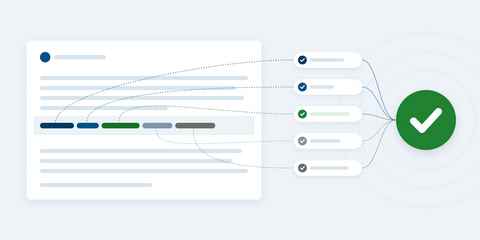
Doximity DoseCheck reduces AI drug dosing errors by more than
The probabilistic nature of AI means that it predicts the most likely answer based on the data it’s been trained on. This can lead to different but equally confident answers to the same prompt. When it comes to drug dosing, doctors need to know that the dosing recommendations AI generates are consistently accurate.
Building on Doximity’s existing work around AI safety, DoseCheck adds a deterministic, rule-based verification step to all dosing recommendations in Doximity Ask, Doximity’s clinical decision making support tool. By checking against FDA labeling and professional guidelines, DoseCheck increases accuracy to more than
Addressing an industry-wide challenge
Drug dosing accuracy is a challenge for any platform using AI to make recommendations to doctors. Doximity tested nine widely used AI models with more than 8,000 dosing questions based on real physician queries. At least
“AI is probabilistic. Drug dosing can’t be,” said Dr. Louis-Antoine Mullie, Chief AI Researcher at Doximity. “DoseCheck doesn’t ask a language model to grade its own homework. It checks dosing claims against a structured, authoritative database, so physicians get the same verified dosing answer every time.”
Common sources of errors identified in the analysis included:
- Recently approved drugs: AI models need time to train on new drugs, meaning LLMs were less accurate on dosing newer drugs.
- Failure to adapt dosing to a patient’s specific characteristics, including things like kidney function, age, weight, medical history.
- Incorrect units, decimal point placement, and confusing drugs with similar names.
DoseCheck is free and has been rolled out to all Doximity Ask users across mobile and desktop.
This latest launch builds on Doximity’s existing work to increase safety for patients. Doximity’s PeerCheck program features more than 12,000 cited physician experts evaluating and improving Doximity Ask outputs, and Doximity Ask ranked top among
Doximity’s membership includes more than
To learn more about Doximity Ask, visit www.doximity.com.
About Doximity
Founded in 2010, Doximity is the leading digital platform for U.S. medical professionals. The company's network members include more than
View source version on businesswire.com: https://www.businesswire.com/news/home/20261029499969/en/
Media Contact
Richard George
pr@doximity.com
Investor Contact
Perry Gold
ir@doximity.com
Source: Doximity