
Canamera Confirms Ionic Clay REE Mineralization at Turvolândia: Eastern Grid Returns up to 6,431 ppm TREO and up to 42% Magnet-Critical Rare Earth Oxides Across 83 Hectares
Canamera Energy Metals (EMETF) reported assay results from the first 27 of 55 auger holes at the Turvolândia project, Minas Gerais, Brazil, highlighting ionic clay-hosted rare earths over an eastern grid of ~83.3 hectares.
Sentiment and the balance of points
Rhea-AI Sentiment reads the wording of the document, how positive or negative its language is on a 1 to 5 scale. The balance of points shown with the takes weighs what the document actually discloses, so the two can disagree, for example when a trial that missed its main goal is described in upbeat language.
Rhea-AI Summary
Canamera Energy Metals (EMETF) reported assay results from the first 27 of 55 auger holes at the Turvolândia project, Minas Gerais, Brazil, highlighting ionic clay-hosted rare earths over an eastern grid of ~83.3 hectares.
Key metrics: peak 6,431 ppm TREO (1m), composites to 3,255 ppm TREO (13m), and magnet-critical oxides up to 42% of TREO. 721m of a 1,000m program completed; 671m submitted for assay; 317m of assays pending.
Positive
- Peak TREO of 6,431 ppm over 1 metre
- Composite 3,255 ppm TREO over 13 metres from surface
- MREO up to 42% of TREO in best intervals
- Eastern grid mineralized area ~83.3 ha (1,200m x 1,100m)
- 721 metres drilled of a budgeted 1,000-metre program
Negative
- Multiple holes stopped in elevated TREO due to ground conditions
- 317 metres of assay results remain pending from the program
- Southern/western holes show lower MREO and variable REE fractionation
Details
News Market Reaction – EMETF
On Mar 11, the day this news came out, EMETF closed 3.70% above the previous close.
Data tracked by StockTitan Argus for the Mar 11 session.
AI-generated analysis. How Rhea-AI works. Not financial advice.




Edmonton, Alberta--(Newsfile Corp. - March 11, 2026) - Canamera Energy Metals Corp. (CSE: EMET) (OTCQB: EMETF) (FSE: 4LF0) ("Canamera" or the "Company") is pleased to report positive assay results from the first 27 of 55 completed auger holes at the Turvolândia rare earth project ("Turvolândia" or the "Project"), located in the State of Minas Gerais, Brazil. Hole TUV-AUG-014 returned 3,255 ppm total rare earth oxide (TREO) over 13 metres from surface, including 5,486 ppm TREO over 3 metres and a peak grade of 6,431 ppm TREO over 1 metre. Nine of the 27 reported holes were stopped in elevated TREO zones due to ground conditions, indicating that mineralization remains open at depth.
"We are pleased with and encouraged by these results. The first 27 holes at Turvolândia indicate the potential for an ionic clay mineralized rare earth system which could stretch across the eastern grid, with multiple holes returning elevated total rare earth oxide grades from surface," stated Brad Brodeur, CEO of Canamera Energy Metals Corp. "What stands out in the eastern grid data is the magnet-critical composition: Nd₂O₃, Pr₆O₁₁, Dy₂O₃ and Tb₄O₇ together account for up to
Highlights:
- TUV-AUG-014: 3,255 ppm TREO over 13 metres from surface (0-13m), including 5,486 ppm TREO over 3 metres (4-7m) and 6,431 ppm TREO over 1 metre (6-7m); MREO
34.6% of TREO; hole stopped in elevated TREO (1,918 ppm TREO over 1m at 12-13m) - TUV-AUG-007: 3,823 ppm TREO over 2 metres (14-16m), including 5,341 ppm TREO over 1 metre (15-16m); MREO 39.7
-42.1% of TREO; hole stopped in elevated TREO - TUV-AUG-021: 1,469 ppm TREO over 15 metres (1-16m); MREO
32.6% of TREO; hole stopped in elevated TREO - TUV-AUG-006: 1,865 ppm TREO over 7 metres (0-7m); HREO
20.4% of TREO - TUV-AUG-001: 1,137 ppm TREO over 6 metres (13-19m); MREO
40.4% of TREO; hole stopped in elevated TREO - Additional elevated intersections from TUV-AUG-004, 012, 013, 018, 024, 025 and 027 are set out in the table (see Table 1);
The Turvolândia auger program is testing ionic clay-hosted rare earth mineralization across the Project, which comprises 29,574-hectares approximately 200 km northeast of São Paulo. Results from the first 27 holes indicate a mineralized zone across the eastern grid measuring approximately 1,200 metres (east-west) by 1,100 metres (north-south), covering an area of approximately 833,000 m² (83.3 ha). To date, 721 metres of a budgeted 1,000-metre program have been completed, of which 671 metres have been submitted for assaying; this release reports results from the first 354 metres (27 holes). Assay results for the remaining 317 metres are pending receipt from the laboratory.
A distinguishing characteristic of the eastern grid results is the proportion of magnet-critical rare earth oxides (MREO) - defined as the combined sum of Nd₂O₃, Pr₆O₁₁, Dy₂O₃ and Tb₄O₇ - which accounts for up to
Table 1: Selected Assay Results - First 27 Holes, Turvolândia Auger Program
| Hole ID | From (m) | To (m) | Width (m) | TREO (ppm) | MREO (ppm) | MREO (%) | Notes |
| TUV-AUG-001 | 13 | 19 | 6 | 1,137 | 459 | 40.4 | Stopped in elevated TREO |
| TUV-AUG-004 | 7 | 14 | 7 | 1,111 | 373 | 33.6 | |
| TUV-AUG-006 | 0 | 7 | 7 | 1,865 | 450 | 24.1 | HREO |
| TUV-AUG-007 | 14 | 16 | 2 | 3,823 | 1,520 | 39.7 | Stopped in elevated TREO |
| incl. | 15 | 16 | 1 | 5,341 | 2,246 | 42.1 | |
| TUV-AUG-012 | 0 | 2 | 2 | 1,094 | 267 | 24.4 | Stopped in elevated TREO |
| TUV-AUG-013 | 6 | 8 | 2 | 1,119 | 341 | 30.5 | Stopped in elevated TREO |
| TUV-AUG-014 | 0 | 13 | 13 | 3,255 | 1,127 | 34.6 | Stopped in elevated TREO; best hole |
| incl. | 4 | 7 | 3 | 5,486 | 2,135 | 38.9 | |
| incl. | 6 | 7 | 1 | 6,431 | 2,409 | 37.5 | Peak grade |
| TUV-AUG-018 | 3 | 6 | 3 | 1,024 | 196 | 19.1 | |
| incl. | 13 | 14 | 1 | 1,148 | 308 | 26.8 | |
| incl. | 16 | 18 | 2 | 1,368 | 482 | 35.2 | Stopped in elevated TREO |
| TUV-AUG-021 | 1 | 16 | 15 | 1,469 | 479 | 32.6 | Stopped in elevated TREO |
| TUV-AUG-024 | 6 | 7 | 1 | 1,033 | 91 | 8.8 | |
| TUV-AUG-025 | 10 | 11 | 1 | 1,384 | 131 | 9.5 | Stopped in elevated TREO |
| incl. | 14 | 16 | 2 | 995 | 210 | 21.1 | HREO |
| TUV-AUG-027 | 4 | 6 | 2 | 1,478 | 59 | 4.0 | |
| incl. | 9 | 10 | 1 | 1,851 | 133 | 7.2 | Stopped in elevated TREO |
Notes:
- All intervals represent intersected lengths; true widths have not been determined.
- Reported intervals exceed 1,000 ppm TREO. Holes not listed returned no intervals above this threshold in the first 27 reported holes.
- "Stopped in elevated TREO": hole terminated due to ground conditions while intersecting mineralized material; mineralization open at depth.
- MREO = Nd₂O₃ + Pr₆O₁₁ + Dy₂O₃ + Tb₄O₇. HREO = Y₂O₃ + heavier REO (Eu₂O₃-Lu₂O₃).
Drilling and Sampling
All holes were drilled vertically. Reported widths represent intersected lengths; true widths have not been determined. Samples were collected at 1-metre intervals with no cutting or compositing prior to laboratory submission.
Samples were analyzed by SGS Geosol (ISO 9001, 14001 and 17025 certified), Belo Horizonte, Brazil, using lithium metaborate (LiBO₂) fusion followed by inductively coupled plasma optical emission spectrometry and mass spectrometry (ICP-OES/MS) for 49-element analysis, including all rare earth elements. The QA/QC program includes the regular insertion of certified reference materials (CRMs), blank standards and field duplicates.
MREO is defined as the combined sum of Nd₂O₃ + Pr₆O₁₁ + Dy₂O₃ + Tb₄O₇. HREO is defined as the sum of Y₂O₃ and the heavier rare earth oxides (Eu₂O₃ through Lu₂O₃).
The mineralized zone indicated by the eastern grid (holes TUV-AUG-001 through TUV-AUG-014) covers an area of approximately 833,000 m² (83.3 ha), measuring approximately 1,200 metres (east-west) by 1,100 metres (north-south) metres. Ionic clay-hosted REE mineralization is developed within the weathered gneissic basement and is interpreted to begin at or near surface, consistent with the typical profile of ionic adsorption clay deposits.
The southern and western holes (TUV-AUG-021 through TUV-AUG-027) returned lower MREO fractions relative to the eastern grid but elevated HREO contributions of up to
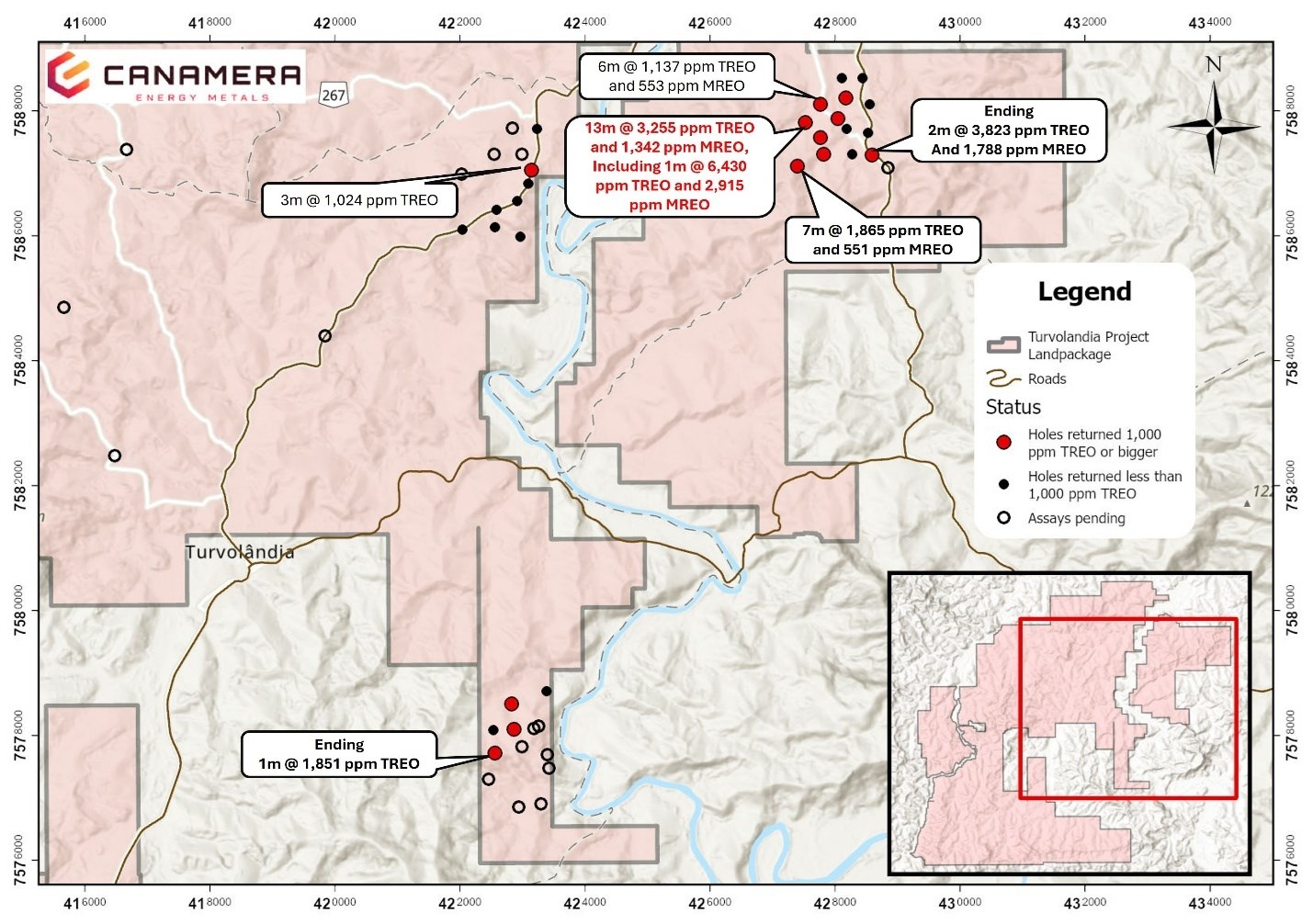
Figure 1: Map Showing Drill Hole Collars & Intercepts
To view an enhanced version of this graphic, please visit:
https://images.newsfilecorp.com/files/11828/288085_a7378bc5148d4b28_001full.jpg
About the Turvolândia Project
The Turvolândia project covers 29,574 ha in the State of Minas Gerais, Brazil, approximately 200 km northeast of São Paulo. The property is optioned by Canamera and is prospective for ionic adsorption clay-hosted rare earth mineralization - the deposit style responsible for the majority of the world's current separated MREO supply. Ionic adsorption clay deposits are characterized by REE adsorbed onto clay minerals within lateritic profiles developed over felsic and meta-igneous basement rocks. At Turvolândia, mineralization is hosted within weathered gneissic material and is interpreted to begin at or near surface.
Following receipt and review of assay results from the remaining 28 auger holes, the Company plans to: (i) commence RC drilling to test mineralization continuity below the auger depth; and (ii) conduct a LiDAR survey to generate a high-resolution topographic model of the property to improve the correlation of results across the terrain.
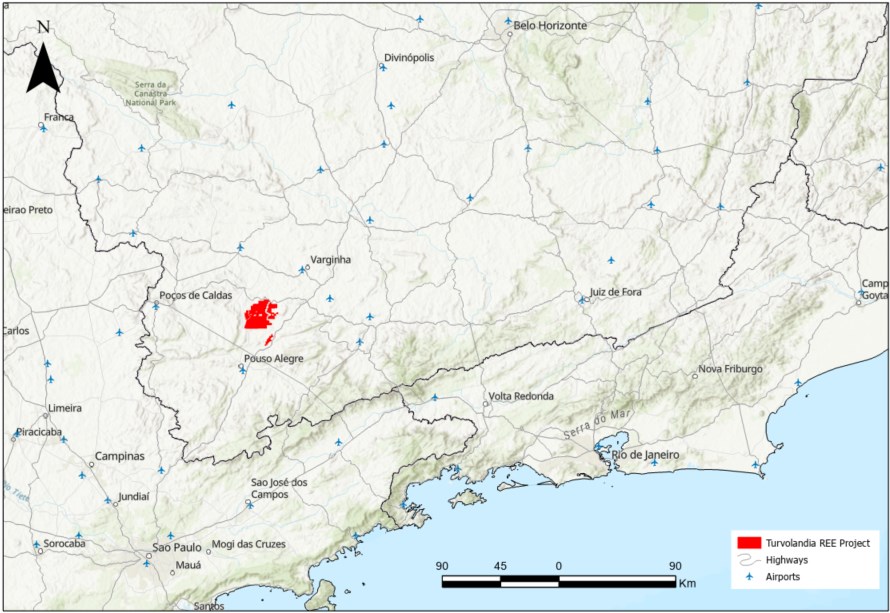
Figure 2: Project Location Map
To view an enhanced version of this graphic, please visit:
https://images.newsfilecorp.com/files/11828/288085_a7378bc5148d4b28_002full.jpg
The scientific and technical information in this news release has been reviewed and approved by Warren Robb, P.Geo. (British Columbia), VP Exploration of Canamera Energy Metals Corp. and a "Qualified Person" as defined by National Instrument 43-101 ("NI 43-101"). Mr. Robb is not independent of the Company within the meaning of NI 43-101.
About Canamera Energy Metals Corp.
Canamera Energy Metals Corp. is a rare earth elements exploration and development company focused on advancing ionic clay REE projects in Brazil and expanding a portfolio of critical mineral assets across North America. The Company's principal projects include Turvolândia and São Sepé in Brazil, the Patos project (CSE-approved, currently undergoing due diligence drilling and geochemical assessment), and a portfolio of uranium and rare earth exploration properties in Canada and the United States. For more information, visit www.canamerametals.com.
FOR FURTHER INFORMATION PLEASE CONTACT:
Brad Brodeur
Chief Executive Officer
brad@canamerametals.com
780-238-7163
CAUTIONARY NOTE REGARDING FORWARD-LOOKING INFORMATION
This news release contains "forward-looking information" within the meaning of applicable Canadian securities legislation, including, but not limited to statements regarding: the potential for mineralization at the Project; the anticipated receipt of assay results from the remaining 28 auger holes at Turvolândia; the Company's intention to commence reverse circulation drilling to test mineralization continuity below auger depth; the Company's intention to conduct a LiDAR topographic survey of the Turvolândia property; the interpretation that mineralization at Turvolândia extends beyond the reported results and remains open along strike and at depth; and the expected completion and execution of the Patos project acquisition agreement.
Forward-looking information is based on a number of assumptions that, while considered reasonable by the Company, are inherently subject to significant business, economic and competitive uncertainties and contingencies. Such assumptions include, without limitation: that the laboratory will deliver assay results for the remaining 28 auger holes on schedule; that reverse circulation drilling equipment can be mobilized and operated at the property as planned; that the LiDAR survey will be completed successfully; that ground conditions and site access will remain suitable for continued exploration activities; and that the Patos acquisition will be executed and closed on the anticipated timeline and terms.
Forward-looking information is subject to known and unknown risks, uncertainties and other factors that may cause the Company's actual results, performance or achievements to differ materially from those expressed or implied by such forward-looking information. These risks include, but are not limited to: delays in laboratory assay delivery; inability to secure equipment or site access for reverse circulation drilling or LiDAR operations; adverse ground or weather conditions that may hinder field operations; volatility in rare earth commodity prices and market demand; title defects or challenges to the Company's mineral property interests; failure to satisfy conditions or execute the Patos acquisition agreement; and general exploration and development risks typical to mineral property advancement. Readers are referred to the risk factors described in the Company's most recent continuous disclosure filings available on SEDAR+ at www.sedarplus.ca. Readers are cautioned not to place undue reliance on forward-looking information. Except as required by applicable securities laws, the Company assumes no obligation to update or revise any forward-looking information to reflect events or circumstances after the date of this news release.
Neither the Canadian Securities Exchange nor its Regulation Services Provider (as that term is defined in the policies of the Canadian Securities Exchange) accepts responsibility for the adequacy or accuracy of this release.

To view the source version of this press release, please visit https://www.newsfilecorp.com/release/288085
FAQ
AI-generated questions and answers. How Rhea-AI works. Not financial advice.