
The future takes flight: AT&T and Ericsson demonstrate drone detection outside of AT&T Stadium
AT&T (NYSE:T) and Ericsson demonstrated 5G-based drone detection and tracking in authorized airspace outside AT&T Stadium in Arlington, Texas, during a major global sporting event.
Rhea-AI Summary
AT&T (NYSE:T) and Ericsson demonstrated 5G-based drone detection and tracking in authorized airspace outside AT&T Stadium in Arlington, Texas, during a major global sporting event. Using Ericsson Massive MIMO radios on existing cellular towers, advanced signal processing and AI algorithms, the network sensed and tracked multiple drones flying between 300 and 400 feet in real time.
The demo showed how current 5G infrastructure can act as a distributed sensing platform for Integrated Sensing and Communication (ISAC), supporting low-altitude threat awareness and informing the evolution toward future 6G capabilities for venues, enterprises and public-sector environments.
Positive
- None.
Negative
- None.
Details
News Market Reaction – ERIC
On Jul 10, the day this news came out, ERIC closed 1.99% below the previous close.
Data tracked by StockTitan Argus for the Jul 10 session.
Key Figures
- Drone altitude range
- 300–400 feet
- Altitudes of drones detected and tracked during the 5G sensing demo
- Ericsson history
- 150 years
- Duration Ericsson cites as a technology pioneer
- AT&T households
- 100 million
- U.S. families, friends and neighbors AT&T states it helps connect
- AT&T business customers
- 2.5 million
- Businesses AT&T states it helps connect
- Market cap
- $36,478,950,658
- Ericsson market capitalization pre-headline
- 52-week price range
- $7.155–$13.77
- Ericsson 52-week low and high pre-headline
- Price vs 52-week low
- 61.84%
- Ericsson share price distance above 52-week low pre-headline
- Relative volume
- 1.71x
- Today’s trading volume vs 20-day average before this news
Historical Context
-
Vonage Protection Suite for Okta launched to enhance multi-factor authentication security.
-
First in-field trial of low-latency mobility features on AT&T’s 5G network.
-
Announcement of timing and webcast details for Ericsson Q2 2026 report.
-
Vonage network‑powered fraud prevention solutions launched across Canadian carriers.
-
Vonage API Power for Kiro introduced for AWS Kiro agentic IDE integration.
24h Move is the share-price change in the day after each event; other market factors may also have contributed.
Key Terms
5g technical
6g technical
massive mimo technical
multi-static sensing configuration technical
ai-enabled sensing algorithms technical
integrated sensing and communication (isac) technical
AI-generated analysis. How Rhea-AI works. Not financial advice.




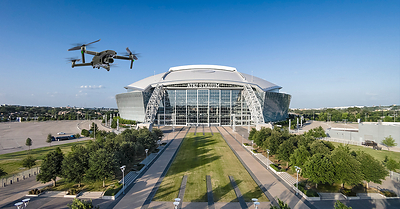
This showed how advanced network features can be enabled using 5G capabilities as the industry momentum towards 6G standardization and subsequent deployment accelerates. Critically, the same underlying capabilities could support new levels of low altitude threat detection and tracking around major venues, public spaces and other complex environments.
Using existing cellular towers, Ericsson deployed its Massive MIMO radios across multiple sites, creating a multi-static sensing configuration. The demonstration combined sensing-enabled radio transmissions with advanced signal processing and AI-enabled sensing algorithms to detect, locate, and track the drones in real time, The network utilized the radio signals typically used for communications to enable real-time environmental sensing, while delivering a total cost of ownership advantage for nation-wide coverage.
In the demonstration, multiple drones flying at altitudes between 300 and 400 feet within the coverage area were successfully detected, localized, and continuously tracked by the sensing technology. By combining observations from multiple synchronized sensing nodes, the technology provided enhanced detection reliability, improved positioning accuracy, and robust target tracking performance. The sensing technology generated real-time target metrics, including the drone's location, velocity, and elevation, enabling comprehensive tracking and monitoring throughout the flight path.
The demonstration highlighted how existing network infrastructure can be transformed into a distributed sensing platform, enabling advanced applications such as drone detection without requiring additional standalone sensing technology. But it shows more than a single technical milestone. It reflects a broader view shared by AT&T and Ericsson: that some of the capabilities people may think of as "6G" can begin taking shape now through software, advanced radios and continued growth of 5G.
Together, AT&T and Ericsson will continue bringing their expertise to the evolution of Integrated Sensing and Communication (ISAC) through future demonstrations and learnings, alongside others helping shape the path toward major event environments such as the next major global sporting event in
"As networks evolve, the opportunity is not just to prepare for 6G someday, but to begin introducing important building blocks now," said Dyon Agnew, SVP and Head of Customer Unit AT&T, Ericsson Americas. "This demonstration with AT&T shows a product roadmap in action: using advanced 5G capabilities today to explore how sensing and connectivity can work together, then evolving those capabilities over time as the path to 6G becomes clearer."
"Integrated sensing is an important part of the road to 6G, and this work helps show how we can start bringing that future to life right now," said Yigal Elbaz, SVP and Network CTO, AT&T. "By working with Ericsson, we are exploring how advanced wireless networks can add sensing capabilities to connectivity in ways that could support safer operations, smarter venues and stronger customer experiences, while creating a path to evolve these capabilities responsibly over time."
What this roadmap will enable over time:
- Help event and facility teams improve planning and staffing by providing broader visibility into how vehicles move through large environments.
- Enhance coordination around temporary event infrastructure and logistics by adding network-based environmental awareness alongside connectivity.
- Support a wide-area drone awareness system for public-sector stakeholders, improving visibility into low-altitude drone activity as the low-altitude economy develops across cities and regions.
- Inform the evolution of future 5G and 6G capabilities as sensing and communications mature together for large venues, enterprises, governments and public-sector environments.
What's next: AT&T and Ericsson will continue exploring how sensing capabilities can be introduced pragmatically using existing network foundations, then advanced over time as standards, ecosystems and market needs develop.
The goal is to help shape a practical path where future 6G capabilities are not treated as a distant leap, but as an evolution that can begin delivering value well before full 6G commercialization.
NOTES TO EDITORS:
FOLLOW US:
Subscribe to Ericsson press releases
Subscribe to Ericsson blog posts
https://x.com/ericsson
https://www.facebook.com/ericsson
https://www.linkedin.com/company/ericsson
MORE INFORMATION AT:
media.relations@ericsson.com (+46 10 719 69 92)
investor.relations@ericsson.com (+46 10 719 00 00)
ABOUT ERICSSON:
Ericsson's high-performing, programmable networks provide connectivity for billions of people every day. For 150 years, we've been pioneers in creating technology for communication. We offer mobile communication and connectivity solutions for service providers and enterprises. Together with our customers and partners, we make the digital world of tomorrow a reality. www.ericsson.com
ABOUT AT&T:
We help more than 100 million U.S. families, friends and neighbors, plus nearly 2.5 million businesses, connect to greater possibility. From the first phone call 150 years ago to our 5G wireless and multi-gig internet offerings today, we @ATT innovate to improve lives. For more information about AT&T Inc. (NYSE:T), please visit us at about.att.com. Investors can learn more at investors.att.com.

 View original content to download multimedia:https://www.prnewswire.com/news-releases/the-future-takes-flight-att-and-ericsson-demonstrate-drone-detection-outside-of-att-stadium-302822568.html
SOURCE Ericsson
FAQ
AI-generated questions and answers. How Rhea-AI works. Not financial advice.