
GM Defense Provides Battery Electric Technology for Future Military Platforms
GM Defense, a subsidiary of General Motors, is collaborating with the University of Texas at Arlington (UTA) and the Naval Surface Warfare Center Philadelphia Division to evaluate electric vehicle battery technology for military applications.
Sentiment and the balance of points
Rhea-AI Sentiment reads the wording of the document, how positive or negative its language is on a 1 to 5 scale. The balance of points shown with the takes weighs what the document actually discloses, so the two can disagree, for example when a trial that missed its main goal is described in upbeat language.
Rhea-AI Summary
GM Defense, a subsidiary of General Motors, is collaborating with the University of Texas at Arlington (UTA) and the Naval Surface Warfare Center Philadelphia Division to evaluate electric vehicle battery technology for military applications. The project, funded by the U.S. Department of Defense, leverages GM's Ultium Platform to address energy storage challenges in high-power operations. This initiative aims to enhance military capabilities and provide scalable energy solutions for future use in military platforms. Insights from this project will contribute to the development of advanced power and energy technologies for the Department of Defense.
Positive
- GM Defense is leveraging GM's Ultium Platform for advanced battery technology.
- The project is funded by the U.S. Department of Defense, enhancing credibility and support.
- Collaboration with UTA and NSWCPD adds academic and research expertise.
- Potential to significantly enhance operational military capabilities with scalable energy solutions.
- Insights gained will aid in future development of advanced power and energy technologies.
Negative
- No concrete financial impact or revenue figures are provided in the PR.
- Potential high costs associated with research and development without immediate commercial application.
- Risks related to the scalability and adaptability of the Ultium Platform in actual military use cases.
Details
News Market Reaction – GM
The recorded move for GM in the trading session of this news was -3.53%.
Data tracked by StockTitan Argus. Session date unavailable.
AI-generated analysis. How Rhea-AI works. Not financial advice.




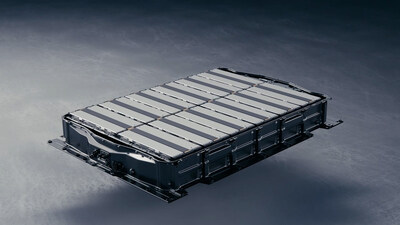
GM Defense is leveraging GM's Ultium Platform propulsion architecture, for evaluation and testing. The Ultium Platform can deliver power, range and scale beyond any previous GM hybrid or extended range EV technology. Modular and scalable, the Ultium Platform can use different chemistries and cell form factors, making it adaptable to changing needs and new technology insertions as they become available. Utilizing the battery technologies of its parent company, GM Defense can help solve the DoD's energy and energy storage challenges. The work performed in this new effort will provide insights into the performance and design considerations when batteries are used in more dynamic, high-power operations than would be faced by more typical applications. OECIF support plays a key role in the development of new power and energy technologies, which provide the DoD with advanced capabilities and help prevent power and energy from being a limiting factor.
"The Department of Defense can benefit from billions of dollars in GM investments to develop and manufacture transformative battery technologies," says Steve duMont, president of GM Defense. "These technologies offer significant potential to enhance operational capability, whether at the tactical edge or on installations throughout the world. GM Defense welcomes the opportunity to support this important project and to help transition our global defense and government customers."
"We are excited to work with GM Defense to test the Ultium Platform to determine its potential for use in future warfighting applications. PPEL has a long relationship with the DoD and the Office of Naval Research for testing the limits of batteries used in high power applications, and we are in a unique position to evaluate this technology and make recommendations for future use cases," said David Wetz, a professor of electrical engineering at UTA and director of the PPEL.
"As a Carnegie R-1 university, UTA is committed to working with industry to better develop and understand the potential of new technology. This collaboration between PPEL, GM Defense and the DoD will not only improve our nation's military capabilities, but also adds to our workforce development efforts producing next generation engineers who will solve our nation's complex problems," said Peter Crouch, dean of UTA's College of Engineering.
GM Defense previously announced its participation in the Defense Innovation Unit's Jumpstart for Advanced Battery Standardization (JABS) project. Similar to EEVBEDE, JABS is designed to evaluate and test high voltage battery systems to optimize commercial technologies. GM Defense provided a prototype of a battery system based on GM's Ultium Platform for the project. Under the same contract, GM Defense demonstrated mission power capabilities by integrating a high-voltage battery pack into a light tactical utility vehicle. Key learnings from JABS will help inform the integration requirements of future battery electric defense solutions. To learn more about GM Defense projects, visit www.gmdefensellc.com or follow us on LinkedIn.
About GM Defense LLC
GM Defense delivers integrated vehicles, power and propulsion, and autonomy and connectivity solutions to global defense, security and government markets. The exceptional reliability of GM Defense's technologies results from decades of proven performance and billions of dollars spent in independent research and development by its parent, General Motors, a world leader in global design, engineering and manufacturing capabilities. For more information, please visit www.gmdefensellc.com.
 View original content to download multimedia:https://www.prnewswire.com/news-releases/gm-defense-provides-battery-electric-technology-for-future-military-platforms-302181446.html
SOURCE GM Defense LLC
FAQ
AI-generated questions and answers. How Rhea-AI works. Not financial advice.