
GreenLight Metals Intersects 1.30% Copper and 1.30 g/t Gold over 25.17 Metres in an Eastern Step-Out Hole at the Bend Project
B26-018 is testing the transition between copper-gold and gold-dominant mineralization, alongside a target identified by downhole surveys.
Sentiment and the balance of points
Rhea-AI Sentiment reads the wording of the document, how positive or negative its language is on a 1 to 5 scale. The balance of points shown with the takes weighs what the document actually discloses, so the two can disagree, for example when a trial that missed its main goal is described in upbeat language.
Rhea-AI Summary
GreenLight Metals (GRLMF) reported eastern step-out drilling results at its Bend copper-gold project, including a 25.17-metre mineralized interval. Hole B26-015 returned 1.30% copper, 1.30 grams per tonne (g/t) gold and 13.87 g/t silver from 427.90 metres, including 6.21 metres at 2.34% copper and 1.85 g/t gold. B26-013, approximately 60 metres farther east, returned 5.20 metres at 0.89% copper and 0.99 g/t gold.
GreenLight interprets the results as supporting an eastward continuation of the copper-gold zone. B26-016 logged 31.62 metres of sulfide-dominant mineralization approximately 55 metres down-dip of B26-015, but assays for it and B26-017 remain pending amid extended laboratory turnaround times. Final Phase 2 hole B26-018 is in progress. The company targets approximately 6,750 metres for the program; work beyond the current Soo Line drilling area requires applicable land-access and government authorizations.
How this balance works
Rhea-AI gives every point it takes from this document a weight. Minor counts 1, Moderate 3 and Major 9, so one Major point outweighs several Minor ones. The bar adds up the weights on each side, and when neither side holds more than 65% of the total the balance reads Mixed.
It reads the document as published, with the same rules for every company, and it does not look at what the market expected or at how the stock traded, so a point can be objectively good on a day the stock falls.
Rhea-AI Sentiment measures something else, the tone of the wording.
Hollow bars mark forward-looking points. How the balance works
Positive
- Minor pointB26-015 returned 25.17 metres at 1.30% copper, 1.30 g/t gold and 13.87 g/t silver.
- Minor pointB26-015 higher-grade intervals included 6.84 metres at 1.64% copper and 6.21 metres at 2.34% copper.
- Minor pointB26-013 returned 5.20 metres at 0.89% copper, 0.99 g/t gold and 9.16 g/t silver.
- Minor pointB26-013 massive sulfide interval included 2.74 metres at 1.51% copper and 1.71 g/t gold.
- Minor pointB26-016 logged 31.62 metres of sulfide-dominant mineralization; metal grades await assays.
4 minor points
- Minor pointB26-017 logged 2.95 metres of semi-massive sulfides within 26.05 metres of mineralized crystal tuff; assays remain pending.
- Minor point. Forward-looking: it has not happened yet and may not happen.Eastward continuity is supported by the results in GreenLight's interpretation, guiding further exploration targets.
- Minor pointB26-018 drilling is testing the mineralization transition and a downhole electromagnetic target below B26-011.
- Minor point. Forward-looking: it has not happened yet and may not happen.Phase 2 targets approximately 6,750 metres, with approximately 6,590 metres drilled as of October 20, 2026.
Negative
- Moderate point. Forward-looking: it has not happened yet and may not happen.Follow-up work beyond the current Soo Line drilling area requires land access and federal, state and surface-use authorizations.
- Minor pointExtended laboratory turnaround times have delayed pending assays; B26-017 samples are being prepared for shipment.
- Minor pointB26-017 deviated during drilling, placing its intersection deeper than planned, approximately 225 metres below B26-013.
- Minor pointB26-013 true thickness remains unknown because nearby data are limited; B26-017 true thickness is also unestablished.
- Minor pointCopper-equivalent estimates use preliminary recovery assumptions; actual recoveries and payabilities are unknown and may differ materially.
AI-generated analysis. How Rhea-AI works. Not financial advice.


Includes 6.21 metres of
Assays pending for B26-016 and B26-017; final Phase 2 hole in progress
Medford, Wisconsin--(Newsfile Corp. - October 22, 2026) - GreenLight Metals Inc. (TSXV: GRL) (OTCQB: GRLMF) ("GreenLight" or the "Company") is pleased to announce assay results from step-out holes B26-015 and B26-013 at its Bend copper-gold volcanogenic massive sulfide ("VMS") Project in Taylor County, Wisconsin. Both holes intersected massive to semi-massive sulfides along the interpreted copper-zone trend to the east. B26-015, drilled approximately 50 metres east of the B26-008/B26-010 section, returned a broad copper-gold interval comparable in width and grade to those holes, and B26-013 intersected massive sulfide on a section approximately 60 metres farther east.
Highlights
Broad copper-gold interval in eastern step-out: B26-015 intersected 25.17 m averaging
1.30% Cu, 1.30 g/t Au and 13.87 g/t Ag (2.69% copper equivalent ("CuEq")) from 427.90 m, including two higher-grade copper intervals: 6.84 m at1.64% Cu, 1.04 g/t Au and 14.66 g/t Ag (2.74% CuEq) from 427.90 m, and 6.21 m at2.34% Cu, 1.85 g/t Au and 29.18 g/t Ag (4.39% CuEq) from 445.66 m.Massive sulfide farther east: B26-013, on a section approximately 60 m east of B26-015, intersected 5.20 m averaging
0.89% Cu, 0.99 g/t Au and 9.16 g/t Ag (1.95% CuEq) from 384.19 m, including 2.74 m of massive sulfide grading1.51% Cu, 1.71 g/t Au and 16.02 g/t Ag (3.33% CuEq) from 386.65 m. The intersection is interpreted to lie near the up-dip margin of the copper-gold zone.A defined direction for follow-up: The broad copper-gold interval in B26-015, together with a 31.62 m logged interval of semi-massive to massive sulfide-dominant mineralization in B26-016 approximately 55 m down-dip (assays pending), supports the interpretation that copper-gold mineralization continues along plunge to the east.
Advancing the next targets: B26-018, the final hole of the Phase 2 program, is in progress and is targeting the geological transition between the gold-dominant footwall mineralization in B26-009W and B26-012 and the copper-gold mineralization in B26-008 and B26-011. Phase 2 results will guide planning of the next drill program, subject to required authorizations.
Assays pending: Assays for B26-016 and B26-017 are pending and will be reported once received and validated.
"B26-015 is among the best results of our Phase 2 program: more than 25 metres of copper-gold mineralization, including 6.21 metres grading
Table 1: Summary of Significant Intercepts - B26-015 & B26-013
| DDH | From (m) | To (m) | Interval (m) | Cu (%) | Au (g/t) | Ag (g/t) | CuEq (%) |
| B26-015 | 427.90 | 453.07 | 25.17 | 1.30 | 1.30 | 13.87 | 2.69 |
| Including | 427.90 | 434.74 | 6.84 | 1.64 | 1.04 | 14.66 | 2.74 |
| Including | 445.66 | 451.87 | 6.21 | 2.34 | 1.85 | 29.18 | 4.39 |
| B26-013 | 384.19 | 389.39 | 5.20 | 0.89 | 0.99 | 9.16 | 1.95 |
| Including | 386.65 | 389.39 | 2.74 | 1.51 | 1.71 | 16.02 | 3.33 |
| All intervals are drilled lengths, and composite grades are length-weighted. True thickness is estimated at approximately CuEq is a calculated grade combining the reported copper, gold and silver grades using assumed metal prices and metallurgical recoveries. It is not a proxy for, or evidence of, economic value. Tellurium is excluded. Assumptions are US CuEq (%) = [(Cu (%) / 100 × 0.90 × 2204.6 × 4.50) + (Au (g/t) × 0.90 / 31.1035 × 3600) + (Ag (g/t) × 0.90 / 31.1035 × 40)] / (2204.6 × 0.01 × 4.50). The recovery assumptions are based on a preliminary assessment of analogous VMS deposits and preliminary, historical metallurgical testwork completed by past operators of the Bend Project; actual recoveries and payabilities are unknown and may differ materially. The calculation does not include smelting or refining charges, penalties, deleterious elements or payability adjustments. | |||||||
Phase 2 Drilling Results and Geological Context
The Phase 2 program is testing two related styles of mineralization at Bend: copper-gold mineralization in massive to semi-massive sulfide lenses and broader gold-bearing mineralization in the underlying footwall crystal tuff. Phase 2 has extended drill-tested mineralization at depth and improved the definition of both zones, supporting continued testing of the copper-gold zone along its interpreted 45°-50° eastward plunge and of the gold mineralization along strike and at depth.
Recent Phase 2 drilling includes four holes (B26-013, B26-015, B26-016 and B26-017) testing the extension of the copper-gold zone along its interpreted plunge, east of the copper-gold intersections reported earlier in the program (see Figures 1 and 2 and Table 2). All four holes intersected VMS-style semi-massive to massive sulfide mineralization. B26-015 and B26-016, drilled from a site approximately 50 metres east of the B26-008/B26-010 section, intersected thick sulfide intervals, and the broad copper-gold interval in B26-015 supports the interpretation that the mineralized 'core' of the zone continues east along the projected plunge. B26-013 and B26-017, drilled from a site approximately 60 metres farther east, intersected thinner zones of semi-massive to massive sulfides. B26-013 intersected a discrete massive sulfide interval interpreted to lie near the up-dip margin of the copper-gold zone. B26-017, approximately 225 metres below B26-013, intersected 2.95 metres of semi-massive sulfides at the base of a 26.05-metre sequence of mineralized crystal tuff. Logged sulfide abundance in this intersection is greater than recorded in nearby historical hole B92-15, to the west at a similar depth, supporting follow-up targeting up-dip of B26-017 on this section.
B26-018, currently in progress, is designed to test the transition in mineralization style between the footwall gold-dominant mineralization in B26-009W and B26-012 and the copper-gold mineralization in B26-008 and B26-011. Its results will help guide targeting of both the copper-gold zone and the footwall gold zone in the next drill program.
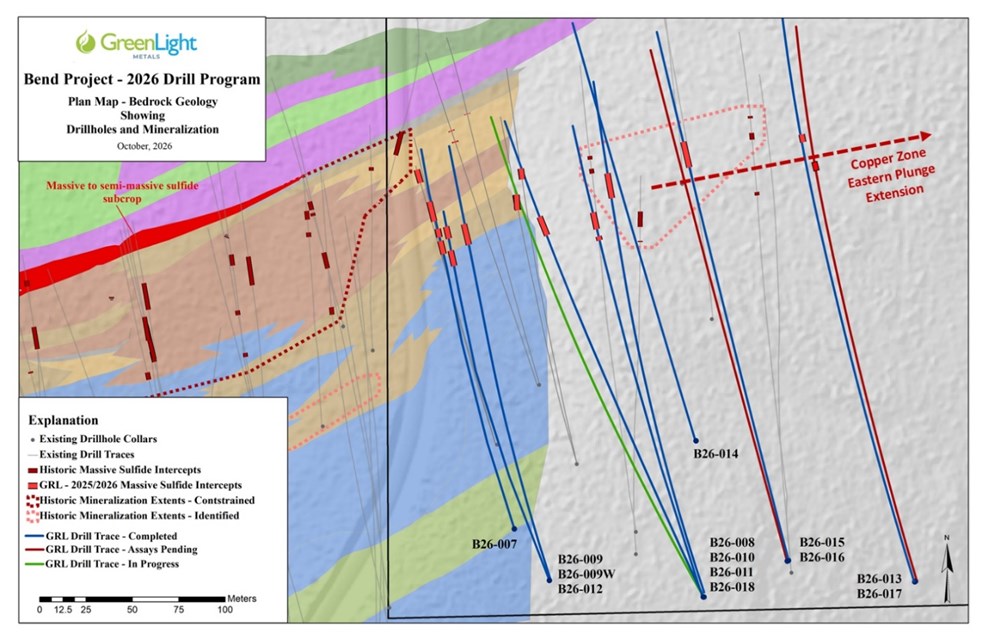
Figure 1: Phase 2 Drill Program Plan Map
To view an enhanced version of this graphic, please visit:
https://images.newsfilecorp.com/files/7506/320320_5d9e63a1c405eb08_001full.jpg
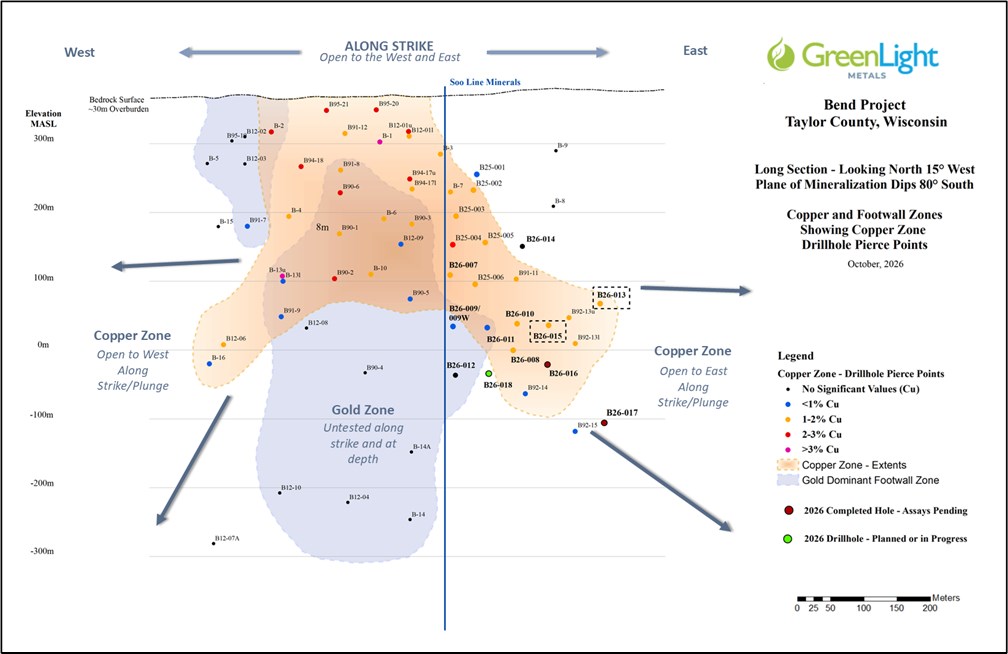
Figure 2: Phase 2 Drill Program Long Section
To view an enhanced version of this graphic, please visit:
https://images.newsfilecorp.com/files/7506/320320_5d9e63a1c405eb08_002full.jpg
Table 2: Previously Reported Results - Phase 2 Program
| Hole | Length (m) | Cu (%) | Au (g/t) | Geological setting | News release (2026) |
| B26-007 | 30.70 | 1.05 | 1.34 | Copper zone | April 27 |
| B26-008 | 27.72 | 1.07 | 0.97 | Copper zone | June 2 |
| B26-010 | 21.06 | 1.32 | 1.07 | Copper zone | June 2 |
| B26-011 | 18.75 | 0.53 | 0.93 | Copper zone | July 22 |
| B26-009W | 52.18 | 0.08 | 1.12 | Gold-bearing footwall | July 22 |
| B26-012 | 55.90 | 0.04 | 0.88 | Gold-bearing footwall | September 22 |
| These are selected earlier results, not newly reported assays. All intervals are drilled lengths; true-width estimates are hole-specific. Refer to the cited releases for full assay tables, inclusions, true-width estimates and technical disclosure. B26-014, reported on September 22, 2026, returned no significant assay results. | |||||
Hole Details
B26-013: Designed as an eastern step-out testing the up-dip extent of copper-gold zone mineralization encountered in historical drilling to the west (B91-11 and B92-13). The mineralized zone was encountered at 384.19 metres and consists of weakly mineralized tuffaceous sediments overlying a 2.74-metre massive sulfide interval (
1.51% Cu and 1.71 g/t Au from 386.65 metres). The true thickness of the mineralized intervals is currently unknown due to limited data nearby.B26-015: Drilled approximately 50 metres east of the B26-008/B26-010 section, B26-015 tested the interpreted eastward plunge of the copper-gold zone. A broad, 25.17-metre zone of semi-massive to massive sulfide-dominant mineralization (
1.30% Cu and 1.30 g/t Au from 427.90 metres) includes a 6.84-metre upper copper-rich interval (1.64% Cu and 1.04 g/t Au from 427.90 metres) and a 6.21-metre lower copper-rich interval (2.34% Cu and 1.85 g/t Au from 445.66 metres). The true thickness of the interval is estimated to be approximately80% of drilled length.B26-016 (Assays Pending): Collared on the same site with the objective of undercutting B26-015 at a steeper angle, B26-016 intersected the targeted horizon approximately 55 metres down-dip of the B26-015 intercept. Logging indicates a 31.62-metre interval of semi-massive to massive sulfide-dominant mineralization from 468.12 to 499.74 metres, including a 0.89-metre quartz vein, within a broader, approximately 70-metre interval of mineralized crystal tuff. The main sulfide interval contains bedded and locally fragmental pyrite with chalcopyrite blebs and disseminations; chalcopyrite appears concentrated in upper and lower parts of the interval. True thickness is estimated to be approximately
70% of drilled length.B26-017 (Assays Pending): Collared on the same site with the objective of undercutting B26-013 at a steeper angle, B26-017 deviated during drilling, which placed the intersection deeper than planned, approximately 225 metres below the B26-013 intersection. The mineralized interval was encountered at 553.31 metres and consists of a 26.05-metre sequence of variably mineralized crystal tuff with intermittent pyrite banding and localized blebs and disseminations of chalcopyrite, including a 2.95-metre basal interval of semi-massive sulfide (approximately
25% pyrite) with intermittent patches, blebs and disseminations of chalcopyrite. True thickness has not yet been established.
The recurrence of pyrite-chalcopyrite sulfides in the same interpreted stratigraphic setting at successive drill positions is encouraging for the continuity of the targeted mineralized horizon. The significant thicknesses of the mineralized intervals encountered in B26-015 and B26-016 further support the projected plunge of the 'core' of the copper zone and support further testing of the zone along this trend to the east. Final surveys, logging and assays will refine the relationship between the intersections and guide follow-up targeting.
The B26-016 and B26-017 descriptions are visual core-logging observations, not assay results. Assays are required to determine metal grades. The reported visual intervals are drilled lengths and include internal quartz-vein and tuff intervals; true widths are provided where surrounding data are sufficient to provide reasonable estimates.
Next Steps
Complete Phase 2: The Company is targeting approximately 6,750 metres of drilling within the existing drilling approval for the leased forty-acre Soo Line mineral parcel. As of October 20, 2026, approximately 6,590 metres had been drilled in 11 completed primary holes, one wedge branch and B26-018, which remains in progress at approximately 447 metres. Approximately 160 metres remain in the current program.
Test priority extensions: B26-018 is designed to test the transition between copper-zone and gold-dominant mineralization and a target identified by borehole electromagnetic ("BHEM") surveys below B26-011. These targets combine the evolving geological model with downhole geophysical information.
Report pending results: The Company has experienced extended laboratory turnaround times on pending assays. Samples from B26-016 were shipped to ALS Global ("ALS") in early October for rush analysis, and samples from B26-017 are being prepared for shipment. Results will be reported following receipt and validation, with B26-018 to follow as sampling and analysis are completed.
Prepare follow-up drilling: Integrate assays, geological logging and BHEM interpretations to prioritize the next drill program at depth and along the mineralized trend. Work beyond the current Soo Line drilling area remains subject to the applicable land access and federal, state and surface-use authorizations.
Table 3: Drill Collar Information
| Hole ID | Easting (m) | Northing (m) | Elevation (masl) | Azimuth (°) | Dip (°) | Total Depth (m) |
| B26-012 | 688519 | 5018496 | 414 | 343 | 74 | 569.06 |
| B26-013 | 688715 | 5018496 | 406 | 343 | 57 | 624.23 |
| B26-014 | 688597 | 5018572 | 410 | 342 | 58 | 413.92 |
| B26-015 | 688648 | 5018508 | 410 | 344 | 62 | 541.93 |
| B26-016 | 688648 | 5018508 | 410 | 344 | 69 | 596.80 |
| B26-017 | 688715 | 5018496 | 406 | 344 | 71 | 742.19 |
| B26-018 | 688602 | 5018488 | 412 | 333 | 73 | In progress |
| Coordinates: NAD83 UTM Zone 15N. Collar locations are planned or field-spotted; final high-resolution collar surveys are pending. Azimuths and dips are collar gyro readings; dips are expressed as positive angles below horizontal. | ||||||
About the Bend Project
The Bend Project is an exploration-stage copper-gold VMS project in Taylor County, Wisconsin, approximately 30 kilometres north-northwest of Medford. GreenLight's interests are held through Green Light Wisconsin LLC and include the leased forty-acre Soo Line mineral parcel and a pending prospecting permit application over approximately 519 acres of adjacent federal mineral estate.
Historical and GreenLight drilling across the Bend property totals approximately 30,440 metres in 70 primary drill holes and two wedge branches as of October 20, 2026, including B26-018 in progress. GreenLight's 2025-2026 drilling accounts for approximately 8,630 metres in 18 primary holes and one wedge branch.
A 1992 historical estimate outlined approximately 4.0 million tonnes grading
¹ Primary source: E.K. Lehmann and Associates, Inc. (1992), Report of the Geology and Ore Reserves of the Bend Copper-Gold Deposit, Taylor County, Wisconsin, prepared for the Jump River Joint Venture. The estimate used approximately 33 drill holes and averaged polygonal and cross-sectional estimates. It was described as a "geologic resource" under U.S. Geological Survey Circular 831 (1980), not a current CIM mineral resource category. No cut-off grade or complete set of estimation assumptions is available in the records reviewed. Its reliability is limited by its age, incomplete supporting records and exclusion of subsequent drilling, including the later historical programs and GreenLight's 2025-2026 work. Reconciliation and verification of collars, surveys, assays, density data, geological interpretations and QA/QC records, together with any additional drilling or sampling required by the Qualified Person, would be required before preparation of a current estimate under CIM Definition Standards. The historical estimate should not be relied upon as a current mineral resource or mineral reserve.
Sample Preparation and QA/QC
A strict chain of custody was maintained from core collection through shipment to ALS, an independent laboratory. NQ-size drill core (47.6-millimetre diameter) was transported to GreenLight's secure Medford-area core facility for geological logging, photography and sampling. Mineralized and adjacent unmineralized intervals were cut lengthwise using an electric saw; one half was submitted for analysis and the remaining half retained. Sample lengths generally ranged from 0.5 to 1.5 metres, subject to geological contacts. Samples were placed in labelled, sealed bags and shipped by ground courier to ALS in Twin Falls, Idaho, for preparation; analyses were completed at ALS in North Vancouver, British Columbia.
Samples were prepared using ALS method PREP-31Y: drying where required, crushing to at least
Certified reference materials and blanks were inserted into the sample stream and together represented approximately
Qualified Person Statement
The technical information in this news release has been prepared under the supervision of, and reviewed and approved by, Thomas Quigley, MSc, CPG-11962, Exploration Director of the Company, a Qualified Person as defined by National Instrument 43-101 - Standards of Disclosure for Mineral Projects ("NI 43-101").
About GreenLight Metals Inc.
GreenLight is a Wisconsin-focused exploration company advancing copper-gold and gold projects across the Penokean Volcanic Belt (one of North America's most prospective VMS districts) and the Kalium Canyon epithermal gold project in Nevada's Walker Lane, which is subject to a staged earn-in and joint venture arrangement with Barrick Mining Corporation. In Wisconsin, GreenLight's portfolio includes the Bend copper-gold deposit, the Reef high-grade gold project, and the Lobo and Lobo East massive sulfide targets. GreenLight's flagship Bend Project is posted on the U.S. Federal Permitting Dashboard as a FAST-41 Transparency Project, providing a public framework for tracking applicable federal review and authorization milestones and coordinated support through the Permitting Council. Guided by a team with deep roots in the state, GreenLight is building a modern minerals company for Wisconsin, by Wisconsin, committed to responsible exploration, transparent engagement, and creating durable local opportunities as it helps supply the critical metals that power the energy transition.
For more information, please contact:
Matt Filgate
President & CEO, Director
(778) 679-3579
matt@greenlightmetals.com
www.greenlightmetals.com
Neither TSX Venture Exchange nor its Regulation Services Provider (as that term is defined in the policies of the TSX Venture Exchange) accepts responsibility for the adequacy or accuracy of this news release.
Forward-Looking Information
This news release contains forward-looking information within the meaning of applicable Canadian securities laws, including statements concerning the interpretation, continuity and potential extension of mineralization; the timing and significance of pending assays; the scope, targets, metreage and completion of Phase 2, including B26-018; BHEM work; and the timing and scope of future drilling, including required authorizations.
This information is based on assumptions regarding geological interpretations, laboratory turnaround times, access, required approvals, financing, equipment and personnel availability, weather and operating conditions. Actual results may differ materially because of assay outcomes; differences between visual observations and assay grades; changes in geological interpretations, true-width estimates or drill plans; delays or denials of permits; access restrictions; contractor or equipment availability; cost increases; financing and market conditions; and operational, environmental or other risks. Additional risks are described in the Company's public filings on SEDAR+.
Readers should not place undue reliance on forward-looking information. It is provided as of the date of this release, and the Company undertakes no obligation to update it except as required by law.

To view the source version of this press release, please visit https://www.newsfilecorp.com/release/320320
FAQ
AI-generated questions and answers. How Rhea-AI works. Not financial advice.
What copper and gold grades did GreenLight Metals report from Bend hole B26-015?
B26-015 returned 25.17 metres at 1.30% copper and 1.30 g/t gold from 427.90 metres. That interval included 6.21 metres grading 2.34% copper and 1.85 g/t gold from 445.66 metres. These are drilled lengths, not true thicknesses.
What assays are still pending from GreenLight Metals' Bend drilling program?
Assays for B26-016 and B26-017 remain pending. B26-016 samples were shipped to ALS Global in early October for rush analysis, while B26-017 samples are being prepared for shipment. Results will be reported after receipt and validation; B26-018 results will follow after sampling and analysis.
How do GreenLight Metals' Bend drill lengths compare with estimated true thickness?
True thickness is estimated at approximately 80% of drilled length for B26-015 and approximately 70% for B26-016. It remains unknown for B26-013 and has not yet been established for B26-017. B26-016's visually logged interval includes a 0.89-metre quartz vein, and assays are required to determine metal grades.
What assumptions underpin GreenLight Metals' Bend copper-equivalent grades?
Copper-equivalent grades combine copper, gold and silver using assumed prices and recoveries. Assumptions are US$4.50/lb copper, US$3,600/oz gold, US$40/oz silver and 90% recovery for each metal. Tellurium is excluded. The calculation omits smelting and refining charges, penalties and payability adjustments; it is not evidence of economic value.