
Graycliff Reports Additional Drill Results Including 7.3 Metres of 10.51 g/t Gold at Shakespeare Gold Project, Ontario
Graycliff Exploration (OTCQB: GRYCF) reported new gold assays from metallurgical drill holes B and C at the Shakespeare Gold Project, Ontario.
Rhea-AI Summary
Graycliff Exploration (OTCQB: GRYCF) reported new gold assays from metallurgical drill holes B and C at the Shakespeare Gold Project, Ontario.
Hole B returned 7.3 m grading 10.51 g/t gold, including 1.0 m at 43.50 g/t and 0.6 m at 45.90 g/t. Hole C intersected 2.0 m grading 1.76 g/t gold at 66.0 m depth. According to Graycliff, results from holes A, B and C plus surface sampling confirm significant gold mineralization near the historic shaft, extending beyond 100 m depth and up to 250 m in prior work. Data and HQ core will support metallurgical and mineralogical studies and planning for potential bulk sampling and future drilling.
Positive
- Hole B intersected 7.3 m grading 10.51 g/t gold, including two intervals above 43 g/t
- Hole C returned 2.0 m grading 1.76 g/t gold at 66.0 m depth
- Previous Hole A interval graded 454.34 g/t gold over 7.0 m
- Gold mineralization traced to >100 m in recent work and up to 250 m previously
- Over 2020–2022, 61 holes drilled; 38 contained gold mineralized intervals
- About 40% of mineralized holes showed visible gold sightings
- Metallurgical HQ core will support mineral extraction and concentration studies and bulk sampling plans
Negative
- Reported drill intervals are down-hole lengths; true widths cannot yet be determined
- Program remains early-stage with no mineral resource estimate disclosed
- Re-activating exploration is tied to completing previously announced LIFE financing
AI-generated analysis. How Rhea-AI works. Not financial advice.




Toronto, Ontario--(Newsfile Corp. - July 7, 2026) - Graycliff Exploration Limited (CSE: GRAY) (OTCQB: GRYCF) (FSE: GE0) (the "Company" or "Graycliff") announces additional high grade gold assay results from metallurgical drill holes B and C (see press release dated June 2, 2026). Drill core assay results include an interval of 10.5 grams per tonne ("g/t") gold over a 7.3 metre ("m") interval in drill hole B, with a 1.0 m intersection of 43.50 g/t gold as well as a 1.0 m intersection of 45.90 g/t gold, as shown in the following table and on the accompanying vertical cross section. The three metallurgical drill holes were completed using larger diameter HQ core equipment and were targeted to provide larger residual material for metallurgical and mineralogical investigation from a variety of material in the gold mineralized zone including lower grade, moderate grade and high-grade mineralization. Extremely high-grade gold mineralization was intersected in drill hole A with the assay results reported June 2 that highlighted an interval grading 454.34 g/t gold over a 7.0 m interval. Mineralization in hole C was targeted at more near surface lower grade mineralization and this targeted mineralization returned a 2.0 m interval grading 1.76 g/t gold at a depth of 66.0 m.
Table 1 - Gold Assay Results from Holes B & C
| Hole | From (m) | To (m) | Width (m)1 | Au (g/t) 2 |
| B | 83.0 | 90.3 | 7.3 | 10.51 |
| including | ||||
| 83.0 | 84.0 | 1.0 | 43.50 | |
| and | ||||
| 88.1 | 89.0 | 0.9 | 4.24 | |
| and | ||||
| 89.0 | 89.6 | 0.6 | 45.90 | |
| and | ||||
| 89.6 | 90.3 | 0.7 | 2.36 | |
| 97.0 | 98.0 | 1.0 | 4.65 | |
| C | 66.0 | 68.0 | 2.0 | 1.76 |
| 70.0 | 71.0 | 1.0 | 1.10 | |
| 88.0 | 89.0 | 1.0 | 3.07 | |
1 Reported intervals are down-hole lengths and not true thicknesses. True widths of the mineralization cannot be determined at this time due to the early-stage nature of the program.
2 Length-weighted average grades are calculated using un-capped gold assay data.
All three holes (A, B & C) drilled were located at 433802 E and 5126912 N with an azimuth of 330. The dips and lengths of the holes were as follows: hole A was -80 degrees to a depth of 149 m; hole B was -73 degrees to a depth of 117 m; and, hole C was -65 degrees to a depth of 101 m.
"The results from Holes A, B & C along with surface sampling confirm the presence of significant gold mineralization in the area of the historic shaft, extending to a depth of more than 100 metres in this recent work, and up to 250 metres in previous work by the Company. The 7 m extremely high-grade intersection in Hole A is more than 35 m from the 7.3 m high-grade intersection in Hole B and is well below the historic workings. We look forward to completing our previously announced LIFE financing and re-activating exploration at our Shakespeare Gold Project", stated Bruce Durham, Director and QP of the Company.
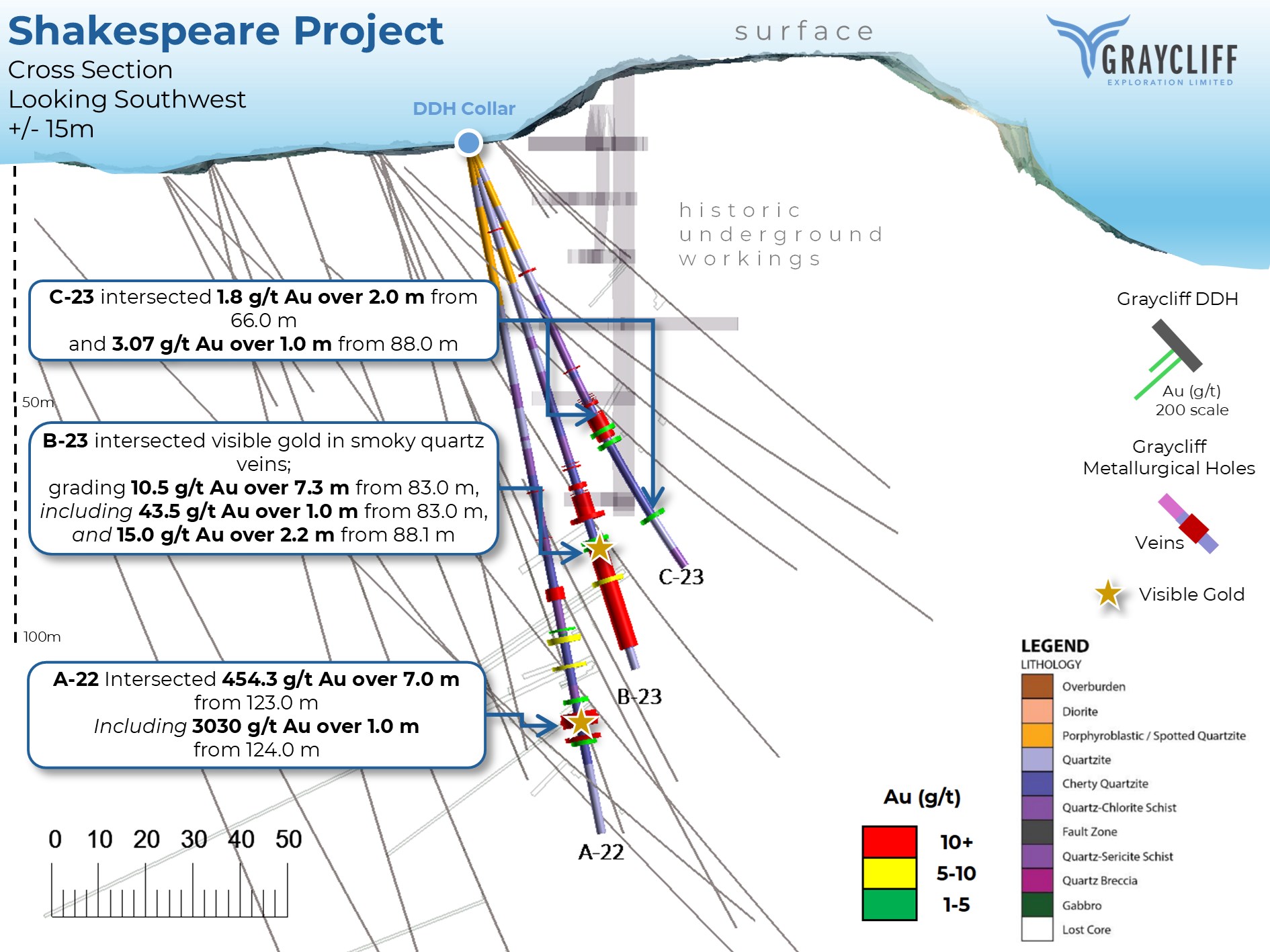
Figure 1 - Cross Section showing Holes A, B & C 1
To view an enhanced version of this graphic, please visit:
https://images.newsfilecorp.com/files/8952/304178_f961bcfc841f29e4_001full.jpg
Note 1 - Figure 1 is not a technical drawing and the information presented is approximate.
The Company will use the analytical data as well as sample material from the three HQ-sized drill holes as the material for initial mineralogical investigations, mineral extraction analysis and for initial mineral concentration studies. These studies will help to provide the Company with data and parameters that will help formulate plans for a program of bulk sampling on the project.
Over the four phases of drilling completed between 2020 and 2022, Graycliff drilled 61 holes totalling more than 12,500 metres. A total of 38 of the 61 holes had gold mineralized intervals and
Qualified Person
Bruce Durham, P.Geo., is a Qualified Person, as that term is defined by Canadian regulatory guidelines under NI 43-101, he is a director of the Company and has read and approved the technical information contained in this press release.
The Company's QA-QC drill core sample protocol consists of collection of samples over generally 0.5 to1.5 metre intervals (depending on the lithology and style of mineralization) over the mineralized portions of the drill hole. The drill core is cut in half with a diamond saw, with half of the core placed in sample bags and the remaining half securely retained in core boxes, off site. Samples are organized into batches, including at least one commercially prepared standard as well as blank material. Sample batches are periodically delivered by Company personnel directly to AGAT. AGAT receives, records and tracks all samples. In the case of metallurgical test holes A, B and C the core was cut in half and then the one half was cut again to provide a one quarter sample similar in weight to one half of the NQ core samples. All samples are assayed at AGAT Laboratories Ltd. ("AGAT") in Thunder Bay, Ontario.
AGAT is accredited to ISO 17025 by the Standards Council of Canada (SCC). Subsequent to drying, crushing grinding as required, the samples are analyzed by lead fusion fire assay with Atomic Absorption Spectroscopy (AAS) finish. PerkinElmer AAnalyst 400 AAS instruments ae used in the analysis. All samples undergo standard fire assay analysis for gold and some samples are processed using ICPOES (Inductively Coupled Plasma Optical Emission Spectroscopy) analysis for 33 additional elements. For samples where visible gold is noted or suspected, or for samples adjacent to visible gold samples, screen-metallic gold analysis is carried out which provides a weighted average gold grade from fire assay analysis of the entire +75 micron fraction and three 30-gram samples of the -75 micron fraction from a 500 gram sample. Prepared samples, sample replicates, duplicates and internal reference materials (both aqueous and geochemical standards) are routinely used as part of AGAT's quality assurance program.
About Graycliff Exploration Limited
Graycliff Exploration is a mineral exploration company focused on its 1,366 hectares of prospective ground, located roughly 88 kms west of Sudbury on the prolific Canadian Shield. The Company's Shakespeare Project consists of one crown patented lease, two crown leases and 82 claims on a property associated with the historic Shakespeare Gold Mine, which operated from 1903 to 1907. Graycliff to date has drilled over 12,900 metres, with visible gold mineralization and significant gold assay intervals in numerous drill holes. Learn more on the website: https://graycliffexploration.com.
On Behalf of the Board of Directors,
James Macintosh, Chairman
jm@graycliffexploration.com or (416) 271-8300
Neither the Canadian Securities Exchange nor its regulation services provider has reviewed or accepted responsibility for the adequacy or accuracy of this press release.
This press release may include forward-looking information within the meaning of Canadian securities legislation, concerning the business of the Company. Forward-looking information is based on certain key expectations and assumptions made by the management of the Company. Although the Company believes that the expectations and assumptions on which such forward-looking information is based on are reasonable, undue reliance should not be placed on the forward-looking information because the Company can give no assurance that they will prove to be correct. Forward-looking statements contained in this press release are made as of the date of this press release. The Company disclaims any intent or obligation to update publicly any forward-looking information, whether as a result of new information, future events or results or otherwise, other than as required by applicable securities laws.

To view the source version of this press release, please visit https://www.newsfilecorp.com/release/304178
FAQ
AI-generated questions and answers. How Rhea-AI works. Not financial advice.