
Gates Grows Its Warehouse Automation Portfolio with IntraLogix™ LRB-100
Gates (GTES) launched IntraLogix LRB-100, a live roller belt for conveyor systems in warehouses and distribution centers.
Sentiment and the balance of points
Rhea-AI Sentiment reads the wording of the document, how positive or negative its language is on a 1 to 5 scale. The balance of points shown with the takes weighs what the document actually discloses, so the two can disagree, for example when a trial that missed its main goal is described in upbeat language.
Rhea-AI Summary
Gates (GTES) launched IntraLogix LRB-100, a live roller belt for conveyor systems in warehouses and distribution centers. The belt drives rollers that carry packages and other goods, replacing conventional fabric construction with a homogeneous polyurethane design. Gates says the design helps eliminate V-guide delamination and reduce maintenance and downtime.
In testing against conventional belt designs, LRB-100 delivered more than five times longer belt life and approximately 75% less elongation. It joins LRB-45 and LRB-77 in the IntraLogix portfolio and is available in the United States, with international availability to follow.
Key Figures
- Belt life
- More than five times longer
- Testing against conventional belt designs
- Elongation
- Approximately 75% less
- Testing against conventional belt designs
- Abrasion resistance
- Roughly 80% greater
- Testing against conventional belt designs
- Weld strength
- Approximately 24% greater
- Compared with other belts used on ARP conveyance systems
- Drive tensions
- On average, 73% lower
- Testing against conventional belt designs
Key Terms
polyurethane technical
delamination technical
elongation technical
abrasion resistance technical
weld strength technical
AI-generated analysis. How Rhea-AI works. Not financial advice.




New Live Roller Belt Replaces Conventional Fabric Construction With A More Durable Polyurethane Design to Help Reduce Maintenance and Downtime
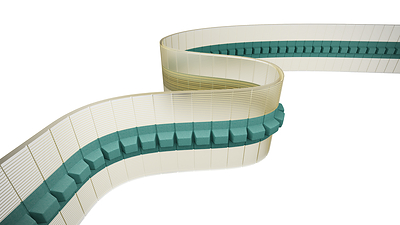
Warehouse automation is a growing market for engineered belt solutions as e-commerce volumes rise, and operators invest in faster, more reliable fulfillment. Conveyors run at high speed and near-continuous duty in these applications, so a belt issue can slow down an entire operation. LRB-100 reflects a deliberate Gates strategy of applying its materials science and engineering expertise to high-growth, automation-driven end markets.
In testing against conventional belt designs, LRB-100 delivered:
- More than five times longer belt life: Reduces replacements, downtime and total ownership costs.
- Approximately
75% less elongation: Helps the belt maintain proper tension longer, reducing retensioning downtime and supporting more consistent around-the-clock operations. - Roughly
80% greater abrasion resistance: Extends belt life in demanding warehouse environments. - Approximately
24% greater weld strength than other belts used on accumulating roller pneumatic (ARP) conveyance systems. - On average,
73% lower drive tensions: Reduces system stress while supporting longer equipment life.
"Increased levels of automation are raising the bar for every component on the conveyor line, and that creates meaningful opportunity for Gates to differentiate," said Mike Haen, vice president of global product line management and marketing at Gates. "With LRB-100, we tackled delamination, a common cause of conveyor downtime, with a belt built from a single material. It's a prime example of how we're leveraging materials science know-how with application expertise to create innovation that matters in fast-growing markets."
LRB-100 joins LRB-45 and LRB-77 in the growing Gates IntraLogix portfolio. It is now available in
About Gates Industrial Corporation Ltd.
Gates is a global manufacturer of innovative, highly engineered power transmission and fluid power solutions. Gates offers a broad portfolio of products to diverse replacement channel customers, and to OEMs as specified components. Gates participates in many sectors of the industrial and consumer markets. Our products play essential roles in a diverse range of applications across a wide variety of end markets ranging from harsh and hazardous industries to everyday consumer applications, including virtually every form of transportation. Our products are sold in more than 130 countries across our three commercial regions: the Americas; Europe, Middle East & Africa; and Asia-Pacific. For more information, visit gates.com.
Forward Looking Statement
This press release contains forward-looking statements within the meaning of Section 27A of the Securities Act of 1933, as amended, and Section 21E of the Securities Exchange Act of 1934, as amended. In some cases, you can identify these forward-looking statements by the use of words such as "outlook," "believes," "expects," "potential," "continues," "may," "will," "should," "could," "seeks," "predicts," "intends," "trends," "plans," "estimates," "anticipates" or the negative version of these words or other comparable words. These statements include, but are not limited to, statements related to the Company's expectations regarding its new LRB-100 product and IntraLogix portfolio. Such forward-looking statements are subject to various risks and uncertainties, including, among others, U.S. policies, actions or legislation (including the imposition of tariffs), economic, political and other risks associated with international operations (including as a result of the ongoing conflicts in the Middle East and their impact on supply chains, such as reduced availability of certain of our production materials and increased supply costs, and economic conditions), availability of raw materials or other manufacturing inputs at favorable prices in sufficient quantities, or at a given time, changes in our relationships with, or the financial condition, performance, purchasing power or inventory levels of key channel partners, dependence on the continued operation of our manufacturing facilities, supply chains, distribution systems and information technology systems, our ability to forecast demand or meet significant increases in demand and market acceptance of new product introductions and innovations. Additional factors that could cause the Company's results to differ materially from those described in the forward-looking statements can be found under the section entitled "Risk Factors" of the Company's Annual Report on Form 10-K for the fiscal year ended December 31, 2025 filed with the Securities and Exchange Commission, as such factors may be updated from time to time in the Company's periodic filings with the SEC, which are accessible on the SEC's website at www.sec.gov. Accordingly, there are or will be important factors that could cause actual outcomes or results to differ materially from those indicated in these statements. These factors should not be construed as exhaustive and should be read in conjunction with the other cautionary statements that are included in the Company's filings with the SEC. The Company undertakes no obligation to publicly update or review any forward-looking statement, whether as a result of new information, future developments or otherwise, except as required by law.
 View original content to download multimedia:https://www.prnewswire.com/news-releases/gates-grows-its-warehouse-automation-portfolio-with-intralogix-lrb-100-302907660.html
SOURCE Gates Corporation