
Helus Pharma Announces Topline Results in Phase 2 Signal Detection Study for HLP004 in Patients with Generalized Anxiety Disorder
Helus Pharma (Nasdaq: HELP) reported topline Phase 2 signal detection results for HLP004 in adults with moderate-to-severe generalized anxiety disorder on standard-of-care therapy.
Rhea-AI Summary
Helus Pharma (Nasdaq: HELP) reported topline Phase 2 signal detection results for HLP004 in adults with moderate-to-severe generalized anxiety disorder on standard-of-care therapy. Patients given 20 mg showed a mean 10.4-point HAM-A reduction at six weeks (p<0.0001), with 67% responders and 39% remitters at six months. The randomized 36-patient study (2:1 active:placebo) found acute effects lasting ~90 minutes and discharge readiness within ~3 hours, and noted no drug-related serious adverse events.
Positive
- Mean HAM-A reduction of 10.4 points at six weeks
- 67% responders in pooled population at six months
- 39% remitters at six months
- No drug-related serious adverse events reported
- Short clinic time: acute effects ~90 minutes, discharge ~3 hours
Negative
- Small randomized sample size: 36 patients
- Limited controlled duration: primary six-week endpoint with observational follow-up
- Results are adjunctive to ongoing SoC, not monotherapy approval data
Details
News Market Reaction – HELP
On Mar 5, the day this news came out, HELP closed 33.88% below the previous close.
Data tracked by StockTitan Argus for the Mar 5 session.
Key Figures
- HAM-A improvement
- 10.4-point reduction
- 20 mg HLP004 adjunctive to SoC at 6 weeks
- P-value
- p<0.0001
- HAM-A reduction at 6 weeks
- Sample size
- 36 patients
- Phase 2 signal detection study in GAD
- Responders at 6 months
- 67%
- Pooled study population
- Remitters at 6 months
- 39%
- Pooled study population
- Response rate 20 mg arm
- 59% responders, 32% remitters
- Week 6 vs SoC in GAD
- Response rate 2 mg arm
- 30% responders and remitters
- Week 6 vs SoC in GAD
- Baseline HAM-A
- 22
- Average baseline score in study participants
Historical Context
-
Appointment of experienced former Pfizer CMO to board and advisory role.
-
Phase 2a MDD trial met primary endpoint with significant antidepressant effects.
-
Q3 results with strong cash and guidance on HLP004 and HLP003 timelines.
-
New CEO installed to lead late-stage development and commercialization plans.
24h Move is the share-price change in the day after each event; other market factors may also have contributed.
Key Terms
hamilton anxiety rating scale medical
ham-a medical
intramuscular medical
randomized medical
placebo medical
phase 2 medical
generalized anxiety disorder-7 medical
suicidality medical
AI-generated analysis. How Rhea-AI works. Not financial advice.




- Statistically significant (p<0.0001) and clinically meaningful improvement in Hamilton Anxiety Rating Scale (“HAM-A”) of ~10 points on top of Standard of Care (“SoC”) at 6 weeks
- Durable effects sustained through at least 6 months
- In Phase 1 trial most participants were ready for discharge within 3 hours1; Acute effects lasted ~90 minutes
- Generally well-tolerated, adverse events were transient, with no drug related serious adverse events recorded
- At six months, the pooled study population showed
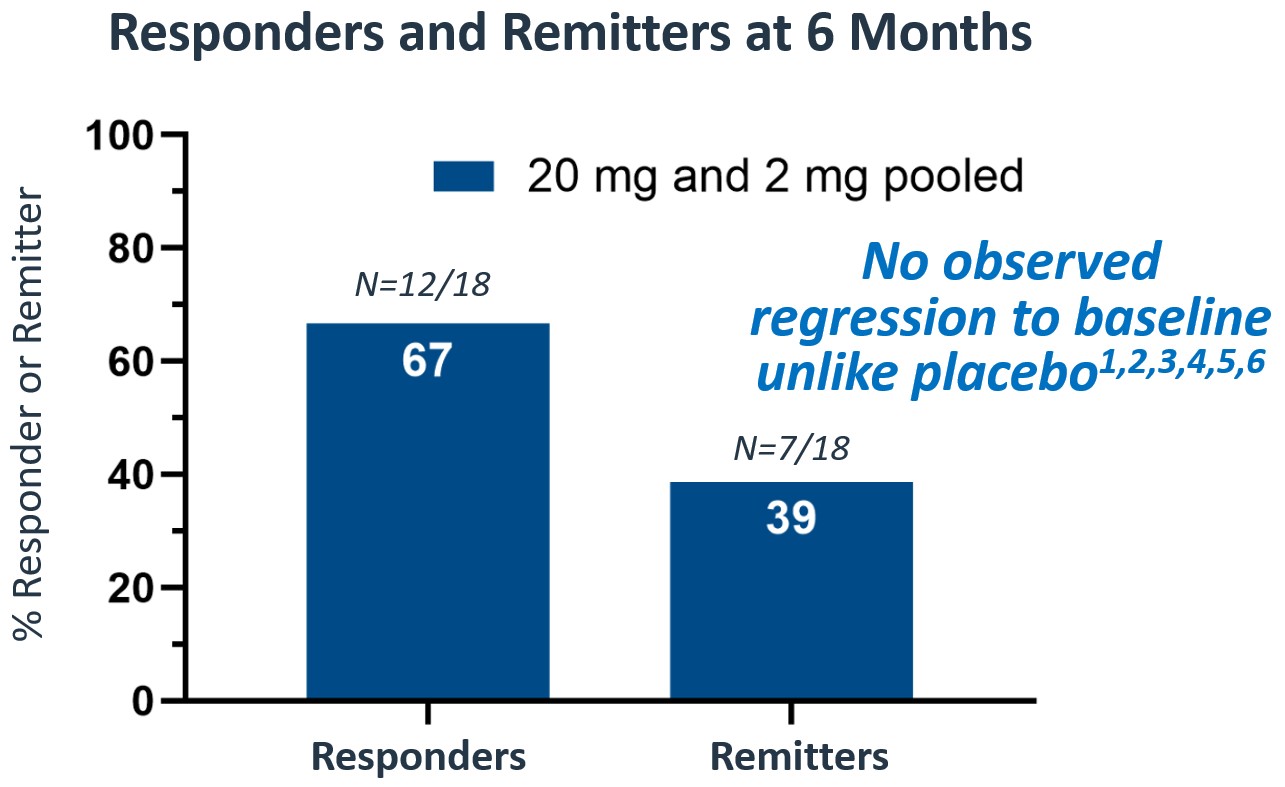
67% responders and39% of patients were in remission (see Figure 1 below)
Figure 1
This news release constitutes a "designated news release" for the purpose of the Company's prospectus supplement dated December 30, 2025, to its short form base shelf prospectus dated September 17, 2025, as amended on December 19, 2025.
NEW YORK and TORONTO, March 05, 2026 (GLOBE NEWSWIRE) -- Helus Pharma (Nasdaq: HELP; Cboe CA: HELP), a clinical-stage pharmaceutical company developing novel serotonergic agonists (“NSAs”) for serious mental health conditions, today announced topline results from a Phase 2 signal detection study evaluating HLP004 as a potential treatment for adults with moderate-to-severe generalized anxiety disorder (“GAD”) who remained symptomatic despite ongoing SoC antidepressant therapy, including selective serotonin reuptake inhibitors and related agents.
GAD affects more than 20 million adults in the United States, and approximately half of patients treated for GAD fail to respond to initial first-line therapy.2,3 No adjunctive pharmacologic treatment for GAD has ever been approved. No new monotherapy has been approved in almost two decades.
In the Phase 2 signal detection study, 36 patients were randomized 2-to-1 active-to-placebo to HLP004 20 mg or 2mg and received two intramuscular doses three weeks apart. Patients were followed through Week 12, with continued observational follow-up extending up to one year. Participants had an average baseline HAM-A score of 22 and a General Anxiety Disorder-7 score of greater than or equal to 10 at screening.
All study participants were already being treated, and continued treatment throughout the trial, with SoC medications for generalized anxiety disorder. The 10-point improvement in anxiety symptoms is above and beyond what was already being seen with SoC treatment.
Key findings include:
- Clinically meaningful efficacy: Patients that received 20mg HLP004 adjunctive to SoC therapy achieved mean reduction of 10.4-points (p<0.0001) in the HAM-A from baseline at six weeks.
- Efficacy in difficult to treat population: Study population consisted of moderate-to-severe patients who remained symptomatic despite ongoing antidepressant or anxiolytic therapy.
- Durable remission and robust response over time:
- At six months, the pooled study population showed
67% responders and39% remitters. - Participants randomized to both 20 mg and 2mg dosing arms experienced meaningful subjective effects and showed clinically significant responses over SoC, with
59% meeting the criteria for response and32% for remission in the 20mg arm and a30% responder and remitter rate in the 2mg arm at week 6.
- At six months, the pooled study population showed
- Commercially scalable clinic time: Short in-clinic treatment experience with acute drug effects lasting approximately 90 minutes and discharge readiness within approximately three hours1, fitting within the treatment paradigm of existing interventional psychiatry clinics.
- Well tolerated: Favorable tolerability profile with no drug-related serious adverse events or suicidality-related safety signals.
“These Phase 2 results support the continued development of HLP004, and I am encouraged by the magnitude of improvement observed over standard of care treatments, together with the rapid onset and short in-clinic treatment experience for this patient population with limited options,” noted Dr. Andrew Cutler, Clinical Professor of Psychiatry at SUNY Upstate Medical University and Senior Advisor to Helus Pharma.
Michael Cola, Chief Executive Officer of Helus Pharma, said, “Patients living with generalized anxiety disorder remain significantly underserved, with many continuing to struggle despite currently available treatments. We are encouraged by these data and the potential for HLP004 to bring hope to GAD patients. The Company’s broad intellectual property portfolio has been leveraged once again to create what we feel are best in class products and we are further excited to release the data on HLP003 targeted at major depressive disorder in the fourth quarter of 2026.”
For additional information, please access our webcast, which is available on the Company's investor relations website on the Events and Presentations page.
About HLP004
HLP004 is an investigational intramuscular deuterated serotonergic agonist designed to activate serotonin pathways believed to promote neuroplasticity. The program is being developed as a potential adjunctive treatment for patients with generalized anxiety disorder who remain symptomatic despite existing pharmacologic therapies.
About Helus Pharma
Helus Pharma™, the commercial operating name of Cybin Inc. (the “Company” or “Helus Pharma”) is a clinical stage pharmaceutical company committed to helping minds heal by developing proprietary NSAs - novel serotonergic agonists: synthetic molecules designed to activate serotonin pathways that are believed to promote neuroplasticity. The Company’s proprietary NSAs are intended to address the large unmet need for people who suffer from depression, anxiety, and other mental health conditions.
With class leading data, Helus Pharma aims to improve the treatment landscape through the introduction of NSAs that aim to provide durable improvements in mental health. Helus Pharma is currently developing HLP003, a proprietary NSA, in Phase 3 clinical development for the adjunctive treatment of major depressive disorder that has received Breakthrough Therapy Designation from the U.S. Food and Drug Administration and HLP004, also a proprietary NSA in Phase 2 for generalized anxiety disorder. Additionally, Helus Pharma has an extensive research portfolio of investigational NSAs.
The Company operates in Canada, the United States, the United Kingdom, and Ireland. For Company updates and to learn more about Helus Pharma, visit www.helus.com or follow the team on X, LinkedIn, YouTube and Instagram. Helus PharmaTM is a trademark of Cybin Corp.
Notes
1. In Phase 1 study at 30 mg dose.
2. Ringeisen H, et al. Mental and Substance Use Disorders Prevalence Study: Findings Report. RTI International; 2023.
3. Fagan H, et al. Pharmacological Treatment of Generalized Anxiety Disorder: Current Practice and Future Directions. Expert Review of Neurotherapeutics. 2023.
Figure 1 Notes:
1) Gueorguieva, et.al. Lancet Psychiatry, 2017. 4(3):230-237.
2) Rutherford, et al. Depress Anxiety, 2015. 32(12):944-57.
3) Berwian, I.M., et al. Psychol Med, 2017. 47(3):426-437.
4) Jones, B.D.M., et al.JAMA Network Open, 2021. 4(9):e2125531-e2125531.
5) Davidson, et al. Eur Neuropsychopharmacol, 2008. 18(9):p. 673-81.
6) Quitkin, et al. Arch GenPsychiatry, 1984. 41:p. 782-786.
Cautionary Notes and Forward-Looking Statements
Certain statements in this news release relating to the Company are forward-looking statements or forward-looking information within the meaning of applicable securities laws (collectively, “forward-looking statements”) and are prospective in nature. Forward-looking statements are not based on historical facts, but rather on current expectations and projections about future events and are therefore subject to risks and uncertainties which could cause actual results to differ materially from the future results expressed or implied by the forward-looking statements. These statements generally can be identified by the use of forward-looking words such as “may”, “should”, “could”, “potential”, “possible”, “intend”, “estimate”, “plan”, “anticipate”, “expect”, “believe” or “continue”, or the negative thereof or similar variations. Forward-looking statements in this news release include statements regarding the Company’s expectations of progressing the HLP004 program toward development; the potential of HLP004 as a scalable treatment option for patients living with GAD; and the Company’s plans to engineer proprietary drug discovery platforms, innovative drug delivery systems, novel formulation approaches and treatment regimens for mental health conditions.
These forward-looking statements are based on reasonable assumptions and estimates of management of the Company at the time such statements were made. Actual future results may differ materially as forward-looking statements involve known and unknown risks, uncertainties, and other factors which may cause the actual results, performance, or achievements of the Company to materially differ from any future results, performance, or achievements expressed or implied by such forward-looking statements. Such factors, among other things, include: fluctuations in general macroeconomic conditions; fluctuations in securities markets; expectations regarding the size of the NSA market; the ability of the Company to successfully achieve its business objectives; plans for growth; political, social and environmental uncertainties; employee relations; the presence of laws and regulations that may impose restrictions in the markets where the Company operates; implications of disease outbreaks on the Company's operations; and the risk factors set out in each of the Company's management's discussion and analysis for the three and nine month periods ended December 31, 2025, and the Company’s annual information form for the year ended March 31, 2025, which are available under the Company's profile on SEDAR+ at www.sedarplus.ca and with the U.S. Securities and Exchange Commission on EDGAR at www.sec.gov/edgar. Although the forward-looking statements contained in this news release are based upon what management of the Company believes, or believed at the time, to be reasonable assumptions, the Company cannot assure shareholders that actual results will be consistent with such forward-looking statements, as there may be other factors that cause results not to be as anticipated, estimated or intended. Readers should not place undue reliance on the forward-looking statements contained in this news release. The Company assumes no obligation to update the forward-looking statements of beliefs, opinions, projections, or other factors, should they change, except as required by law.
The Company makes no medical, treatment or health benefit claims about the Company’s proposed products. The U.S. Food and Drug Administration, Health Canada or other similar regulatory authorities have not evaluated claims regarding NSAs or HLP003, HLP004 and other programs of the Company. The efficacy of such products has not been confirmed by approved research. There is no assurance that the use of NSAs, HLP003, HLP004 or other programs of the Company can diagnose, treat, cure or prevent any disease or condition. Rigorous scientific research and clinical trials are needed. If Helus Pharma cannot obtain the approvals or research necessary to commercialize its business, it may have a material adverse effect on the Company’s performance and operations.
Neither Cboe Canada, nor the Nasdaq Global Market stock exchange, have approved or disapproved the contents of this news release and are not responsible for the adequacy and accuracy of the contents herein.
Investor Contact:
Josh Barer
astr partners
Managing Director
(908) 578-6478
josh.barer@astrpartners.com
George Tziras
Chief Business Officer
Helus Pharma
1-866-292-4601
irteam@helus.com – or – media@helus.com
Media Contact:
Johnny Tokarczyk
RXMD
Public Relations Director
jtokarczyk@rxmedyn.com
(914) 772-7562
A photo accompanying this announcement is available at https://www.globenewswire.com/NewsRoom/AttachmentNg/728bf286-24d0-40b0-a151-beaced3735d7.

FAQ
AI-generated questions and answers. How Rhea-AI works. Not financial advice.