
The Path Forward: How Commuting Impacts the Return to Office Experience
HealthEquity (HQY) released new research on employee transitions from remote work to office-based schedules, highlighting commuting challenges and benefits solutions.
Rhea-AI Summary
HealthEquity (HQY) released new research on employee transitions from remote work to office-based schedules, highlighting commuting challenges and benefits solutions. The 2025 RTO and Commuter Insights study revealed that 54% of employees identified commuting costs as the primary obstacle to office attendance.
Key findings show that 75% of employees reported positive RTO experiences, and 83% noted improved work quality after returning to office. While 65% of employees are aware of tax-free commuter benefits, only 47% currently use them. The study found a correlation between higher commuting costs and lower office attendance, with cost concerns affecting employee wellbeing and sleep quality.
With companies averaging approximately 3 days per week of mandatory office time, HealthEquity emphasizes that commuter benefits can help organizations develop flexible RTO policies aligned with workforce needs, potentially improving employee wellbeing and productivity.
Positive
- 75% of employees reported positive RTO experience
- 83% reported improved work quality after office return
- 65% of employees are aware of tax-free commuter benefits
Negative
- 54% cite commuting costs as main obstacle to office attendance
- Only 47% utilize available commuter benefits
- Higher commuting costs correlate with lower office attendance
- RTO policies linked to increased employee turnover
News Market Reaction – HQY
In the trading session that priced this news, HQY declined 1.81%, reflecting a mild negative market reaction.
Data tracked by StockTitan Argus on the day of publication.
AI-generated analysis. How Rhea-AI works. Not financial advice.




Commuting expenses are on employees’ minds, and with more employees returning to the office, commuter benefits can ease the transition
DRAPER, Utah, Feb. 20, 2025 (GLOBE NEWSWIRE) -- HealthEquity, a leader in benefits solutions, today released new research focused on the challenges and preferences of employees who recently transitioned from fully remote work to a consistent in-office schedule. The findings highlight how factors like commuting can impact employees' return to office (RTO) experience and underscore the importance of commuter benefits in supporting a positive RTO experience.
“Commuting can be the biggest hurdle in any return-to-office or existing work-from-office experience," said HealthEquity Commuter Product General Manager, Kalpi Desai. "Offering commuter benefits, from pre-tax options to parking discounts, can make a big difference in making individuals’ workdays more manageable and cost-efficient."
The 2025 HealthEquity RTO and Commuter Insights study revealed that
- Most employees said their RTO was positive –
75% of employees surveyed reported positive RTO experience. - RTO improved quality of work –
83% reported that their quality of work improved after they returned to the office. - Correlation between higher commuting costs and lower in-office attendance – Employees who reported higher commuting costs also tend to have lower in-office attendance, suggesting a correlation between commuting expenses and reduced office presence.
- Cost concerns impact wellbeing – Those most affected by commuting expenses report lower sleep quality and a more negative perception of RTO.
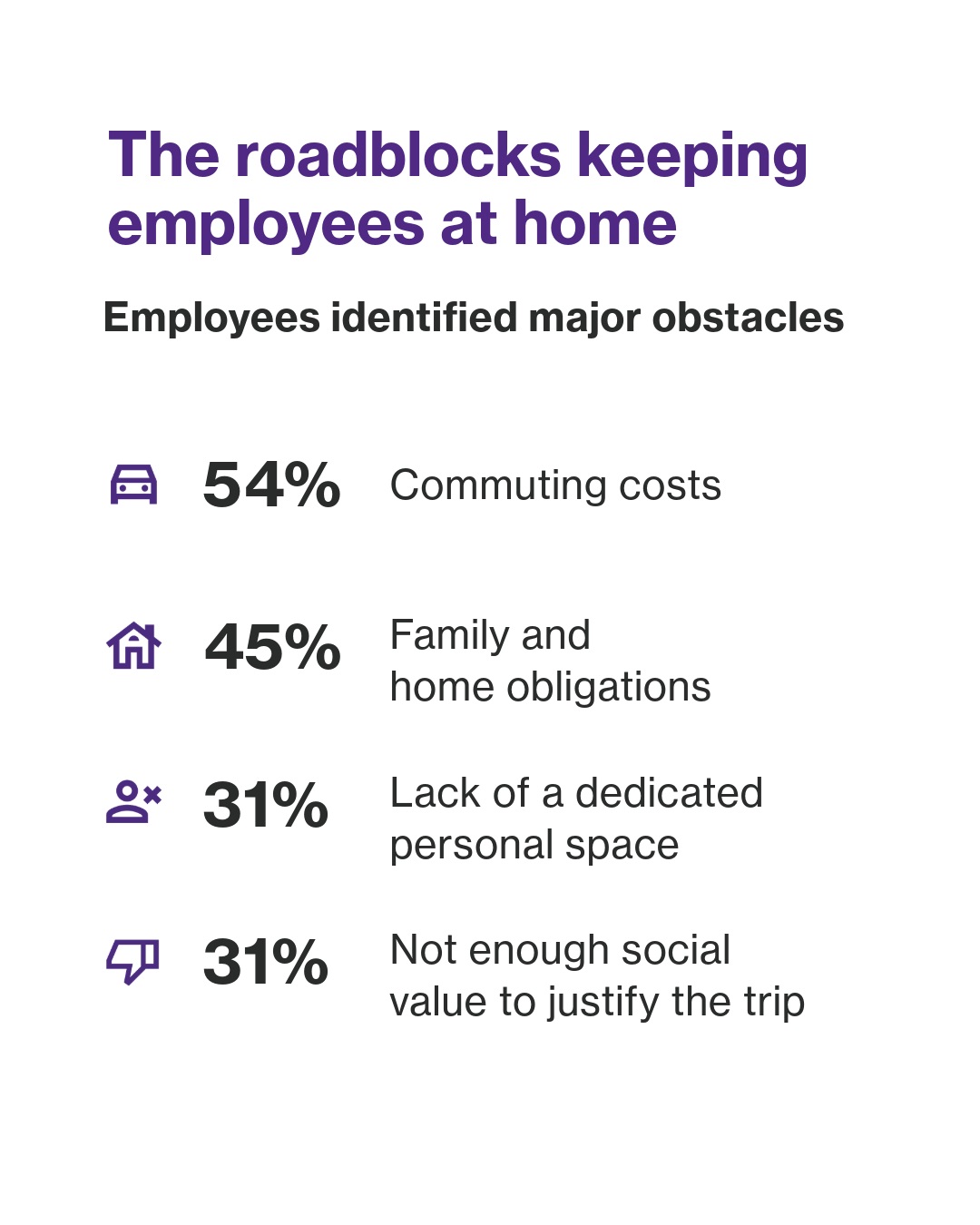
With more companies mandating more in-office time from 2023, (the average across size and industry being approximately 3 days a week), it’s important to get the details right. This is particularly evident as RTO policies have made it more challenging to fill positions and have contributed to higher employee turnover.2 These realities combined with the fact that the cost of transportation in the US remains one of the highest consumer costs3, make workforce commutes one of the most important considerations in a successful RTO strategy.
Despite these challenges, the research highlights an opportunity for employers to address these concerns through commuter benefits and ongoing benefits education. While HealthEquity found that
“While benefit types and options vary, what these employees are telling us is they want benefits that ease the financial strain of RTO. Commuter benefits are smart, strategic choices for companies that are shifting to more time in the office,” said Desai. “This is true not only in cities with mass transit, but also in the more numerous areas where driving to work is more common.”
HealthEquity commuter benefits support organizations as they develop flexible RTO policies that align with workforce needs. By addressing commuting challenges, employers can improve employee wellbeing, promote better work-life balance, and foster a more engaged and productive workforce. Employers wanting to learn more about the latest RTO research and RTO employee-centered strategies can register to attend the HealthEquity webinar, “Employee-Centered RTO Strategies that Really Work,” on Thursday, February 27.
2 https://papers.ssrn.com/sol3/papers.cfm?abstract_id=5031481
3 https://www.bts.gov/sites/bts.dot.gov/files/2024-12/TSAR-2024_Web_123024-1644.pdf
About HealthEquity
HealthEquity and its subsidiaries administer HSAs and various other consumer-directed benefits for over 16 million accounts, working in close partnership with employers, benefits advisors, and health and retirement plan providers. With a commitment to saving and improving lives, HealthEquity empowers individuals to take control of their healthcare journey through cutting-edge solutions, innovation, and a relentless focus on well-being. Learn more about HealthEquity’s “Purple service” and our approach to consumer-driven benefits at www.healthequity.com.
Media Contact
Amy Cerny
801-508-3237
acerny@healthequity.com
A photo accompanying this announcement is available at https://www.globenewswire.com/NewsRoom/AttachmentNg/cf76b502-7866-4849-9643-7d12f7d48bb2
