





Atlas Critical Minerals' Iron Ore Project Commences Revenue-Generating Operations
Rhea-AI Summary
Atlas Critical Minerals (OTCQB: JUPGD) has begun revenue-generating mining operations at its iron ore project in Brazil's Iron Quadrangle. Shipments of run-of-mine iron ore are being transported to a nearby third-party processing plant for conversion into sinter feed, and the company receives payment for delivered raw material plus a small percentage of proceeds from final sinter feed sales.
Key permits include a 10-year operational license (May 2024) allowing up to 300,000 tons/year extraction and a mining concession (May 2025). The iron ore portfolio covers ~55,057 acres across 18 mineral rights; total critical mineral rights exceed 218,000 hectares (rare earths, titanium, graphite, uranium).
Positive
- Revenue-generating operations commenced with iron ore shipments
- Company receives payment for raw material plus a percentage of sinter feed proceeds
- 10-year license (May 2024) permits up to 300,000 tons/year extraction
- Iron ore holdings of 55,057 acres across 18 mineral rights
Negative
- Processing depends on a third-party plant, limiting operational control
- Company receives only a small percentage of final sinter feed proceeds, capping upside
Key Figures
Market Reality Check
Peers on Argus
No peer momentum or same-day peer headlines are provided, suggesting the sharp -26.69% move was stock-specific rather than sector-driven.
Market Pulse Summary
This announcement marked a shift to revenue-generating operations as Atlas Critical Minerals began shipping iron ore to a third-party plant for processing into sinter feed. The company operates under a 10-year license allowing up to 300,000 tons of run-of-mine ore annually and controls 55,057 acres of iron ore rights within a broader portfolio exceeding 218,000 hectares of critical minerals. Investors may watch actual volumes, realized revenues, and operational consistency from this model.
Key Terms
open-pit mining technical
sinter feed technical
run-of-mine technical
mining concession regulatory
AI-generated analysis. Not financial advice.




Belo Horizonte, Brazil--(Newsfile Corp. - December 4, 2025) - Atlas Critical Minerals Corporation (OTCQB: JUPGD) ("Atlas Critical Minerals" or the "Company"), a company focused on critical minerals for advanced technology uses, energy transition, and defense applications, is pleased to announce that mining operations have commenced at its iron ore project in Brazil's renowned Iron Quadrangle region. Iron ore shipments are now being transported from the mine site to a nearby third-party processing facility for conversion into high-quality sinter feed.
Under the Company's streamlined operating model, iron ore is extracted via open-pit mining, and transported to the nearby processing facility operated by an independent Brazilian iron ore company. The processing plant transforms the Company's run-of-mine material into premium sinter feed used in steelmaking. Atlas Critical Minerals receives revenues both for the raw material delivered and a small percentage of proceeds from the final sinter feed product. Attached to this press release, Figure 1 shows the Company's iron ore material being loaded for transport to the processing plant, and Figure 2 depicts such plant.
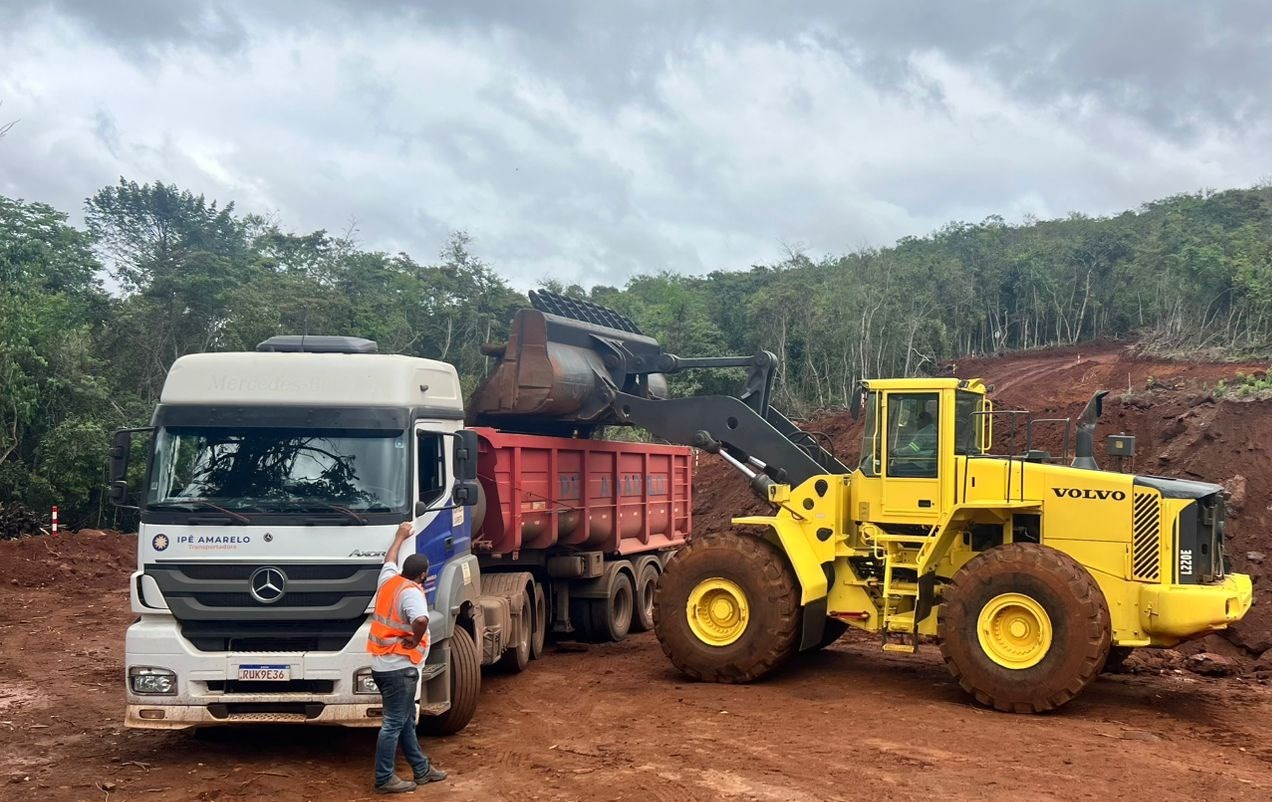
Figure 1 — Iron ore being loaded for transport to the processing facility.
To view an enhanced version of this graphic, please visit:
https://images.newsfilecorp.com/files/6728/276870_caede9d64487696e_002full.jpg
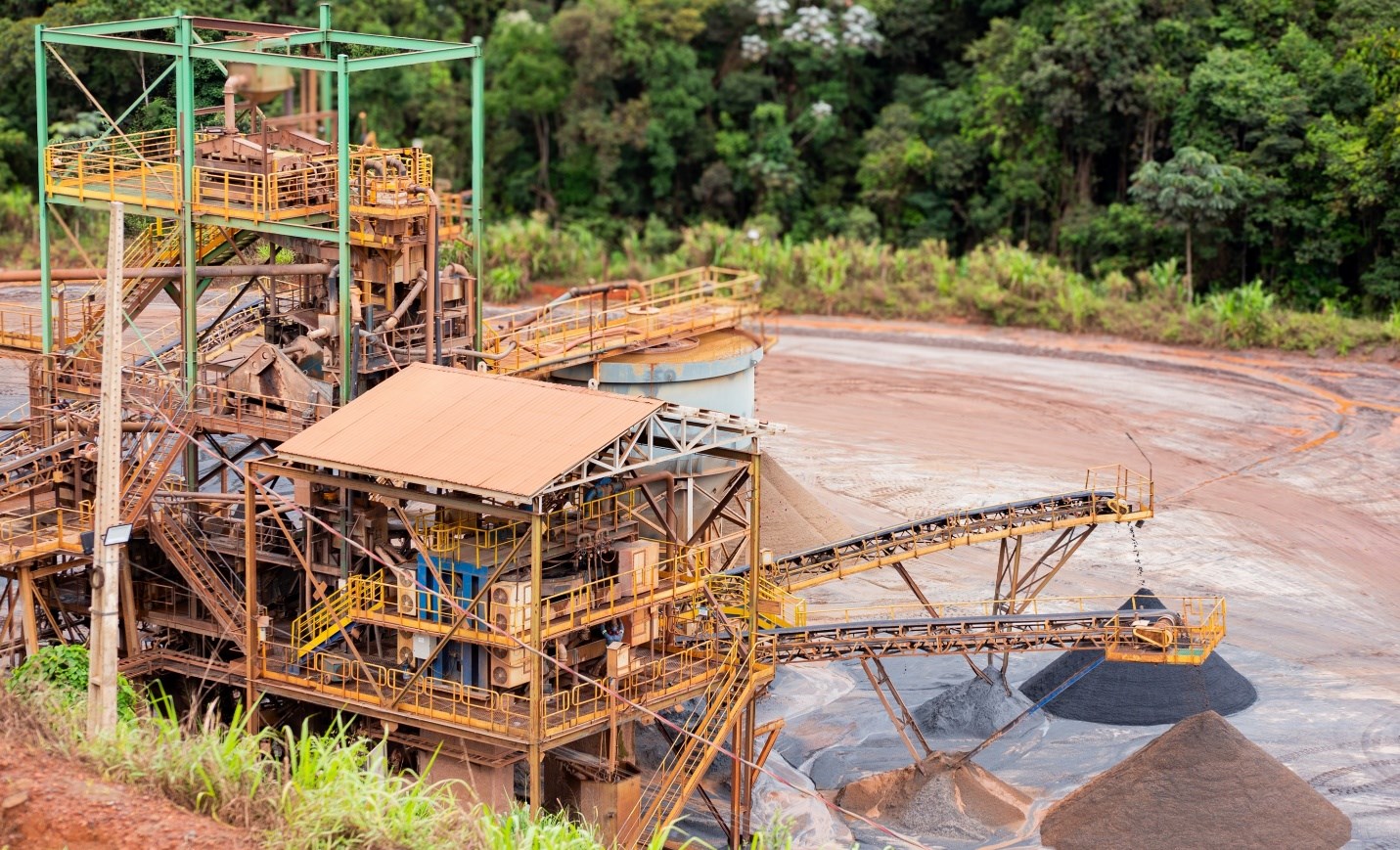
Figure 2 — Third-party plant where Atlas Critical Minerals' iron ore is processed.
To view an enhanced version of this graphic, please visit:
https://images.newsfilecorp.com/files/6728/276870_caede9d64487696e_003full.jpg
In May 2024, Atlas Critical Minerals received a 10-year operational license from the State of Minas Gerais for extraction of up to 300,000 tons of run-of-mine per year, and in May 2025, it obtained the mining concession status from Brazil's Ministry of Mines and Energy for its mineral right.
Atlas Critical Minerals' iron ore portfolio now encompasses approximately 55,057 acres across 18 mineral rights in Brazil. The Company's broader portfolio of critical mineral rights totals more than 218,000 hectares, including projects targeting rare earths, titanium, graphite, and uranium — minerals essential for advanced technology uses, energy transition, and defense applications.
About Atlas Critical Minerals Corporation
Atlas Critical Minerals Corporation (OTCQB: JUPGD) controls a large portfolio of critical mineral rights in Brazil, encompassing over 218,000 hectares, and including projects in rare earths, titanium, graphite, and uranium — minerals essential for advanced technology uses, energy transition, and defense applications. Additionally, the Company's first iron ore project began operations in November 2025. More information is available at www.atlascriticalminerals.com and in the Company's filings with the U.S. Securities and Exchange Commission.
Safe Harbor Statement
This press release contains forward-looking statements within the meaning of Section 27A of the Securities Act of 1933, as amended, and Section 21E of the Securities Exchange Act of 1934, as amended. Forward-looking statements are based upon the current plans, estimates and projections of Atlas Critical Minerals and its subsidiaries and are subject to inherent risks and uncertainties which could cause actual results to differ from the forward-looking statements. Therefore, you should not place undue reliance on these forward-looking statements.
Risks related to the Company and its subsidiaries are discussed in the section entitled "Risk Factors" in the Company's Form 20-F filed with the Securities and Exchange Commission (the "SEC") on February 28, 2025. Please also refer to the Company's other filings with the SEC, all of which are available at www.sec.gov. In addition, any forward-looking statements represent the Company's views only as of today and should not be relied upon as representing its views as of any subsequent date. The Company explicitly disclaims any obligation to update or revise any forward-looking statements to reflect any change in its expectations or any change in events, conditions, or circumstances on which any such statement is based.
Investor Relations
Brian W. Bernier
Vice President, Investor Relations
+1 (833) 661-7900
brian.bernier@atlas-cm.com
https://www.atlascriticalminerals.com/
@Atlas_Crit_Min

To view the source version of this press release, please visit https://www.newsfilecorp.com/release/276870
FAQ
What did Atlas Critical Minerals (JUPGD) announce on December 4, 2025 about its iron ore project?
How much iron ore extraction is permitted under Atlas' May 2024 license (JUPGD)?
What permits did Atlas Critical Minerals secure for the Brazil iron ore project (JUPGD)?
How large is Atlas' iron ore portfolio reported on December 4, 2025 (JUPGD)?
Will Atlas process its iron ore on-site or use a third party (JUPGD)?
What other critical minerals does Atlas Critical Minerals hold in its broader portfolio (JUPGD)?