
New Report from KBR Supports Potential for US$1.75/kg Hydrogen from Syntholene's Geothermal-SOEC Platform
KBR (NYSE: KBR) completed an independent technical and economic review of Syntholene's geothermal‑integrated SOEC hydrogen platform, modeling levelized hydrogen costs of about US$1.75/kg in best‑case Iceland scenarios and US$2.10/kg under broader deployment.
Rhea-AI Summary
KBR (NYSE: KBR) completed an independent technical and economic review of Syntholene's geothermal‑integrated SOEC hydrogen platform, modeling levelized hydrogen costs of about US$1.75/kg in best‑case Iceland scenarios and US$2.10/kg under broader deployment.
The study benchmarks these costs against higher recent European green and fossil hydrogen estimates and outlines key assumptions, potential technical advantages, and project risks.
Positive
- Modeled LCOH about US$1.75/kg in Iceland geothermal scenario
- Modeled broad‑deployment LCOH about US$2.10/kg hydrogen
- Target hydrogen cost below recent European fossil SMR benchmark
- Integration of geothermal heat and power may reduce electrical intensity
- Demonstration facility expected to provide key operating performance data
Negative
- LCOH findings based on modelling, not commercial operating data
- Economics assume advantaged geothermal access and successful thermal integration
- Risks include electricity price variability and SOEC degradation over time
- Project‑specific capital and operating costs still require validation
Details
News Market Reaction – KBR
In the Jul 9 session, KBR declined 1.24%, reflecting a mild negative market reaction.
Data tracked by StockTitan Argus on the day of publication.
Key Figures
- LCOH best-case
- US$1.75/kg H2
- KBR-reviewed Syntholene LCOH under best-case Iceland geothermal scenario
- LCOH broad deployment
- US$2.10/kg H2
- KBR-reviewed Syntholene LCOH under broader deployment assumptions
- Green hydrogen Europe
- €6.71/kg H2
- Recent unsubsidized average green hydrogen price in Europe (US$7.66 equivalent)
- Fossil SMR benchmark
- €3.33/kg H2 (US$3.80)
- Recent regional European benchmark LCOH for unabated SMR hydrogen
- SMR with carbon price
- €4.12/kg H2 (US$4.70)
- European SMR hydrogen including current carbon price (ETS)
- SOEC system size
- 1200 kW
- System size used in Syntholene LCOH estimate
- Capital expenditures
- US$1.2 million
- Capex assumption for 1200 kW configuration in KBR review
- Electricity price
- US$30/MWh
- Assumed power cost in Syntholene LCOH estimate
Historical Context
-
Scheduled second quarter 2026 earnings release and conference call date and time.
-
PureSAF technology selected for licensing and FEED for Asia’s first commercial SAF plant.
-
Named CEO and CFO designates for planned Mission Technology Solutions spin-off business.
-
Opened inaugural Innovation Studio in Bengaluru focused on INSITE 3.0 and AI services.
-
$95 million five-year DEEDS contract win supporting U.S. Space Force digital engineering.
24h Move is the share-price change in the day after each event; other market factors may also have contributed.
Key Terms
solid oxide electrolyzer cells technical
levelized cost of hydrogen financial
steam methane reforming technical
carbon capture technical
binary-cycle-style heat exchange technical
AI-generated analysis. How Rhea-AI works. Not financial advice.




Technical Review from KBR Highlights the Advantages of Syntholene's Geothermally Integrated Solid Oxide Electrolyzer Cells for Step Change Reduction in Hydrogen Cost
Chicago, Illinois--(Newsfile Corp. - July 9, 2026) - Syntholene Energy Corp. (TSXV: ESAF) (FSE: 3DD0) (OTCQB: SYNTF) ("Syntholene" or the "Company") announced today an independent technical and economic review evaluating Syntholene's geothermal-integrated hydrogen production platform and its potential application to low-carbon fuels, including synthetic sustainable aviation fuel ("eSAF").
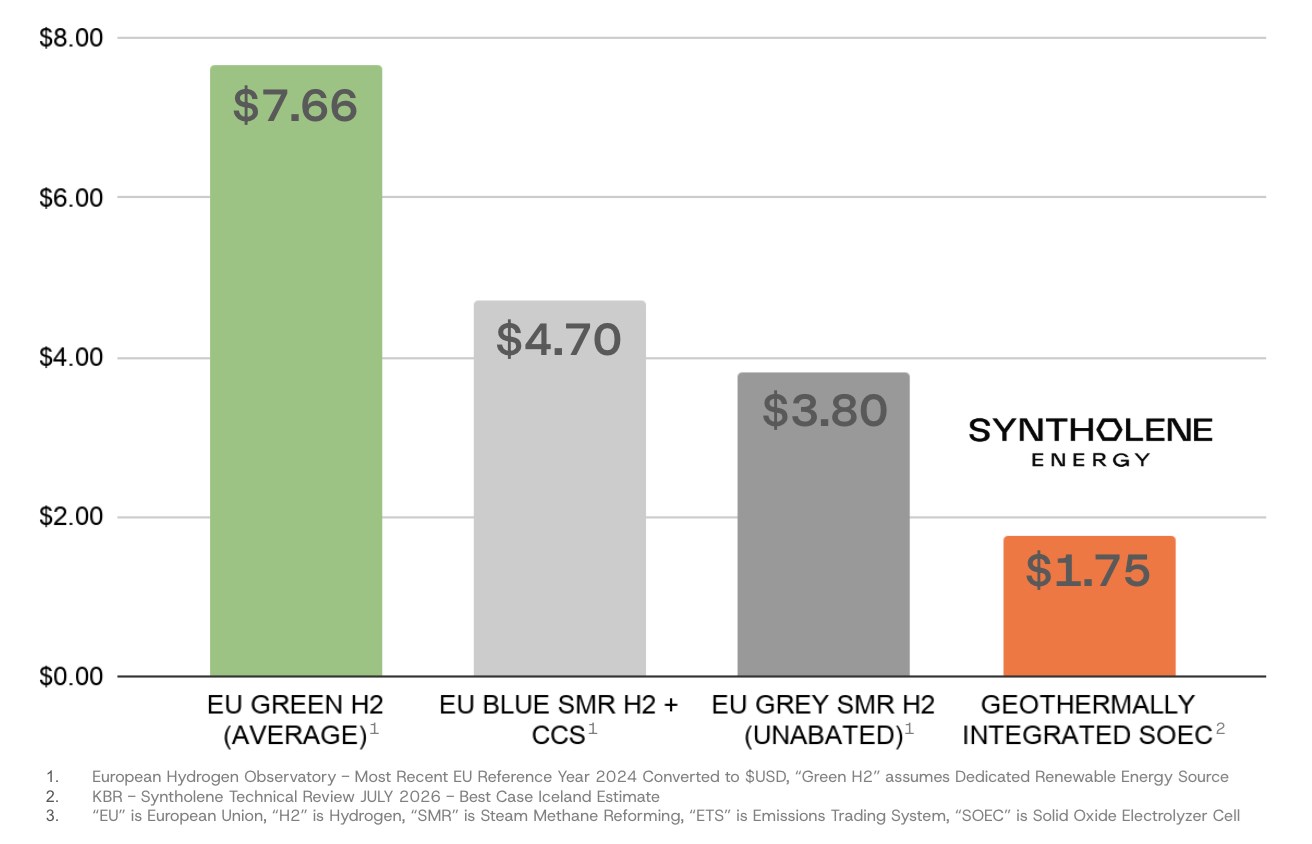
Figure 1. Regional Hydrogen Production Cost Comparison (per kilogram)
To view an enhanced version of this graphic, please visit:
https://images.newsfilecorp.com/files/11636/304450_277c20f9c4cbc810_001full.jpg
Kellogg Brown and Root LLC (NYSE: KBR) ("KBR") was engaged by the Company to provide an analysis and opinion of high level technical and cost review of the Company's hydrogen technology that can be applied to eSAF deployments (the "Report"). The Report assessed Syntholene's levelized cost of hydrogen ("LCOH") methodology and conducted sensitivity analysis across key cost variables. KBR concluded that Syntholene's likely LCOH is approximately US
Hydrogen is the dominant cost in synthetic aviation fuel production (IEA), and generating it at low cost is central to achieving cost competitive synthetic fuel. Recent unsubsidized estimates of comparable green hydrogen price averages across Europe were ~€
Notably, Syntholene's LCOH target is lower than the most recent regionally comparable European benchmark for unabated fossil hydrogen produced with traditional Steam Methane Reforming ("SMR"), of which the European Hydrogen Observatory stated "the levelized production costs of hydrogen by SMR in Europe were, on average, ~€3.33/kg H2 (US
The review further states that successful operation at Syntholene's demonstration facility in Húsavík, Iceland (the "Demonstration Facility") would provide key operating data related to efficiency, thermal integration, reliability and stack degradation.
The findings in the Report are based on a number of key assumptions using modelling and sensitivity analysis rather than commercial operating data or executed contracts. These assumptions include the Company's access to advantaged geothermal resources and successful thermal integration. In addition, Syntholene's LCOH estimate was based on 1200 kW size with US
The Report identified several potential technical and commercial differentiators for Syntholene, including:
- Integration of low-carbon geothermal electricity and thermal energy;
- Reduced electrical intensity through SOEC operation and heat recovery;
- Integration advantages with eSAF configurations, including heat and utility integration;
- Mitigation strategies for geothermal silica scaling through indirect fluid handling and binary-cycle-style heat exchange design; and
- Extension of SOEC stack operating life through dynamic AC:DC operation approach.
"Syntholene's core thesis is that low-cost synthetic fuel production starts with low-cost clean hydrogen, and that the lowest-cost clean hydrogen will come from systems that intelligently use both electricity and heat," said Dan Sutton, Chief Executive Officer of Syntholene. "The report identifies the major cost drivers, validates the importance of our now-operating Húsavík Demonstration Facility, and reinforces why geothermal colocation can be a structural advantage in synthetic fuel production."
KBR was engaged as an independent third-party technical consultant and was paid a fixed fee for its assessment and the preparation for the Report. KBR did not receive any securities of the Company as compensation for its services.
If you are interested in receiving a copy of the Report, please contact the Company at comms@syntholene.com.
About KBR
KBR delivers science, technology and engineering solutions to governments and companies around the world. KBR employs approximately 36,000 people worldwide with customers in more than 85 countries and operations in over 28 countries. KBR is proud to work with its customers across the globe to provide technology, value-added services, and long-term operations and maintenance services to ensure consistent delivery with predictable results. At KBR, We Deliver.
Visit www.kbr.com.
About Syntholene
Syntholene is actively commercializing its novel Hybrid Thermal Production System for low-cost clean fuel synthesis. The target output is ultrapure synthetic jet fuel, which the Company seeks to manufacture at
Syntholene operates the world's first geothermally-integrated high temperature electrolysis demonstration facility in Husavik, Iceland.
Founded by experienced operators across advanced energy infrastructure, nuclear technology, low-emissions steel refining, process engineering, and capital markets, Syntholene aims to be the first team to deliver a scalable modular production platform for cost-competitive synthetic fuel, thus accelerating the commercialization of carbon-neutral eFuels across global markets.
For further information, please contact:
Dan Sutton, CEO
comms@syntholene.com
www.syntholene.com
+1 608-305-4835
X: @Syntholene
Linkedin: Syntholene Energy
Youtube: Syntholene Energy
Investor Relations
KIN Communications Inc.
604-684-6730
ESAF@kincommunications.com
Neither TSX Venture Exchange nor its Regulation Services Provider (as that term is defined in policies of the TSX Venture Exchange) accepts responsibility for the adequacy or accuracy of this release.
Forward-Looking Statements
This press release contains forward-looking statements within the meaning of applicable securities laws. The use of any of the words "expect", "anticipate", "aims", "continue", "estimate", "objective", "may", "will", "project", "should", "believe", "plans", "intends", "targets" and similar expressions are intended to identify forward-looking information or statements. All statements, other than statements of historical fact, including but not limited to statements regarding the projections or estimates made in the Report, the Demonstration Facility, testing planned at the Demonstration Facility, including the timing thereof and and the proposed use of data from such testing, commercial scalability, proposed benefits to the project from the skills of the engaged service providers, economic benefits of the Company's products relative to competitive products, the Company's ability to execute on its plans for advancement and commercialization of its technology, technical and economic viability, anticipated geothermal power availability, anticipated benefit of eFuel, and future commercial opportunities, are forward-looking statements.
The forward-looking statements and information are based on certain key expectations and assumptions made by the Company, including without limitation the assumption that the Company will be able to execute its business plan in the manner and timeline set forth in its public disclosure or at all, that the Demonstration Facility will operate as expected, that the engaged service providers have the skills to advance the Company's business plans, that the eFuel will have its expected benefits, that there will be market adoption, that the Company's review of the competitive landscape and that its understanding of being the world's first Company to have geothermal-SOEC integration remain accurate, that any potential competitors to the Company would not be able to develop or execute geothermal-SOEC integration as quickly or as well as the Company, that the Company will be able to produce the eFuel at competitive pricing in the range anticipated in this news release and the Report or at all, that the proposed testing will be able to be completed, and that the results from such tests will validate the Company's technology and support further commercialization, that geothermal heat will be available to the Company at the necessary levels, that the Company will continue to have access to skilled personnel with relevant experience, that regulatory requirements remain favourable for the Company, and that the Company will be able to access financing as needed to fund its business plan. Although the Company believes that the expectations and assumptions on which such forward-looking statements and information are based are reasonable, undue reliance should not be placed on the forward-looking statements and information because the Company can give no assurance that they will prove to be correct. Since forward-looking statements and information address future events and conditions, by their very nature, they involve inherent risks and uncertainties.
Actual results could differ materially from those currently anticipated due to a number of factors and risks, including, without limitation, Syntholene's ability to operate the Demonstration Facility and complete the testing, that the results of the testing will support continued commercialization and the Company's technology, that the engaged service providers do not have the necessary skills to and do not advance the Company's business plan, that there are competitors in geothermal-SOEC integration that are unknown to the Company, that the Company may not be able to produce eFuel at the targeted prices or at a price that is lower than potential competitors, that definitive commercial purchase orders for Syntholene's eFuel may not materialize, Syntholene's ability to meet production targets, realize projected economic benefits, overcome technical challenges, secure financing, maintain regulatory compliance, manage geopolitical risks, and successfully negotiate definitive terms. Syntholene does not undertake any obligation to update or revise these forward-looking statements, except as required by applicable securities laws.
This news release contains future-oriented financial information and financial outlook information (collectively, "FOFI") about the cost and pricing of the eFuel product that Syntholene is seeking to commercialize, which is subject to the same assumptions, risk factors, limitations, and qualifications as set forth in the above paragraphs. FOFI contained in this news release was made as of the date hereof and was provided for the purpose of describing the anticipated effects of advancement of Syntholene's business operations. Syntholene's actual results, performance or achievement could differ materially from those expressed in, or implied by, such FOFI. Syntholene disclaims any intention or obligation to update or revise any FOFI contained in this news release, whether as a result of new information, future events or otherwise, unless required pursuant to applicable law. Readers are cautioned that the FOFI contained herein should not be used for purposes other than for which it is disclosed herein.
Readers are advised to exercise caution and not to place undue reliance on the forward-looking statements and FOFI in this news release.
To view the source version of this press release, please visit https://www.newsfilecorp.com/release/304450
FAQ
AI-generated questions and answers. How Rhea-AI works. Not financial advice.