
Leidos building low-signature air defense for Marines
Sentiment and the balance of points
Rhea-AI Sentiment reads the wording of the document, how positive or negative its language is on a 1 to 5 scale. The balance of points shown with the takes weighs what the document actually discloses, so the two can disagree, for example when a trial that missed its main goal is described in upbeat language.
Rhea-AI Summary
Leidos (NYSE: LDOS) received a $40.8 million award to build and support Medium Range Air Defense Radar systems for the Marine Corps. The award covers 14 radar systems and moves the program from prototyping toward broader deployment. Leidos expects work to be completed by August 2028.
Leidos received a $32 million contract in 2023 to develop four prototypes. The new award includes an option to retrofit previously developed prototypes and existing Marine Expeditionary Long Range Persistent Sensor systems.
Positive
- Minor point$40.8 million Marine Corps award covers building and supporting 14 Medium Range Air Defense Radar systems
- Minor point. Forward-looking: it has not happened yet and may not happen.Work on the new award is expected to be completed by August 2028
Negative
- None.
Key Figures
- Award value
- $40.8 million
- New award to build and support MRADR systems
- Systems
- 14 systems
- MRADR systems under the new award
- Prior contract value
- $32 million
- 2023 contract to develop four MRADR prototype systems
- Prototype systems
- Four systems
- Developed under the 2023 MRADR contract
- Expected completion
- August 2028
- Work under the new award is expected to be completed by this date
Key Terms
signal processing technical
counter-uas technical
AI-generated analysis. How Rhea-AI works. Not financial advice.


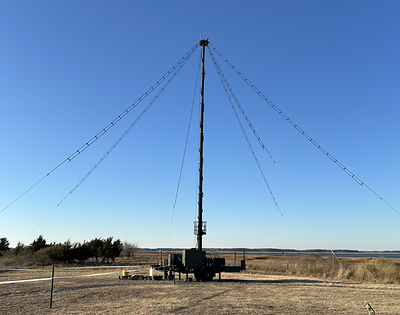
Leidos (NYSE: LDOS) will help meet that need by building and supporting 14 Medium Range Air Defense Radar (MRADR) systems under a new
Why it matters
MRADR is designed to provide persistent, 360-degree surveillance to help Marines track, identify, and defeat threats while minimizing the risk of revealing their position. The mobile system uses advanced antenna technology coupled with sophisticated signal processing designed to deliver that capability. In 2023, Leidos received a
Leidos will apply its engineering, manufacturing and integration experience to deliver the new systems, with work expected to be completed by August 2028. The award includes an option to retrofit previously developed prototype systems and existing Marine Expeditionary Long Range Persistent Sensor (MELPS) systems.
Expert perspective
"Marines need air defense capabilities that can keep pace with an increasingly complex operating environment," said Matt Becker, vice president of Leidos Defense Sensors. "This award allows us to help the Marine Corps work toward a significant increase in survivable air-surveillance capability that supports the warfighter wherever the mission takes them."
The big picture
Leidos designs and builds advanced sensing capabilities, including the Army Long Range Persistent Surveillance (ALPS) system designed to support Golden Dome for America, Multifunction X-Band Radar (MXR) counter-UAS radar supporting homeland defense, and electro-optical and infrared space sensing satellite payloads for missile warning and tracking.
The new award supports Leidos' NorthStar 2030 strategy and its focus on defense technology designed to address evolving customer requirements and support mission effectiveness.
About Leidos
Leidos is an industry and technology leader serving government and commercial customers with smarter, more efficient digital and mission innovations. Headquartered in Reston, Virginia, with approximately 50,000 global employees, Leidos reported annual revenues of approximately
Certain statements in this announcement constitute "forward-looking statements" within the meaning of the rules and regulations of the U.S. Securities and Exchange Commission (SEC). These statements are based on management's current beliefs and expectations and are subject to significant risks and uncertainties. These statements are not guarantees of future results or occurrences. Several factors could cause our actual results, performance, achievements, or industry results to be different from the results, performance, or achievements expressed or implied by such forward-looking statements. These factors include, but are not limited to, the "Risk Factors" set forth in Leidos' Annual Report on Form 10-K for the fiscal year ended January 2, 2026, and other such filings that Leidos makes with the SEC from time to time. Readers are cautioned not to place undue reliance on such forward-looking statements, which speak only as of the date hereof. Leidos does not undertake to update forward-looking statements to reflect the impact of circumstances or events that arise after the date the forward-looking statements were made.
Media Contact:
Philip Carder
(571) 926-6698
Philip.Carder@leidos.com

 View original content to download multimedia:https://www.prnewswire.com/news-releases/leidos-building-low-signature-air-defense-for-marines-302943296.html
SOURCE Leidos Holdings, Inc.
FAQ
AI-generated questions and answers. How Rhea-AI works. Not financial advice.