
Leidos, Havoc integrate capabilities to advance maritime and air autonomy
Rhea-AI Summary
Leidos (NYSE: LDOS) and Havoc are partnering to integrate collaborative autonomy across unmanned surface and aerial platforms. Elements of Havoc's software will be combined with Leidos' Autonomous Vessel Architecture (LAVA), beginning with the Sea Archer vessel. A joint operational validation is planned for Q4 2026 to demonstrate single-operator control of fleets across contested areas.
The collaboration targets faster integration, coordinated multi-domain operations, and scalable deployment across air, surface and sub-surface missions while seeking to optimize performance, cost and production timelines.
Positive
- Joint operational validation scheduled for Q4 2026
- Integration begins on Sea Archer using Leidos LAVA and Havoc software
- Aims to enable single-operator control of multi-domain unmanned fleets
Negative
- Operational capability remains unproven until Q4 2026 validation
- No commercial terms, contract value, or delivery orders disclosed
News Market Reaction – LDOS
On the day this news was published, LDOS declined 1.05%, reflecting a mild negative market reaction.
Data tracked by StockTitan Argus on the day of publication.
Key Figures
Historical Context
| Date | Event | Sentiment | 24h Move | Catalyst |
|---|---|---|---|---|
| Apr 15 | Business combination plan | Positive | +1.8% | Planned combination of Analogic with Leidos’ security and automation units. |
| Apr 15 | Joint venture creation | Positive | +1.8% | Leidos and Analogic forming U.S.-based JV to enhance security screening. |
| Apr 06 | Earnings call scheduled | Neutral | +0.4% | Announcement of Q1 2026 earnings call and webcast details. |
| Mar 30 | ENTRUST acquisition close | Positive | -0.9% | Completion of $2.4 billion ENTRUST deal expanding energy infrastructure. |
| Mar 11 | Major Air Force contract | Positive | +0.5% | Award of $454.9 million contract to modernize Air Force Cloud One. |
24h Move is the share-price change in the day after each event; other market factors may also have contributed.
Recent company-specific news (JV, contracts, M&A) generally saw modestly positive price reactions, with the ENTRUST acquisition as the main negative divergence.
Over the last months, Leidos announced several strategic moves, including a JV with Analogic contributing $625 million projected 2026 revenue and combining security businesses, plus completing the $2.4 billion ENTRUST acquisition that doubled its energy infrastructure presence. It also secured a $454.9 million U.S. Air Force cloud contract and scheduled Q1 2026 earnings. Most of these updates saw small positive price moves, while the ENTRUST completion drew a modest negative reaction, framing today’s autonomy partnership as another capability-focused expansion step.
Key Terms
collaborative autonomy technical
unmanned surface vessel technical
autonomous battlespace technical
AI-generated analysis. How Rhea-AI works. Not financial advice.




Leaders in defense technology combine systems integration and collaborative autonomy to help accelerate operational capability
NATIONAL HARBOR, Md., April 20, 2026 /PRNewswire/ -- Leidos (NYSE: LDOS) and Havoc are partnering to integrate unmanned systems with collaborative autonomy technology, enabling a single operator to command and coordinate fleets of platforms across vast, contested areas.
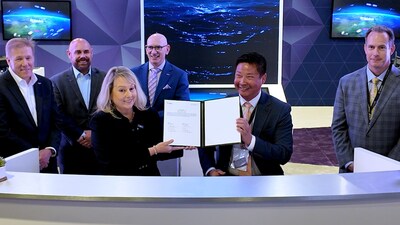
The companies plan to showcase these capabilities during a joint operational validation in the fourth quarter of 2026, where unmanned surface and aerial vehicles are expected to operate under a single autonomy system. The event is intended to provide a clear preview of how collaborative autonomous operations can be executed at scale in real-world conditions.
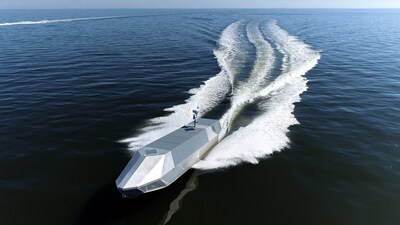
Elements of Havoc's collaborative autonomy software will be integrated with Leidos' Autonomous Vessel Architecture (LAVA) on select platforms, beginning with Sea Archer, the small unmanned surface vessel. This combined approach is designed to enable coordinated operations across systems while seeking to optimize performance, integration speed and cost for specific mission applications. The collaboration aims to define and deliver the architecture for an autonomous battlespace, where distributed systems sense, decide and act together across air, surface and sub-surface domains, even in contested and communications-degraded environments.
"The future of warfare will be defined by how quickly and effectively systems can operate together across domains," said Leidos Defense President Cindy Gruensfelder. "The Leidos and Havoc team will work to deliver integrated, mission-ready capability that gives commanders more options and operational advantage."
"Leidos is a strong partner because their vessels and software are proven and trusted," said Paul Lwin, Co-founder and CEO of Havoc. "By integrating Havoc's autonomy across those platforms, we expect to compress integration timelines from months to weeks and move systems into production in days, not months. That speed, applied to Leidos' breadth of platforms, is what makes this partnership so significant for defense customers."
This partnership combines Leidos' proven maritime platforms and systems integration expertise with Havoc's collaborative autonomy capabilities. Depending on the mission, solutions will incorporate Leidos, Havoc, or a combination of both software architectures to deliver scalable capability across existing and future force structures. These systems are designed to operate together to help expand reach, improve coordination and reduce risk to human operators.
About Leidos
Leidos is an industry and technology leader serving government and commercial customers with smarter, more efficient digital and mission innovations. Headquartered in
Certain statements in this announcement constitute "forward-looking statements" within the meaning of the rules and regulations of the
About Havoc
Havoc is the leader in all-domain collaborative autonomy. Its software-defined hardware approach powers military and commercial-grade autonomous systems across sea, air, and land to sense, decide, and act together in complex and contested environments. Havoc connects assets, enabling them to share information, adapt in real time, and continue operating even when communications are disrupted or denied. Havoc optimizes mission performance and minimizes human risk. Havoc was founded in 2024 and is headquartered in
Media Contacts
Leidos Media Relations
Brandon Ver Velde
(571) 926-1627
brandon.p.vervelde@leidos.com
Havoc Media Relations
media@havocai.com
 View original content to download multimedia:https://www.prnewswire.com/news-releases/leidos-havoc-integrate-capabilities-to-advance-maritime-and-air-autonomy-302747724.html
SOURCE Leidos Holdings, Inc.