
Sonic Incytes Announces Multi-Year Partnership with Madrigal Pharmaceuticals to Advance Non-Invasive Liver Assessment in MASH
Sentiment and the balance of points
Rhea-AI Sentiment reads the wording of the document, how positive or negative its language is on a 1 to 5 scale. The balance of points shown with the takes weighs what the document actually discloses, so the two can disagree, for example when a trial that missed its main goal is described in upbeat language.


Partnership aims to help more clinicians assess and risk-stratify patients with or at risk for metabolic dysfunction-associated steatohepatitis (MASH), using point-of-care liver assessment.
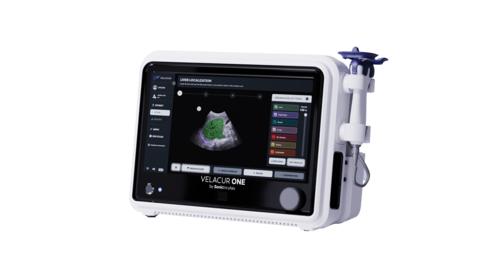
Velacur ONE®, Sonic Incytes’ AI-guided, point-of-care ultrasound elastography platform, provides real-time, non-invasive assessment of liver stiffness and fat to support clinical evaluation of patients at risk for MASH.
“MASH remains significantly underdiagnosed, and too many patients are missed or identified only after their disease has advanced,” said Barry Allen, President and CEO of Sonic Incytes. “We look forward to working with Madrigal to help clinicians deliver non-invasive liver assessments to the patients who need them, where they need them. We believe Velacur’s demonstrated accuracy, including our proprietary Velacur Determined Fat Fraction (VDFF), can help more patients be assessed earlier.”
The companies will work together to improve how patients at risk for MASH are identified, assessed and followed in clinical practice. The partnership will center on expanding the use of non-invasive tests (NITs) at the point of care, initially including gastroenterology, hepatology and endocrinology settings.
An estimated 80–100 million
Bringing Liver Assessment to the Point of Care
Current guidelines recommend non-invasive testing, including elastography, to assess liver fibrosis. Limited access to liver elastography in the community can delay assessment and follow-up.
Velacur, which received initial
Unlike conventional elastography technologies, Velacur ONE combines AI guidance with 3D S-WAVE technology, which provides approximately 30 times greater sampling volume and up to twice the measurement depth compared with traditional vibration-controlled transient elastography (VCTE). These capabilities are designed to support consistent, reproducible assessments across a broad range of patients, including those with elevated BMI.
“Clinicians need practical tools that fit their existing workflows,” said Allen. “Madrigal has helped transform what is possible for people living with MASH. Together, we want to make objective liver assessment easy to access, so more patients can be identified and evaluated at the point of care.”
Supporting Clinical Workflows and the Patient Experience
Because Velacur ONE delivers real-time results in the clinic, liver health can be evaluated during a routine visit rather than through a separate referral. Results can help clinicians decide on next steps, including further evaluation or referral when appropriate. Treatment decisions remain with the clinician and patient.
A Shared Focus on Earlier Identification
The partnership reflects a broader shift toward treating liver health as part of comprehensive metabolic care. By combining Sonic Incytes’ point-of-care technology with Madrigal’s experience in MASH, the companies aim to support clinicians as they build more systematic approaches to identifying and assessing patients at risk.
About Sonic Incytes
Sonic Incytes is committed to enhancing patient care through innovative diagnostic solutions. The company’s flagship product, Velacur™, equips physicians with an advanced liver imaging tool to help manage the growing epidemic of fatty liver disease. Today, Velacur ONE offers real-time, AI-guided quantification of the key markers for fatty liver disease: liver stiffness, attenuation and VDFF. With real-time results, a low up-front cost and AI guidance, Velacur ONE makes liver imaging at the point of care affordable and accessible. For more information, visit www.sonicincytes.com.
About Madrigal
Madrigal Pharmaceuticals, Inc. (Nasdaq: MDGL) is a biopharmaceutical company leading the fight against metabolic dysfunction-associated steatohepatitis (MASH), a liver disease with high unmet medical need. Madrigal has an approved therapy for MASH and a pipeline of investigational candidates targeting multiple pathways involved in liver disease progression. Through continued investment in innovation, Madrigal is committed to helping shape the future of MASH care and improving outcomes for patients. For more information, visit www.madrigalpharma.com.
References
- Le P, et al. Estimated burden of metabolic dysfunction-associated steatotic liver disease in US adults, 2020 to 2050. JAMA Netw Open. 2025;8(1):e2454707.
- D. Kim, we al. Current burden of steatotic liver disease and fibrosis among adults in the United States, 2017-2023. Clin Mol Hepatol. 2025;31(2):382-393.
- Estes C, et al. Modeling the epidemic of nonalcoholic fatty liver disease demonstrates an exponential increase in burden of disease. Hepatology. 2018;67:123-133.
- Madrigal Pharmaceuticals, Inc. Annual Report on Form 10-K for fiscal year 2024.
- Lazarus JV, et al. A call for doubling the diagnostic rate of at-risk metabolic dysfunction-associated steatohepatitis. Lancet Reg Health Eur. 2025.
View source version on businesswire.com: https://www.businesswire.com/news/home/20261119401533/en/
For media inquiries, please contact:
Julia Pinter, Director of Marketing, Sonic Incytes Medical Corp.
communications@sonicincytes.com, +1 (236) 484-1885
Source: Sonic Incytes Medical Corp.