
Micron in High-Volume Production of HBM4 Designed for NVIDIA Vera Rubin, PCIe Gen6 SSD and SOCAMM2
Rhea-AI Summary
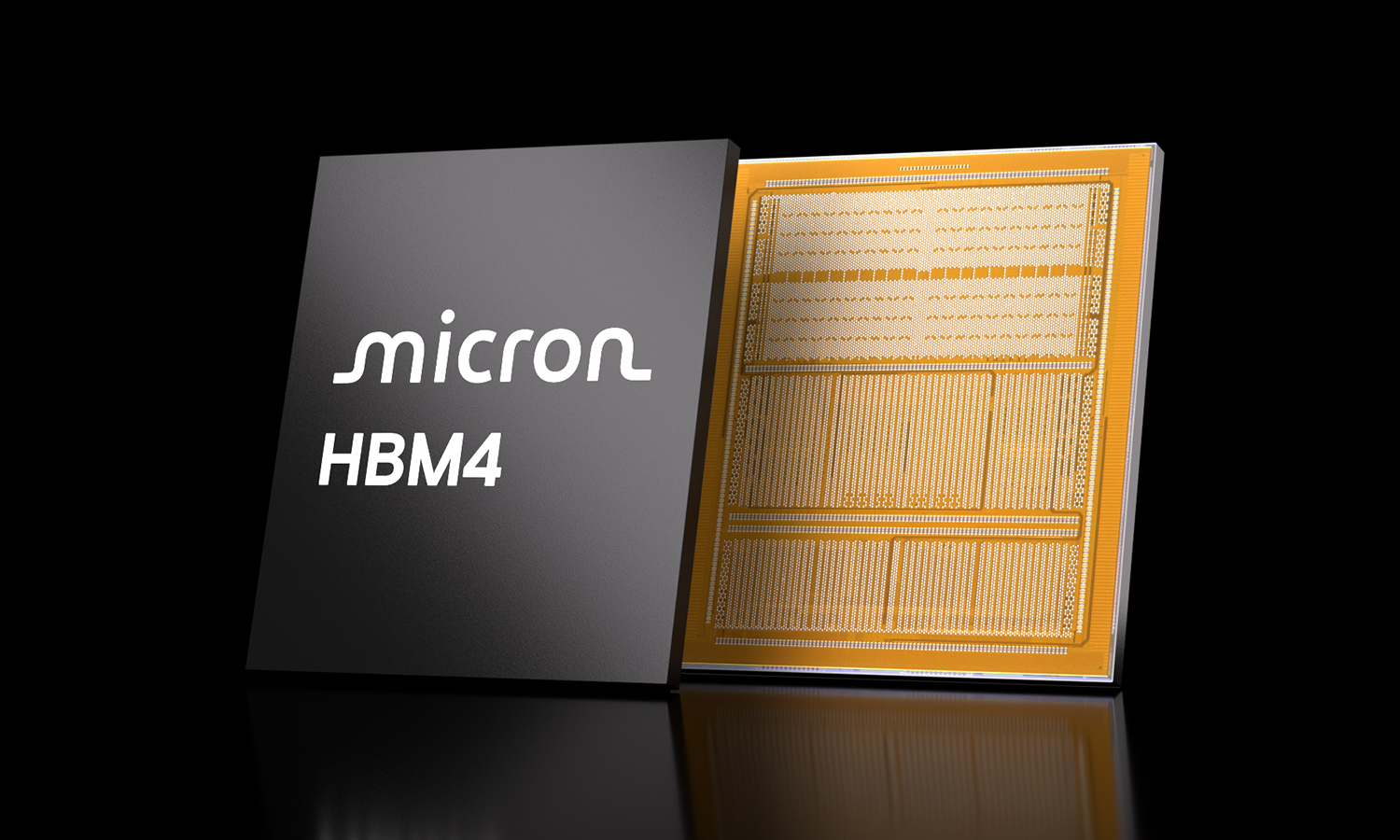
Micron (Nasdaq: MU) announced high-volume production of AI-optimized memory and storage: HBM4 36GB 12H (volume shipments in Q1 2026) and HBM4 48GB 16H samples, PCIe Gen6 Micron 9650 SSD in volume, and SOCAMM2 192GB in production for NVIDIA Vera Rubin platforms.
Key specs: >11 Gb/s pin speeds, >2.8 TB/s bandwidth (2.3x vs HBM3E), >20% power efficiency improvement, 28 GB/s sequential read and 5.5M random read IOPS for the 9650, and SOCAMM2 scaling to 48–256GB.
Positive
- HBM4 36GB 12H in volume shipment starting Q1 2026
- HBM4 achieves >11 Gb/s pin and >2.8 TB/s bandwidth (2.3x vs HBM3E)
- Demonstrated HBM4 48GB 16H samples stacking 16 die (33% capacity gain)
- Micron 9650 PCIe Gen6 SSD in volume with up to 28 GB/s read and 5.5M random read IOPS
- SOCAMM2 192GB in production, SOCAMM2 portfolio spans 48GB–256GB
Details
News Market Reaction – MU
On Mar 17, the first trading day after this news, MU closed 4.50% above the previous close.
Data tracked by StockTitan Argus for the Mar 17 session.
Key Figures
- HBM4 capacity
- 36GB 12H
- HBM4 in high-volume production for NVIDIA Vera Rubin
- HBM4 bandwidth
- >2.8 TB/s
- HBM4 36GB 12H bandwidth for AI workloads
- Power efficiency gain
- 20% better
- HBM4 vs Micron HBM3E power efficiency improvement
- HBM4 pin speed
- over 11 Gb/s
- HBM4 pin speeds enabling >2.8 TB/s bandwidth
- HBM4 48GB stack
- 16 die, 48GB 16H
- HBM4 samples showing 33% capacity increase per HBM placement
- SOCAMM2 capacity
- 192GB
- SOCAMM2 in high-volume production for NVIDIA Vera Rubin platform
- CPU memory enablement
- up to 2TB, 1.2 TB/s
- SOCAMM2 per NVIDIA Vera CPU platform
- Gen6 SSD throughput
- 28 GB/s & 5.5M IOPS
- Micron 9650 PCIe Gen6 sequential read and random read IOPS
Historical Context
-
Acquisition of PSMC’s Tongluo P5 cleanroom site to expand DRAM capacity.
-
Launch of 256GB SOCAMM2 LPDRAM samples targeting AI and HPC servers.
-
Announcement of upcoming fiscal Q2 2026 earnings report and webcast schedule.
-
Planned appearance at Wolfe Research semiconductor conference for investor outreach.
-
Groundbreaking on $24B Singapore fab to expand NAND and HBM-related capacity.
24h Move is the share-price change in the day after each event; other market factors may also have contributed.
Key Terms
pcie gen6 ssd technical
iops technical
schedule 13g regulatory
rule 144 regulatory
rule 10b5-1 trading plan regulatory
AI-generated analysis. How Rhea-AI works. Not financial advice.




News highlights:
- HBM4 36GB 12H in high-volume production, designed for NVIDIA® Vera Rubin — greater than 2.8 TB/s1 and with
20% better power efficiency2 - Industry's first PCIe® Gen6 SSD in high-volume production3 — the Micron 9650 data center SSD delivers up to two times the read performance of Gen5 at
100% higher performance per watt4 and optimized for agentic AI workloads on NVIDIA BlueField-4 STX architecture - 192GB SOCAMM2 in high-volume production — expanding low-power, high-capacity memory for AI and HPC workloads on the NVIDIA Vera Rubin platform, part of a broad portfolio of SOCAMM2 products spanning 48GB to 256GB capacities
A Media Snippet accompanying this announcement is available by clicking on this link.
SAN JOSE, Calif., March 16, 2026 (GLOBE NEWSWIRE) -- GTC 2026 — AI-optimized memory and storage have become strategic assets driving system performance to enable AI workloads and infrastructure to deliver real-world value. Micron Technology, Inc. (Nasdaq: MU), has begun volume shipment of its HBM4 36GB 12H in the first quarter of calendar year 2026 and is designed for NVIDIA Vera Rubin. With HBM4, Micron achieves over 11 Gb/s pin speeds,5 enabling a bandwidth greater than 2.8 TB/s, representing a 2.3 times bandwidth and greater than
Looking towards further HBM cube capacity expansion, Micron has demonstrated advanced packaging capability of stacking 16 die of HBM by shipping samples of HBM4 48GB 16H to customers. This milestone delivers a
“The next era of AI will be defined by tightly integrated platforms developed through joint engineering innovations across the ecosystem. Our close collaboration with NVIDIA ensures that compute and memory are designed to scale together from day one,” said Sumit Sadana, executive vice president and chief business officer at Micron Technology. “At the heart of this is Micron’s HBM4, the engine of AI, delivering unprecedented bandwidth, capacity and power efficiency. With HBM4 36GB 12H, alongside the industry’s first SOCAMM2 and Gen6 SSD now in high-volume production, Micron’s memory and storage form a core foundation that unlocks the full potential of next-generation AI.”
Micron SOCAMM2 is designed for NVIDIA Vera Rubin NVL72 systems and standalone NVIDIA Vera CPU platforms, enabling up to 2TB of memory and 1.2 TB/s of bandwidth per CPU.
Micron is the first company to mass-produce a PCIe Gen6 data center SSD.3 The Micron 9650 is optimized for energy efficiency and liquid-cooled environments, delivering high-speed, low-latency data access for AI training and inference workloads with the NVIDIA BlueField-4 STX reference architecture, supporting up to 28 GB/s sequential read throughput and 5.5 million random read IOPS. Micron 7600 and 9550 SSDs offer customers PCIe Gen5 SSDs, increasing their architectural design choices.
Showcasing Micron innovation at NVIDIA GTC 2026
At NVIDIA GTC 2026, Micron will showcase how its advanced memory and storage portfolio enables end-to-end AI acceleration from the data center to the edge. Attendees can find detailed information at the Micron booth, 1407.
Additional resources:
- Micron AI data center solutions webpage
- Micron HBM4 image gallery
- Micron 9650 PCIe Gen6 image gallery
- From breakthrough demo to deployment path: SCADA on production-grade PCIe Gen6 hardware at NVIDIA GTC 2026
About Micron Technology, Inc.
Micron Technology, Inc. is an industry leader in innovative memory and storage solutions, transforming how the world uses information to enrich life for all. With a relentless focus on our customers, technology leadership, and manufacturing and operational excellence, Micron delivers a rich portfolio of high-performance DRAM, NAND and NOR memory and storage products. Every day, the innovations that our people create fuel the data economy, enabling advances in artificial intelligence (AI) and compute-intensive applications that unleash opportunities — from the data center to the intelligent edge and across the client and mobile user experience. To learn more about Micron Technology, Inc. (Nasdaq: MU), visit micron.com.
© 2026 Micron Technology, Inc. All rights reserved. Information, products and/or specifications are subject to change without notice. Micron, the Micron logo and all other Micron trademarks are the property of Micron Technology, Inc. NVIDIA and the NVIDIA logo are trademarks and/or registered trademarks of NVIDIA Corporation in the U.S. and other countries. All other trademarks are the property of their respective owners.
Micron Product and Technology Communications Contact:
Mengxi Liu Evensen
+1 (408) 444-2276
productandtechnology@micron.com
Micron Investor Relations Contact:
Satya Kumar
+1 (408) 450-6199
satyakumar@micron.com
_____________________________________
1 Comparing the bandwidth of HBM4 to the previous generation HBM3E with the same capacity and stack height (36GB 12H).
2 Comparison of HBM power efficiency: (HBM4 12H vs. HBM3E 12H at 9.2 Gbps; workload pattern 60/30/10/75) [Internal power calculator tool].
3 On February 12, 2026, Micron announced mass production of the 9650 SSD. At the time of blog publication, no other Gen6 SSDs from the top five OEM data center SSDs suppliers by revenue had announced mass production, according to the Forward Insights analyst report SSD Supplier Status Q4/25 (Nov 2025).
4 For the Micron 9650 SSD performance results, see table 1 in the Micron 9650 SSD Product Brief.
5 Based on internal Micron testing and confidential customer test vehicle validation.
6 The 48GB cube provides a

FAQ
AI-generated questions and answers. How Rhea-AI works. Not financial advice.