
PG&E Advances Deployment of Community Microgrids, Announces New Grant Agreements and Second Round of Funding Awards
PG&E commits over $73 million to community microgrids, including a new $30 million funding wave for six additional clean-energy resilience projects.
Rhea-AI Summary
PG&E (PCG) is advancing deployment of community microgrids in Northern and Central California, announcing new grant agreements for first-round projects and $30 million of second-wave awards under its Microgrid Incentive Program (MIP).
The utility now has more than $73 million in authorized community microgrid investments, including $43 million for nine initial projects announced in 2025 and the new tranche of funding. Several Tranche 1 projects have executed grant agreements to fund engineering, design and development. Three Lake County projects will study an innovative FLASHES concept that pairs tens of megawatts of local solar with pumped-hydro storage using subsurface water, targeting multi-day outage resilience and added firefighting water supply.
In Tranche 2, $30 million will support six new microgrids serving more than 2,200 customers, including critical facilities, across six counties. Awards range from $2–6 million each and use solar, batteries, biomass and biodiesel. One project, in Pescadero (San Mateo County), led by WestLight Energy, will combine about 1.5 MW of solar and a 2 MW battery system to provide at least 24 hours of standalone operation for over 200 customers.
Positive
- $30 million in second-wave MIP awards for six new microgrids
- Total authorized community microgrid investments exceed $73 million
- Tranche 2 projects will serve over 2,200 customers including critical facilities
- Individual Tranche 2 awards range between $2–6 million per project
- Pescadero microgrid to integrate about 1.5 MW solar and 2 MW storage for 24-hour islanding
Negative
- None.
News Explained
PG&E advances grant-funded microgrids into development, but the disclosed projects remain short of operating completion.
PG&E has selected six second-round projects and executed first-round grant agreements; the structural effect is authorized grant support moving into development, not a report of completed operating microgrids.
The agreements set terms for disbursing funds for engineering, design and development, while the Lake County FLASHES projects remain in early feasibility work with activities planned; the release therefore places the announcement at a development-stage milestone despite its deployment language.
At the program level, the release describes a
Key Figures
- Second-wave funding
- $30 million
- Six projects selected through the second MIP application window
- Authorized investment
- More than $73 million
- Combined investment from 2025 projects and the second funding wave
- Second-wave projects
- Six projects
- Selected through the second MIP application window
- Customers served
- More than 2,200 customers
- Across the six projects receiving second-wave funding
- Award range
- $2-6 million each
- Funding range for second-wave projects
- Solar capacity
- Roughly 1.5 MW
- Pescadero community microgrid
- Battery capacity
- 2 MW
- Pescadero community microgrid
- Standalone operation
- Minimum of 24 hours
- Pescadero microgrid operating independently
Historical Context
-
Launched a virtual power plant initiative to improve grid reliability and affordability
-
Expanded vehicle-to-everything program with backup-power and grid-support capabilities
24h Move is the share-price change in the day after each event; other market factors may also have contributed.
Key Terms
microgrid incentive program financial
pumped hydroelectric storage technical
long-duration energy storage technical
reclosers technical
front-of-the-meter technical
AI-generated analysis. How Rhea-AI works. Not financial advice.




Together, the projects represent more than
"In addition to the grid investments PG&E is making, community microgrids empower communities to take an active role in building local resilience," said Dave Canny, Head of PG&E's North Coast Region. "PG&E is proud to partner with communities by providing incentives, technical support and the safe interconnection needed to bring these projects to life. The North Coast has helped lead the way in microgrid innovation through pioneering projects like the Redwood Coast Airport Microgrid and the Blue Lake Rancheria Microgrid. Today's MIP awardees — with advanced solar-plus-storage systems and innovative pumped-hydro designs — are building on that legacy, showing how communities and utilities can work together to strengthen resilience, keep critical services powered and advance clean energy solutions for the future."
Building Local Power for Communities
A community microgrid is a grid-connected local energy system that can continue serving customers by operating independently during grid outages.
It can help keep power on for:
- Hospitals and health clinics
- Fire stations and emergency services
- Schools and local businesses
- Other critical facilities and services
Microgrids can use:
- Solar power
- Batteries
- Other energy sources like biomass
- Smart grid equipment—such as switches, circuit breakers or reclosers—paired with microgrid controllers that allow a community to safely separate from the grid and keep power flowing locally during an outage
When the main grid goes down, microgrids can keep key services running for hours or even days.
Tranche 1: Projects move forward with new grant agreements
PG&E is advancing several of the nine projects selected in the first application round, with awardees executing grant agreements indicating they are ready to proceed.
These agreements set the terms and conditions for the disbursement of funds which will support microgrid engineering, design and development work—critical steps to bring projects from concept to construction.
Lake County Advances Innovative FLASHES Microgrids
Three proposed projects in
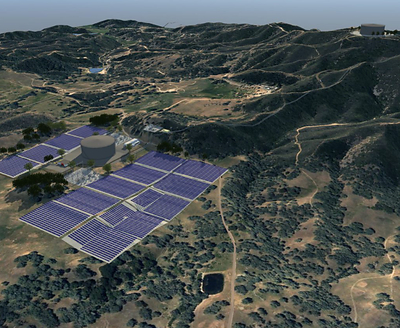
- The proposed projects intend to pair tens of megawatts of locally generated solar energy with pumped hydroelectric storage that uses subsurface water resources. Solar power will be used to pump water to roofed tanks at higher elevations when energy is abundant. When electricity is needed, the water will be released through turbines to generate power.
- The result is a system that could provide both long-duration energy storage and multi-day resilience during outages, as well as additional water supply for firefighting emergencies. If successful, the projects could serve as a model for how communities across
California use local renewable energy and long-duration storage to improve resilience.
"The FLASHES projects carry the potential to deliver energy and wildfire resiliency for
The three proposed microgrids would serve communities along the northwest shore of Clear Lake, from
All three projects are moving into early development to determine feasibility, with geotechnical core boring, initial test well drilling, and other activities planned over the coming months.
All three FLASHES projects were a result of collaboration between local governments and Trane Energy Services.
"We are proud to partner with PG&E,
Tranche 2: Second round awards expand microgrid footprint
PG&E is also announcing the selection of six new projects from the second MIP application window.
This second wave directs
- Serve more than 2,200 customers
- Support critical facilities, including schools, fire stations and health centers
These projects use a mix of:
- Solar
- Battery storage
- Biomass and biodiesel
Together, they expand access to reliable, local energy solutions across PG&E's service area, including projects in
Award amounts range between
One project from Tranche 2 is already advancing: in
- This system will energize most of the town of
Pescadero , a remote coastal community along theSan Mateo coastline. It includes more than 200 customers including key critical facilities. - The microgrid will integrate a roughly 1.5 megawatt (MW) solar system and a 2 MW battery energy storage system, to support a minimum of 24 hours of standalone operation.
- In addition to PG&E's MIP funding, this project will also include funding from WestLight Energy and the County of San Mateo.
"When a community faces a challenge that doesn't have an obvious solution, local public agencies like WestLight Energy have an opportunity to bring partners together," says Shawn Marshall, CEO of WestLight Energy. "That's exactly what happened here. This project shows what's possible when community organizations, local government, utilities and clean energy partners work toward a common goal."
What Customers Can Expect
As these projects move forward, customers can benefit from:
- More resilient electric service
- Greater protection for critical community services
- Cleaner local energy resources
- Improved wildfire and emergency resilience
- Stronger community energy independence
More About MIP
The Microgrid Incentive program is a statewide
- Authorized and approved by the California Public Utilities Commission, the new program allocates a total of
$79.2 million $83.3 million $17.5 million - Projects selected under the MIP can receive up to
$14 million - Customers and communities interested in learning more or applying for grants through the third and final wave of PG&E MIP grant funding should visit www.pge.com/mip
About PG&E
Pacific Gas and Electric Company, a subsidiary of PG&E Corporation (NYSE: PCG), is a combined natural gas and electric utility serving more than sixteen million people across 70,000 square miles in Northern and Central California. For more information, visit pge.com, pge.com/news, and pge.com/innovation.

 View original content to download multimedia:https://www.prnewswire.com/news-releases/pge-advances-deployment-of-community-microgrids-announces-new-grant-agreements-and-second-round-of-funding-awards-302881464.html
SOURCE Pacific Gas and Electric Company
FAQ
AI-generated questions and answers. How Rhea-AI works. Not financial advice.
What is the FLASHES concept being evaluated in Lake County microgrid projects?
The Lake County projects will evaluate Firemain Linked Auxiliary Supply/Hydraulic Energy Storage (FLASHES), which intends to pair tens of megawatts of locally generated solar energy with pumped hydroelectric storage using subsurface water resources. Solar power would pump water to roofed tanks at higher elevations when energy is abundant, then release it through turbines to generate electricity when needed, aiming to provide long-duration storage, multi-day outage resilience and additional water supply for firefighting.
How many customers and facilities will the second-wave MIP projects support and where are they located?
The second application window will direct $30 million to six projects that together will serve more than 2,200 customers, including schools, fire stations and health centers. These projects are located across Humboldt, Sonoma, San Mateo, Butte, Placer and El Dorado counties within PG&E’s service area.
What are the key technical details of the Pescadero microgrid project?
The Pescadero project in San Mateo County, led by WestLight Energy, is designed to energize most of the town, serving more than 200 customers including critical facilities. It will integrate a roughly 1.5 MW solar system and a 2 MW battery energy storage system, with a goal of providing a minimum of 24 hours of standalone operation. Funding will come from PG&E’s MIP, WestLight Energy and the County of San Mateo.
What is the Microgrid Incentive Program (MIP) and how much funding is allocated to PG&E?
The Microgrid Incentive Program is a statewide $200 million competitive grant initiative to fund clean-energy community microgrids in disadvantaged and vulnerable communities. It is authorized and approved by the California Public Utilities Commission. The program allocates $79.2 million in project funding for PG&E, $83.3 million for Southern California Edison and $17.5 million for San Diego Gas & Electric. Individual projects can receive up to $14 million each for design and development of multi-customer, front-of-the-meter community microgrids.
How can customers and communities apply for future PG&E MIP grant funding?
Customers and communities interested in learning more or applying for grants through the third and final wave of PG&E’s MIP funding are directed to visit www.pge.com/mip for program information and application details.