
PepsiCo announces progress toward deforestation-free sourcing goal
Sentiment and the balance of points
Rhea-AI Sentiment reads the wording of the document, how positive or negative its language is on a 1 to 5 scale. The balance of points shown with the takes weighs what the document actually discloses, so the two can disagree, for example when a trial that missed its main goal is described in upbeat language.
Rhea-AI Summary
PepsiCo (NASDAQ: PEP) reported that 94% of high-risk commodity sourcing in its company-owned and -operated activities was deforestation-free by year-end 2025.
Results were 77% for palm oil, 99.5% for fiber packaging, 95% for sugarcane, 99.7% for soybean oil and 59% for cocoa. All palm oil volumes had Roundtable on Sustainable Palm Oil certification. Traceability reached 100% of reported fiber packaging volume to mill, 97% of sugarcane to the first aggregation point, 100% of soybean oil to refinery and 77% of cocoa to country of origin.
PepsiCo continues to target deforestation- and conversion-free sourcing by 2030. Methods for measuring conversion-free sourcing remain under development for most ingredients; differing industry approaches can cause year-to-year fluctuations. The company plans to assess the scope and timing of future conversion-free sourcing reporting.
AI-generated analysis. How Rhea-AI works. Not financial advice.


Company announces progress in its continued work to strive toward deforestation- and conversion-free sourcing by 2030
"This is an important step in our work that reflects the meaningful progress and efforts with multiple stakeholders across our value chain," said Jim Andrew, Chief Sustainability Officer and Executive Vice President, PepsiCo. "We also know there is more work ahead. Deforestation and natural ecosystem conversion are complex, systemic challenges, and we remain focused on supporting efforts to protect forests and natural ecosystems and working toward our deforestation- and conversion-free goal."
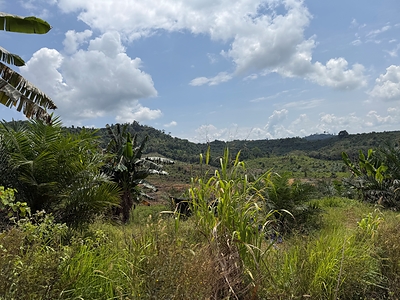
PepsiCo relies on forests and natural ecosystems for agricultural commodities including palm oil, fiber packaging, sugarcane, soybean oil and cocoa, which are in scope of this goal. For each of these commodities, the company aims to support sector-wide progress through supplier engagement, industry collaboration, on-the-ground initiatives, technology and greater supply-chain transparency.
"The momentum we're seeing across many sourcing regions demonstrates that progress is possible when companies, suppliers, producers and other stakeholders work together in shared landscapes. While significant challenges remain, we believe collaboration, shared learnings, innovation and greater transparency can help drive meaningful change," said Rob Meyers, Vice President, Global Agriculture.
Progress across high-risk commodities
In 2025, PepsiCo reached
- Palm oil:
77% deforestation-free, with100% of volumes covered by Roundtable on Sustainable Palm Oil (RSPO) certification - Fiber packaging:
99.5% deforestation-free, with100% of reported volume traceable to mill - Sugarcane:
95% deforestation-free, with97% traceable to the first point of aggregation - Soybean oil:
99.7% deforestation-free, with100% traceable to refinery - Cocoa:
59% deforestation-free, with77% traceable to country of origin
The company is encouraged by this progress while recognizing that this is only a step in the journey. Industry-aligned methodologies are under development for conversion-free sourcing for most ingredients. There remain differing approaches on conversion-free sourcing among industry groups, which can lead to year-to-year fluctuations in progress. However, PepsiCo plans to continue to work toward its 2030 ambition and will assess the scope and timing of future reporting on conversion-free sourcing efforts.
Strengthening traceability, technology and action
In 2025, PepsiCo advanced work in three priority areas:
- Improving traceability: Identifying the origins of in-scope ingredients and materials to assess deforestation-free status.
- Leveraging technology: Using Satelligence satellite monitoring to increase visibility, detect potential deforestation and strengthen grievance assessments.
- Strengthening collaboration: Working with industry groups and other stakeholders and investing in landscape initiatives to support conservation, restoration, livelihoods and sustainable production.
PepsiCo also maintains a supply-chain grievance mechanism for third parties to raise environmental and social concerns, engaging relevant suppliers to assess allegations, review corrective actions and monitor progress.
Advancing progress through strategic collaboration
PepsiCo works with suppliers, smallholder farmers, industry peers and other stakeholders in an effort to scale solutions that support its pep+ deforestation- and conversion-free ambitions.
- Consumer Goods Forum Forest Positive Coalition of Action: PepsiCo has been a member since 2019 and co-chair since 2023. The Coalition shares learnings in an effort to help eliminate deforestation, forest degradation and conversion across palm oil, pulp and paper, soy and beef supply chains.
- Palm Oil Collaboration Group: PepsiCo helped create this platform for companies to share learnings in an effort to address social issues, strengthen forest protection, and improve monitoring and reporting. A key achievement was the rollout of the No Deforestation, No Peat, No Exploitation Implementation Reporting Framework (NDPE IRF), an industry-wide reporting tool.
- Rimba Collective: PepsiCo is a founding member of this initiative, which aims to deliver
$1 billion Southeast Asia over 30 years. The program seeks to protect and restore more than 1 million acres of tropical forests while supporting local economic development and job creation through long-term conservation financing. - Sugarcane Collaboration Group (SCG): In 2025, PepsiCo joined the SCG, which brings together members of the sugar supply chain in an effort to develop practical resources, including tools, methodologies and approaches designed to help address shared challenges.
- Forests Forward: led by the World Wildlife Foundation (WWF), this program for corporate action focuses on forest-linked supply chains, stewardship, and landscape conservation. Through Forests Forward, PepsiCo is working with WWF on two of the program's action areas: sourcing and funding forest landscape conservation projects.
Cautionary Statement
This disclosure contains statements reflecting our views about our future performance that constitute "forward-looking statements" within the meaning of the Private Securities Litigation Reform Act of 1995. Forward-looking statements are generally identified through the inclusion of words such as "aim," "anticipate," "believe," "drive," "estimate," "expect," "goal," "intend," "may," "plan," "project," "strategy," "strive," "target" and "will" or similar statements or variations of such terms and other similar expressions. Forwardlooking statements inherently involve risks and uncertainties. For information on certain factors that could cause actual events or results to differ materially from our expectations, please see PepsiCo's filings with the Securities and Exchange Commission, including its most recent annual report on Form 10-K and subsequent reports on Forms 10-Q and 8-K. Investors are cautioned not to place undue reliance on any such forward-looking statements, which speak only as of the date they are made. PepsiCo undertakes no obligation to update any forward-looking statements, whether as a result of new information, future events or otherwise.
About PepsiCo
PepsiCo products are enjoyed by consumers more than one billion times a day in more than 200 countries and territories around the world. PepsiCo generated nearly
Guiding PepsiCo is our vision to Be the Global Leader in Beverages and Convenient Foods by Winning with pep+ (PepsiCo Positive). pep+ is our strategic end-to-end transformation that puts sustainability and human capital at the center of how we aim to create value and growth by operating within planetary boundaries and inspiring positive change for planet and people. For more information, visit www.pepsico.com, and follow on X (Twitter), Instagram, Facebook, and LinkedIn @PepsiCo.
 View original content to download multimedia:https://www.prnewswire.com/news-releases/pepsico-announces-progress-toward-deforestation-free-sourcing-goal-302939150.html
SOURCE PepsiCo, Inc.
FAQ
AI-generated questions and answers. How Rhea-AI works. Not financial advice.