
PPL Electric Proposes New Customer Protection Transmission Rider, Building on its Existing Customer Protection Framework
PPL Electric seeks approval to replace its transmission charge with a rider that makes costs more visible and shifts more costs to large users.
Rhea-AI Summary
PPL (PPL), through PPL Electric Utilities, has proposed a Customer Protection Transmission Rider (CPTR) to the Pennsylvania Public Utility Commission to replace its current Transmission Service Charge.
The CPTR is intended to make transmission costs more visible on customer bills via a separate line item and to create a method to directly allocate certain transmission network upgrade costs tied to large-load LP-6 customers, such as data centers, to that customer class. The company said the proposal would not add a new charge but would change how existing transmission costs are recovered, with an expectation that all customers may benefit as large users pay a larger share of network costs. If approved, the CPTR is expected to take effect in the first quarter of 2028.
Positive
- None.
Negative
- None.
News Explained
The proposal is not yet in effect: PPL Electric says it builds on an existing framework that already requires LP-6 large-load customers to make significant financial and usage commitments before connecting, separate from the proposed rider.
AI-generated analysis. How Rhea-AI works. Not financial advice.




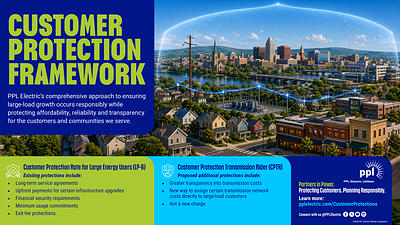
The proposal would establish a Customer Protection Transmission Rider (CPTR) and replace the current Transmission Service Charge (TSC). It builds on the company's existing Customer Protection Framework, which already requires large-load customers served under the LP-6 rate class to make significant financial and usage commitments before connecting to the system.
"We want to ensure that all of our customers benefit from economic growth and that includes how investments in the electric grid are supported. As
Customer benefits of the proposal
Today, transmission costs are embedded within supply charges on the bill and recovered through existing cost-recovery mechanisms by customers' energy suppliers or by PPL Electric for default service customers. While these costs are recovered through established regulatory frameworks, this approach makes it difficult for customers to see these costs on their bills and limits the ability for the company to directly assign certain transmission network costs associated with large-load growth to a specific customer class.
The proposed CPTR would address both challenges by making transmission costs visible to customers through a dedicated line item and creating a mechanism for the company to directly allocate certain transmission network upgrade costs associated with LP-6 large-load customers to that customer class. This added protection helps ensure customers driving the need for new transmission investments contribute directly to those shared costs while increasing transparency and accountability for all customers.
The proposal would not add a new charge. It would replace the existing Transmission Service Charge with a more transparent method of recovering transmission costs while positioning all customers to benefit from the expected reduction in transmission costs as large-load customers begin contributing a larger share of transmission network costs.
If approved, the CPTR is expected to take effect in the first quarter of 2028, further expanding PPL Electric's Customer Protection Framework.
For more information visit: pplelectric.com/CustomerProtections.
About PPL Electric Utilities
PPL Electric Utilities delivers safe, reliable and affordable electricity to about 1.5 million homes and businesses in eastern and central Pennsylvania. It regularly ranks among the country's best utility companies for reliability and customer satisfaction. PPL Electric Utilities is a major employer and an active supporter of the communities it serves. It is a part of the PPL Corporation (NYSE: PPL) family of companies. Visit pplelectric.com or connect on social media via Facebook, X and Instagram for energy efficiency tips, bill help information, guidance on shopping for an electricity supplier, storm updates and more.
Note to Editors: Visit our media website at https://news.pplweb.com/ for additional news and background about PPL Corporation.
|
Contact: |
For news media: PPL Electric Utilities Media Line, 610-774-5997 |
|
|
PPL Electric Utilities |
 View original content to download multimedia:https://www.prnewswire.com/news-releases/ppl-electric-proposes-new-customer-protection-transmission-rider-building-on-its-existing-customer-protection-framework-302878126.html
SOURCE PPL Electric Utilities
FAQ
AI-generated questions and answers. How Rhea-AI works. Not financial advice.