
SiTime Addresses $2 Billion Opportunity in Data Center Bandwidth Upgrades with Two New Clock Families
Sentiment and the balance of points
Rhea-AI Sentiment reads the wording of the document, how positive or negative its language is on a 1 to 5 scale. The balance of points shown with the takes weighs what the document actually discloses, so the two can disagree, for example when a trial that missed its main goal is described in upbeat language.


FemtoClock 4 and VersaClock 8 Bring 20 Years of Heritage to 2X Faster Ethernet and Connectivity Standards
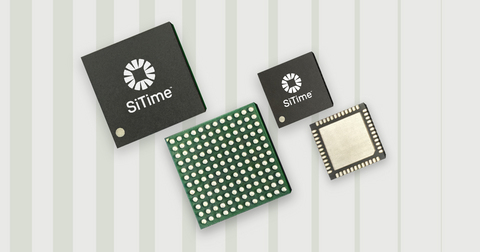
FemtoClock 4 and VersaClock 8 Bring 20 Years of Heritage to 2X Faster Ethernet and Connectivity Standards
“Insatiable demand for AI, along with rising performance requirements, is driving the need for greater density and speed,” said Piyush Sevalia, executive vice president and chief business officer of SiTime. “The FemtoClock and VersaClock families have a 20-year heritage and multiple generations of products. Over this period, they have led the industry in performance, density and shipments, and have become the default choice for many customer designs. Engineers know these architectures well. This familiarity enables them to design with confidence, get the most from these programmable clocks and reuse existing software. The result is higher-performance, denser AI hardware that generates revenue sooner. Built on this successful track record, FemtoClock 4 and VersaClock 8 extend SiTime’s lead in Precision Timing.”
These clocks are built to solve the bandwidth challenge and the industry is tackling it right now; 224G serializer-deserializer (SerDes) links are being rapidly adopted in data center switches and AI servers to double Ethernet bandwidth, and PCI Express® (PCIe®) 7 is doing the same for interconnectivity between CPUs, xPUs, memory, storage and smart network interface cards (SmartNICs). In faster, denser systems, the margin for error is smaller. FemtoClock 4 delivers resilient clock signals for Ethernet networking with ultra-low jitter and high clock density in a single device. VersaClock 8 serves PCIe interconnectivity with a flexible, compact, low-power design that is ideal for hot and dense compute trays.
According to Dell’Oro Group, 1.6 Tbps ports in AI back-end switches are expected to ramp at least five times faster than 800 Gbps, driven by adoption across scale-up, scale-out and scale-across networks. This bandwidth is critical to maximizing utilization of expensive xPU resources.
“The AI infrastructure build-out is exposing bottlenecks that go well beyond GPU compute performance,” said Dave Altavilla, president and principal analyst at HotTech Vision and Analysis. “Moving data efficiently across increasingly complex systems is becoming a critical design challenge, particularly as Ethernet and PCIe bandwidth requirements continue to climb. Precision Timing plays an important role here, especially as higher signaling speeds leave less margin for jitter and signal degradation. SiTime’s latest clock families reflect how these underlying technologies are evolving to meet the precise needs of the next generation of AI data center architectures.”
Product Features
FemtoClock 4 is a jitter attenuator and clock generator for top-of-rack and spine switches built on 224G SerDes. Key features include:
- 19 fs RMS phase jitter at 312.5 MHz in clock generator mode (12 kHz to 20 MHz, 4 MHz high-pass filter)
- Up to six frequency domains across 18 outputs
- Fewer devices for top-of-rack switches that generally need more than 40 clocks
VersaClock 8 is a programmable clock generator providing reference clocks for CPUs, xPUs, memory and storage. Key features include:
- About 10 fs reference clock jitter for PCIe 7
- 30 fs RMS phase jitter at 312.5 MHz (12 kHz to 20 MHz, 4 MHz high-pass filter)
- Low power limits self-heating; operates at up to 105°C
- 5-, 9- and 12-output variants in QFN packages from 4x4 mm to 6x6 mm
-
12-output variant is about
40% smaller than a comparable solution
Availability
FemtoClock 4 and VersaClock 8 are in production and available now. FemtoClock 4 part numbers: RC38616, RC38412, RC32418 and RC32412. VersaClock 8 part numbers: RC31312A, RC31309A and RC31305A.
Additional Resources
About SiTime
SiTime is the Precision Timing company. Our people and products help engineers build the impossible. Customers trust SiTime solutions in more than 400 applications, including AI hardware, autonomous vehicles, low Earth orbit satellites and wearables. Built on decades of innovation, our oscillators, clocks, resonators and software deliver higher system performance, greater resilience and better reliability. For more information, visit www.sitime.com.
View source version on businesswire.com: https://www.businesswire.com/news/home/20261117222922/en/
Media contacts
Simone Souza
SiTime
ssouza@sitime.com
(650) 888-9637
Donna St. Jean Conti
Green Flash Media
donna@gflashmedia.com
(949) 290-0622
Source: SiTime Corporation