STOCK TITAN

What drives multimillion-dollar medical claims? Sun Life report shows secondary health conditions, hospital stays and specialty drugs among key factors

(Neutral)
(Neutral)
Tags

Sun Life (NYSE:SLF) released its High-Cost Claims and Injectable Drug Trends report analyzing 70,000+ high-dollar claims from 3,300+ self-funded employers. Claims above $3 million are mainly driven by comorbid conditions, long hospital stays and specialty drugs, with cancer, premature births and orthopedic/MSK conditions prominent.

Loading...
Loading translation...

Positive

  • None.

Negative

  • None.

News Market Reaction – SLF

-0.22%
-0.22% Session close to close

In the May 22 session, SLF declined 0.22%, reflecting a mild negative market reaction.

Data tracked by StockTitan Argus on the day of publication.

Market Context

This announcement outlines trends in high-cost medical claims, highlighting more than 70,000 analyze...
Analysis

This announcement outlines trends in high-cost medical claims, highlighting more than 70,000 analyzed claims and drivers such as comorbidities, gene therapies and injectable drugs. It reinforces Sun Life’s U.S. Health & Risk positioning and solutions like orthopedic/MSK support and cancer review services. Investors may track how rising average claim sizes, including $3.6 million gene therapies and $5.45 million blood cancer claims, interact with pricing, risk management and the broader earnings profile already detailed in recent Q1 2026 filings.

Key Figures

High-dollar claims analyzed: over 70,000 claims Employers in study: more than 3,300 employers Claim threshold: $3 million +5 more
8 metrics
High-dollar claims analyzed over 70,000 claims High-Cost Claims and Injectable Drug Trends report universe
Employers in study more than 3,300 employers Self-funded employers across the U.S.
Claim threshold $3 million Level defining high-dollar claims in the report
Million-dollar claim growth 46% Increase in million-dollar+ claim frequency from 2022–2026
Liver disease spend growth 43% Increase in liver disease treatment spend in 2025 vs prior year
Liver disease cost per patient $230,000 Average cost per patient in 2025
Elevidys average cost $3.6 million Average cost of gene therapy for Duchenne muscular dystrophy
Blood cancer multimillion claims $5.45 million Average 2025 cost of highest multimillion-dollar blood cancer claims

Historical Context

5 past events · Latest: May 07 (Positive)
Pattern 5 events
Date Event Sentiment 24h Move Catalyst
May 07 Director election results Positive +0.8% All 13 director nominees elected with 97.9–99.8% support.
May 07 Executive award recognition Neutral -4.9% Chief Legal Officer received lifetime achievement award in legal profession.
May 06 Dividend increase Q2 2026 Positive -4.9% Common dividend raised to $0.96 per share, plus preferred share dividends.
May 06 NCIB renewal plan Positive -4.9% Intention to renew NCIB for up to 10,000,000 common shares.
May 06 Q1 2026 earnings Neutral -4.9% Underlying income steady at $1,050M, reported net income down 50% YoY.

24h Move is the share-price change in the day after each event; other market factors may also have contributed.

Pattern Detected

Recent corporate and capital-return announcements often saw negative price reactions, except for the director election, which was modestly positive.

Recent Company History

Over the past months, SLF has reported several shareholder- and capital-focused updates. Q1 2026 results showed underlying net income of $1,050 million and reported net income of $465 million, alongside a dividend increase to $0.96 and an NCIB for up to 10 million shares. These events on May 6, 2026 coincided with a -4.91% move. The current high-cost-claims report connects to Sun Life’s U.S. Health & Risk Solutions, complementing earlier earnings commentary that highlighted U.S. Health & Risk as a key contributor.

Key Terms

comorbidities, gene therapies, glp-1s, osteoporosis (oa), +4 more
8 terms
comorbidities medical
"Several of these high-cost health conditions occur as comorbidities, such as orthopedic/MSK and cancer."
Comorbidities are other medical conditions a patient has alongside a primary illness, like extra weight in a car that makes the trip harder. For investors, they matter because additional illnesses can change how well treatments work, raise healthcare costs, affect insurance payouts and regulatory trial results, and therefore influence the market size, pricing, and risk for drugs, devices, and health services.
gene therapies medical
"Healthcare costs continue to increase as specialty treatments and gene therapies become more prevalent."
Gene therapies are medical treatments that change or replace a person’s genetic instructions to fix or counteract a disease, using biological delivery methods to get the new material into cells — like repairing or swapping pages in a faulty instruction manual. They matter to investors because they can offer one-time or long-lasting cures with large market potential, but carry high development costs, regulatory scrutiny and manufacturing challenges that make outcomes binary and investment risky.
glp-1s medical
"Employers have an opportunity to broaden coverage of GLP-1s and proactively reduce the risk..."
GLP-1s are a class of prescription medicines that mimic a natural gut hormone to lower blood sugar, curb appetite and slow stomach emptying, often used for diabetes and weight management. They matter to investors because prescribing rates, pricing and insurance coverage can drive large, sustained revenue streams and reshape demand across drug makers, medical device vendors and health insurers—like a bestselling product line that shifts an entire market.
osteoporosis (oa) medical
"Osteoarthritis (OA), a common MSK condition, is more prevalent (54%) in patients on dialysis..."
Osteoporosis is a medical condition in which bones lose density and become thin and fragile, making them more likely to break from minor falls or routine activities; think of bones turning from solid wood into a brittle, porous sponge. For investors, it matters because higher prevalence and aging populations drive demand for diagnostics, drugs, implants and long-term care, influence clinical trial outcomes and regulatory approvals, and can materially affect companies’ revenues and growth prospects.
chronic kidney disease (ckd) medical
"Osteoarthritis (OA), a common MSK condition, is more prevalent (54%) in patients on dialysis for chronic kidney disease (CKD)."
Chronic kidney disease (CKD) is a long-term decline in the kidneys’ ability to filter waste and balance fluids and chemicals in the body, often progressing slowly over months or years; think of it as a filter that gradually becomes clogged and less effective. It matters to investors because CKD drives demand for drugs, dialysis, transplants, diagnostics and related medical devices, influences healthcare costs and reimbursement decisions, and is a common target for clinical trials and regulatory review.
malignant neoplasm medical
"The most prevalent and frequent diagnosis among people aged 20–59 ... were solid cancers (malignant neoplasm)."
A malignant neoplasm is a medical term for a cancerous growth of cells that can invade nearby tissue and spread to other parts of the body. For investors, it matters because diagnoses, drug trial results, approvals, or liabilities tied to such cancers can materially affect healthcare costs, drug and device company revenues, and regulatory outcomes—think of it like a fault in a product line that can both damage performance and trigger costly fixes.
stop-loss financial
"Sun Life's Health and Risk Solutions are designed ... and are available with its stop-loss coverage."
A stop-loss is an instruction an investor gives to sell a stock or other asset automatically if its price falls to a specific level, designed to limit how much money they can lose on that position. It matters because it helps manage risk like a safety net or seatbelt—locking in a maximum acceptable loss without needing to watch the market constantly, which can protect a portfolio from sudden drops.
oncologists medical
"Expert Cancer Review – second opinions from expert oncologists to ensure patients receive right diagnosis..."
Oncologists are medical doctors who diagnose, treat and manage cancer; think of them as specialist mechanics for a complex disease. Their decisions — which drugs, tests or procedures to use and when — determine how quickly new treatments are adopted, how many patients will receive them, and how clinical trials are run, so their preferences and prescribing patterns can directly affect a company’s sales, trial success and regulatory pathway.

AI-generated analysis. How Rhea-AI works. Not financial advice.

See more from StockTitan in Google Search and AI answers. Adds StockTitan as a preferred source · opens Google
Add on Google

WELLESLEY, Mass., May 21, 2026 /PRNewswire/ -- Sun Life U.S. has released its annual High-Cost Claims and Injectable Drug Trends report, which analyzed over 70,000 high-dollar medical claims from more than 3,300 self-funded employers across the country. This year's report shows that secondary (comorbid) conditions, long inpatient hospitalizations and injectable drugs are the biggest drivers of claims above $3 million. Other contributing factors include conditions existing from birth (congenital anomalies), complicated surgeries and gene therapies.

Sun Life spotlights the costliest medical conditions and injectable drugs driving million-dollar medical claims

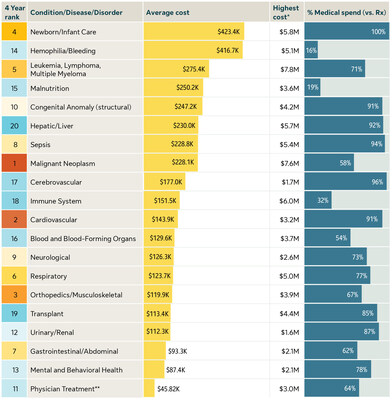
Some of the most common conditions resulting in claims above $3 million include orthopedic/musculoskeletal (MSK) conditions, newborn/infant care (premature birth) and cancer. While cancer and premature births have been top drivers of million-dollar and multimillion-dollar claims for several years, orthopedic/MSK conditions have only recently reached this level, suggesting increases in severity as well as developments in therapies and treatments. Orthopedic/MSK conditions and cancer are also two of the most frequent diagnoses for short-term disability claims.

"We have a real opportunity to help people achieve meaningful, improved health outcomes by prioritizing whole-person care," said Jennifer Collier, president, Health and Risk Solutions, Sun Life U.S. "Several of these high-cost health conditions occur as comorbidities, such as orthopedic/MSK and cancer. We tend to think about diagnoses and treatments individually, but care is more effective when we recognize the interconnectedness of health conditions. By getting people the right care, we can improve both health and cost outcomes, benefitting both members and employers."

Comorbidities have long been a major contributor to high-cost and multimillion-dollar claims. Multiple conditions can complicate treatment plans, exacerbate the primary diagnosis and prolong recovery. Sun Life's claims data analysis in the report identifies strong connections among cancer, cardiovascular and chronic kidney diseases, and orthopedic/MSK conditions. These conditions share several risk factors, including age, obesity, diabetes and inflammation.

Rising cost of care
Healthcare costs continue to increase as specialty treatments and gene therapies become more prevalent. Supporting these life-saving treatments is crucial, as Sun Life continues to explore ways to improve outcomes and manage risk.

  • Million-dollar+ claims increased in frequency by 46% from 2022 – 2026.
  • Spending on treating liver disease grew 43% in 2025 from the previous year, with an average cost per patient of $230,000.
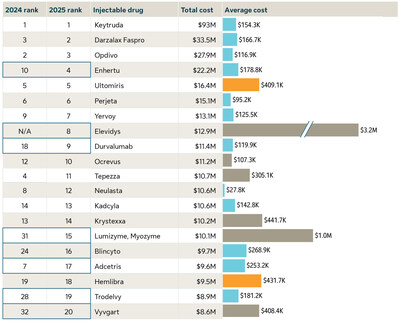
  • The most expensive drug treatment, at an average cost of $3.6 million, was Elevidys, a gene therapy that slows the progression of Duchenne muscular dystrophy.
  • The highest multimillion-dollar claims were for blood cancers (leukemia/lymphoma/myeloma), with an average of $5.45 million in 2025; the highest claim for a single leukemia patient in 2025 was nearly $8 million.

Impact of GLP-1s
Many high-dollar conditions are associated with obesity and diabetes. Employers have an opportunity to broaden coverage of GLP-1s and proactively reduce the risk of major health conditions that can result in high-dollar claims.

  • While the cost of GLP-1s per person is still relatively low, high-dollar claims that include GLP-1s increased by 24% over the past year.
  • GLP-1s have broader patient eligibility than many of the higher-cost specialty drugs in Sun Life's report, and can significantly reduce the risk of costlier conditions associated with obesity.
  • Several of the highest-cost conditions (kidney disease, cardiovascular disease and orthopedic/MSK conditions), are often associated with obesity and related health issues.

Why health services matter
Programs that provide health support services can have substantial impact on health outcomes and reduce medical costs, particularly if they target the more frequently seen conditions like cancer and MSK – also both common conditions for disability leave.

  • Osteoarthritis (OA), a common MSK condition, is more prevalent (54%) in patients on dialysis for chronic kidney disease (CKD). Research cited in the report suggests that OA may even be considered a predictor for CKD.
  • The most prevalent and frequent diagnosis among people aged 20–59 (i.e. those in the workforce) were solid cancers (malignant neoplasm).

Sun Life's Health and Risk Solutions are designed to address the conditions and factors that drive high-dollar claims and are available with its stop-loss coverage. The solutions include:

  • Orthopedic/MSK health support services through Hinge Health
  • Clinical 360 
    • High-dollar claims review from clinical experts to identify cost reduction opportunities
    • Access to site- or home-based specialty drug infusions through OptiMed
  • Health Navigator – personalized healthcare navigation services that get people the right care at the right time
  • Expert Cancer Review – second opinions from expert oncologists to ensure patients receive right diagnosis and treatment plan (also part of Health Navigator services)

Sun Life issues the High-Cost Claims and Injectable Drug Trends report annually, covering four-year spans of medical stop-loss claims. As the largest independent stop-loss provider in the country, Sun Life is uniquely qualified to offer analysis and commentary on the prevailing trends in care navigation, rising cost of care, complex conditions and drug treatments.

Click here to register for Sun Life's upcoming webinar to learn more about this year's report from Sun Life experts. To explore Sun Life's Health and Risk Solutions, including stop-loss insurance, visit: Stop-Loss insurance | Sun Life U.S.

About Sun Life

Sun Life is a leading international financial services organization providing asset management, wealth, insurance and health solutions to individual and institutional Clients. Sun Life has operations in a number of markets worldwide, including Canada, the U.S., the United Kingdom, Ireland, Hong Kong, the Philippines, Japan, Indonesia, India, China, Australia, Singapore, Vietnam, Malaysia and Bermuda. As of March 31, 2026, Sun Life had total assets under management of C$1.58 trillion. For more information, please visit www.sunlife.com.

Sun Life Financial Inc. trades on the Toronto (TSX), New York (NYSE) and Philippine (PSE) stock exchanges under the ticker symbol SLF.

Sun Life U.S. is one of the largest providers of employee and government benefits, helping approximately 48 million Americans access the care and coverage they need. Through employers, industry partners and government programs, Sun Life U.S. offers a portfolio of benefits and services, including dental, vision, disability, absence management, life, supplemental health, medical stop-loss insurance, and healthcare navigation. Sun Life employs nearly 8,300 people in the U.S., including associates in our partner dental practices and affiliated companies in asset management. Group insurance policies are issued by Sun Life Assurance Company of Canada (Wellesley Hills, Mass.), except in New York, where policies are issued by Sun Life and Health Insurance Company (U.S.) (Lansing, Mich.). For more information visit our website and newsroom.

Media Contact:

Devon Fernald
Sun Life U.S.
Devon.portney.fernald@sunlife.com

Cision View original content to download multimedia:https://www.prnewswire.com/news-releases/what-drives-multimillion-dollar-medical-claims-sun-life-report-shows-secondary-health-conditions-hospital-stays-and-specialty-drugs-among-key-factors-302779625.html

SOURCE Sun Life U.S.

FAQ

What are the main drivers of multimillion-dollar medical claims in Sun Life’s 2026 report (SLF)?

The report identifies comorbid conditions, long inpatient stays and injectable drugs as key drivers of multimillion-dollar claims. According to Sun Life, congenital anomalies, complex surgeries and gene therapies also materially contribute to claims above $3 million for self-funded employer health plans.

How much did million-dollar medical claims increase from 2022 to 2026 in Sun Life’s SLF analysis?

Million-dollar-plus medical claims increased in frequency by 46% between 2022 and 2026. According to Sun Life, this rise reflects growing use of specialty treatments, gene therapies and complex care associated with cancers, premature births, orthopedic/MSK conditions and other high-cost diagnoses.

What did Sun Life report about liver disease costs and average claim size for 2025 (SLF)?

Spending on treating liver disease grew 43% in 2025 compared with 2024. According to Sun Life, the average cost per liver disease patient reached about $230,000, underscoring the financial impact of complex care in self-funded employer health plans.

Which drugs and conditions generated the highest multimillion-dollar claims in Sun Life’s 2025 data (SLF)?

Elevidys was the most expensive drug, averaging $3.6 million per treatment. According to Sun Life, blood cancers had the highest multimillion-dollar claims, averaging $5.45 million in 2025, with one leukemia case approaching an $8 million claim.

How are GLP-1 drugs affecting high-cost claims in Sun Life’s 2026 report (SLF)?

High-dollar claims that include GLP-1s rose 24% over the past year. According to Sun Life, GLP-1s remain relatively low per-person cost but have broad eligibility and may reduce risks of obesity-related conditions like kidney, cardiovascular and orthopedic/MSK disease.

What health support services does Sun Life offer to address high-cost medical claims (SLF)?

Sun Life offers Health and Risk Solutions bundled with stop-loss coverage to target costly conditions. According to Sun Life, services include Hinge Health MSK support, Clinical 360 reviews, specialty drug infusion access, Health Navigator, and Expert Cancer Review second-opinion programs.