
Teledyne e2v Strengthens Space-Grade ADC Offering with Radiation Robustness Results
Key Terms
analog-to-digital converter technical
ka-band technical
single event effects technical
single event latch-up technical
linear energy transfer technical
total ionizing dose technical




GRENOBLE,
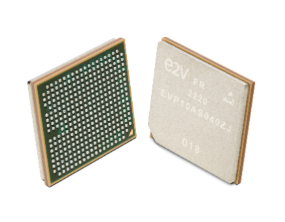
EV10AS940 10-bit, 12.8 GSps space-grade analog-to-digital converter from Teledyne e2v Semiconductors.
These results give space engineers additional confidence when designing high-performance satellite communications payloads, synthetic aperture radar, or SAR, systems, space electronic intelligence platforms and advanced space instrumentation, where data-conversion speed, radiation tolerance and in-orbit reliability are critical to mission success.
As part of a comprehensive single event effects, or SEE, test campaign, multiple EV10AS940 samples were evaluated at leading radiation test facilities, including RADEF in
Across all tested configurations, no single event latch-up, or SEL, events were observed, including at maximum LET levels, elevated temperature and increased supply-voltage conditions. At the conclusion of the campaign, all tested devices remained fully operational, with no functional degradation observed.
“These results give space system designers added confidence when selecting high-speed data converters for advanced payloads,” said Victoria Nasserddine, Product Marketing Manager at Teledyne e2v Semiconductors. “The EV10AS940 combines ultrahigh-speed performance with demonstrated radiation robustness, supporting applications where mission assurance and signal-chain performance are both critical.”
The EV10AS940 supports high-bandwidth applications that require fast, reliable conversion in harsh environments, including satellite communications, radar, electronic intelligence and advanced space instrumentation. The latest SEE results build on Teledyne e2v’s long-standing expertise in high-reliability semiconductor technologies for space and defense markets.
Total ionizing dose, or TID, characterization of the EV10AS940 has also been completed, confirming its robustness for long-term operation in radiation environments. Additional testing is ongoing, with complete reports expected by the end of 2026.
ABOUT TELEDYNE e2v SEMICONDUCTORS
Teledyne e2v delivers advanced solutions for health care, life sciences, space, transportation, defense and industrial markets. The company offers high-reliability semiconductors, including data converters, microprocessors and radiation-tolerant memories, alongside specialized manufacturing and test services. To learn more, visit Teledyne e2v Semiconductors’ website at semiconductors.teledyne-e2v.com.
ABOUT TELEDYNE
Teledyne Technologies Incorporated (NYSE:TDY) is a leading provider of sophisticated digital imaging products and software, instrumentation, aerospace and defense electronics, and engineered systems. Teledyne’s operations are primarily located in the United States, Canada, the United Kingdom, and Western and Northern Europe. For more information, visit Teledyne’s website at teledyne.com.
View source version on businesswire.com: https://www.businesswire.com/news/home/20260701621862/en/
Jane Rohou – Marcom Manager
Email: jane.rohou@teledyne.com
Source: Teledyne