
Toogood Gold Reports 76.89 g/t Gold and Defines 8.5 Km High-Grade Gold Trend at the Toogood Gold Project, Newfoundland
Rhea-AI Summary
Toogood Gold (OTCQB: TGGCF) reported Phase 2 surface exploration results on March 25, 2026, confirming high-grade gold up to 76.89 g/t and delineating an 8.5 km Shoreline gold trend plus multiple kilometre-scale corridors. Over 650 rock and soil samples were collected, defining several high-priority drill targets for 2026.
Work highlighted structural controls, stockwork quartz-carbonate veining, and planned infill sampling and drill-target generation along the Burnt Arm Fault corridor.
Positive
- High-grade assay of 76.89 g/t gold confirmed
- 8.5 km Shoreline gold trend defined
- Over 650 rock and soil samples collected (2025)
- Multiple kilometre-scale target corridors (4 km, 2 km, 1 km)
Negative
- Grab samples are selective and may not be representative of wider mineralization
- Historical assay values not independently verified by the company
- No mineral resource or reserve estimate reported yet
News Market Reaction – TGGCF
In the Mar 25 session, TGGCF gained 16.46%, reflecting a significant positive market reaction.
Data tracked by StockTitan Argus on the day of publication.
AI-generated analysis. How Rhea-AI works. Not financial advice.




Vancouver, British Columbia--(Newsfile Corp. - March 25, 2026) - Toogood Gold Corp. (TSXV: TGC) (OTCQB: TGGCF) (FSE: D3P) ("Toogood" or the "Company") reports final results from its Phase 2 surface exploration program at the Company's
Highlights:
High-grade gold up to 76.89 g/t confirmed, with additional results of 4.88 g/t and 4.49 g/t Au confirmed along the 8.5 km Shoreline gold trend (Figure 2), demonstrating district-scale potential;
Additional high-grade mineralization confirmed at key target areas:
34.50 g/t, 3.09 g/t and 2.93 g/t Au from quartz veins at Chimo, Vic, and Hank targets;
Multiple new kilometre-scale gold corridors outlined in the NE Block (Figures 3 and 4):
4 km Burnt Arm Trend, 2 km Western Trend and 1 km Eastern Trend;
Strong alignment between gold mineralization and major structural controls supports a scalable, structurally controlled gold system;
Over 650 rock and soil samples collected, significantly advancing geological understanding and target definition;
Multiple high-priority drill targets defined, with work advancing toward initial drill testing.
Management Commentary
"Phase 2 results continue to demonstrate the scale and prospectivity of the Toogood Gold Project, with high-grade gold confirmed along an 8.5-kilometre-long trend and multiple kilometre-scale soil anomalies defined from regional sampling," stated Colin Smith, CEO of Toogood Gold Corp. "The strong alignment between surface mineralization, coherent geochemical signatures, and well-defined structural controls, including key lithological contacts and district-scale faults, provides a robust targeting framework to define and advance a growing pipeline of high-quality drill target corridors."
Geological Advancement and Targeting
Phase 2 exploration at the Toogood Gold Project (Q4, 2025) integrated detailed structural mapping, prospecting, and soil sampling, significantly advancing the geological model. A total of 340 rock and 315 soil samples were collected, identifying new high-grade gold occurrences and multiple kilometre-scale gold-in-soil anomalies (Figure 1).
Phase 2 mapping has materially improved the Company's understanding of structural controls on gold mineralization. Work on the Project has identified at least two semi-continuous mineralized zones developed along the sheared northern margin of the regionally extensive Mélange Complex.
Mineralization is characterized by stockwork quartz-carbonate veining within altered and brecciated volcaniclastic rocks, commonly associated with sulphidic black shales. Key controls on mineralization include:
Structural convergence zones where multiple foliations, shears, and faults intersect, resulting in thickened and higher-grade mineralized zones;
Reactive lithological contacts, particularly between mafic-intermediate volcaniclastic rocks and black shales; and
Local enhancement of mineralization where intermediate porphyry dikes and sills intersect these favourable horizons.
These observations support a structurally controlled gold mineralizing system at both regional and local scales, underscoring the potential for significant gold mineralization across the Project.
Next Steps
Results from Phase 2 have defined multiple high-priority, structurally coherent target corridors in the NE Block, with strong spatial coincidence between gold-in-soil anomalies and interpreted structural controls.
The Company intends to advance these corridors toward drill testing, with current work focused on refining and prioritizing high-confidence targets along the Burnt Arm Fault corridor and parallel structures.
Planned 2026 work will include:
Infill and regional soil sampling to better delineate anomalies and expand coverage into unsampled areas;
Structural mapping and prospecting along auriferous corridors; and
Drill target generation and ranking.
This integrated approach is designed to efficiently convert surface anomalies into high-confidence, scalable drill targets and support systematic evaluation of the Project's emerging gold corridors.
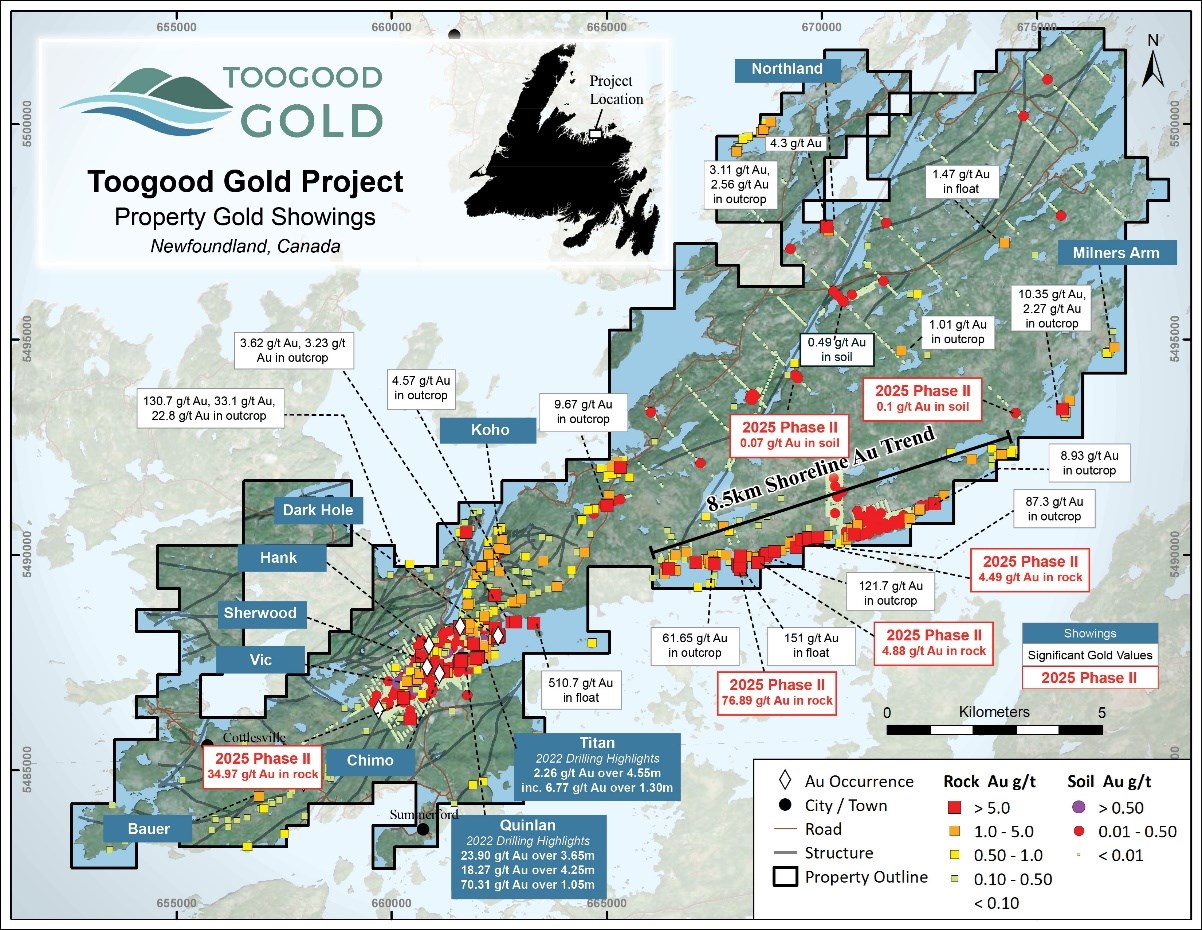
Figure 1. 2025 Rock and soil samples, Toogood Gold Project, Newfoundland.
To view an enhanced version of this graphic, please visit:
https://images.newsfilecorp.com/files/11439/289809_c3086b80b4e3e8fc_002full.jpg
Notes:
Historical assay values have not been independently verified by the Company and a potential investor should not place undue reliance on such results when making an investment decision, nor should they be used as the sole criterion for making investment decisions. There is no assurance that the Company can reproduce such results or that the historical results described herein will be realized.
Grab samples are selective in nature and may not be representative of mineralization hosted on the Project.
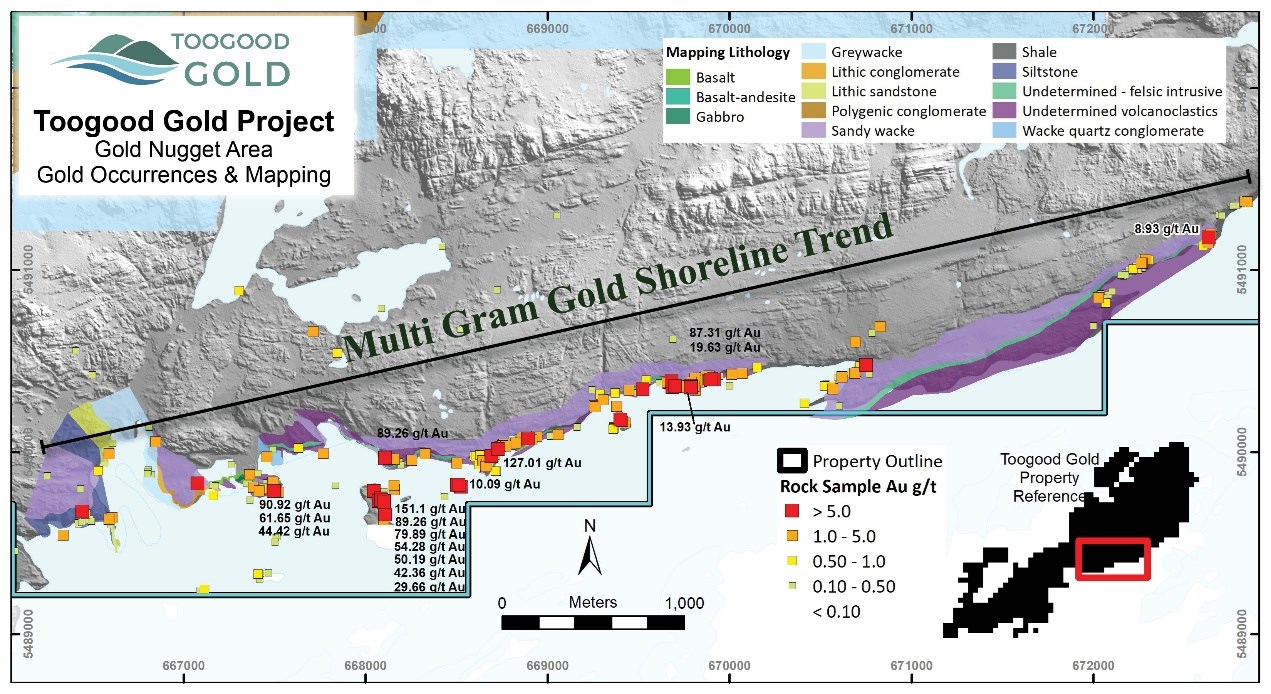
Figure 2. Shoreline trend mapping and rock sampling, Toogood Gold Project, Newfoundland.
To view an enhanced version of this graphic, please visit:
https://images.newsfilecorp.com/files/11439/289809_c3086b80b4e3e8fc_003full.jpg
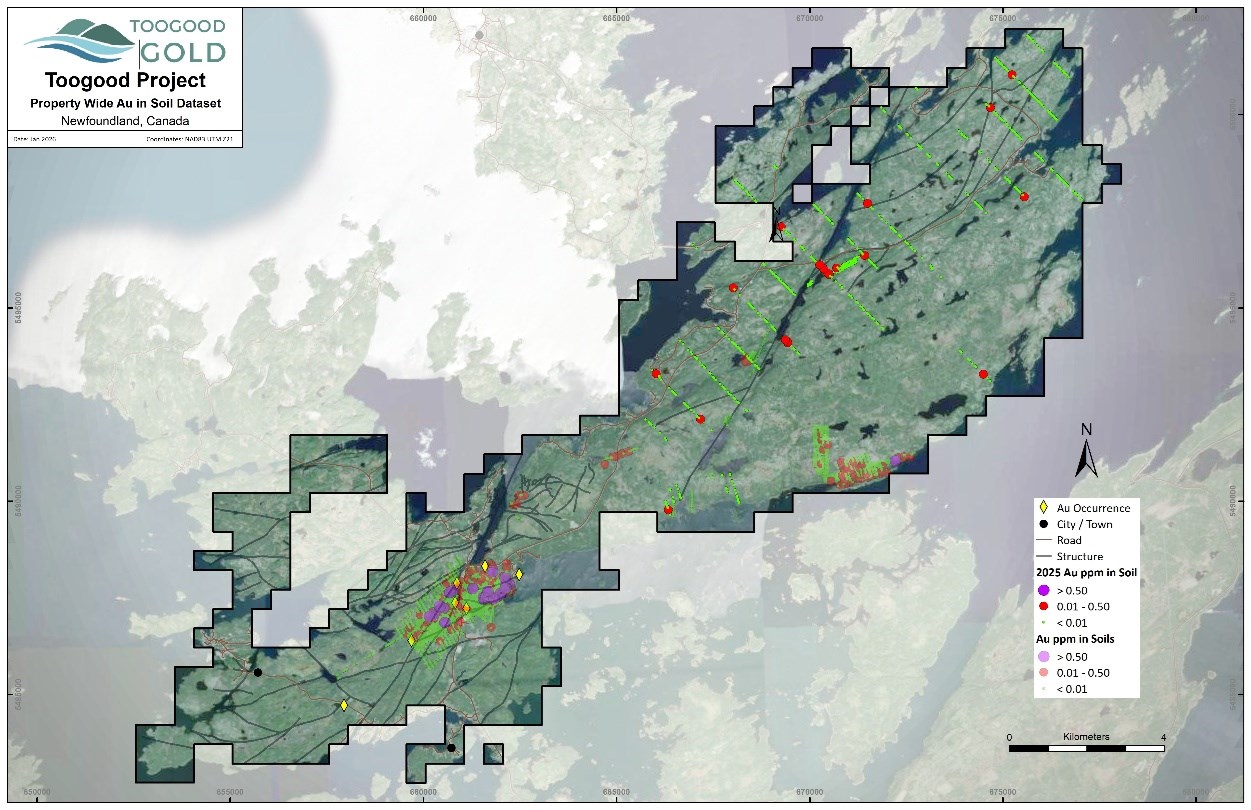
Figure 3. 2025 and historical soil sampling, Toogood Gold Project, Newfoundland.
To view an enhanced version of this graphic, please visit:
https://images.newsfilecorp.com/files/11439/289809_c3086b80b4e3e8fc_004full.jpg
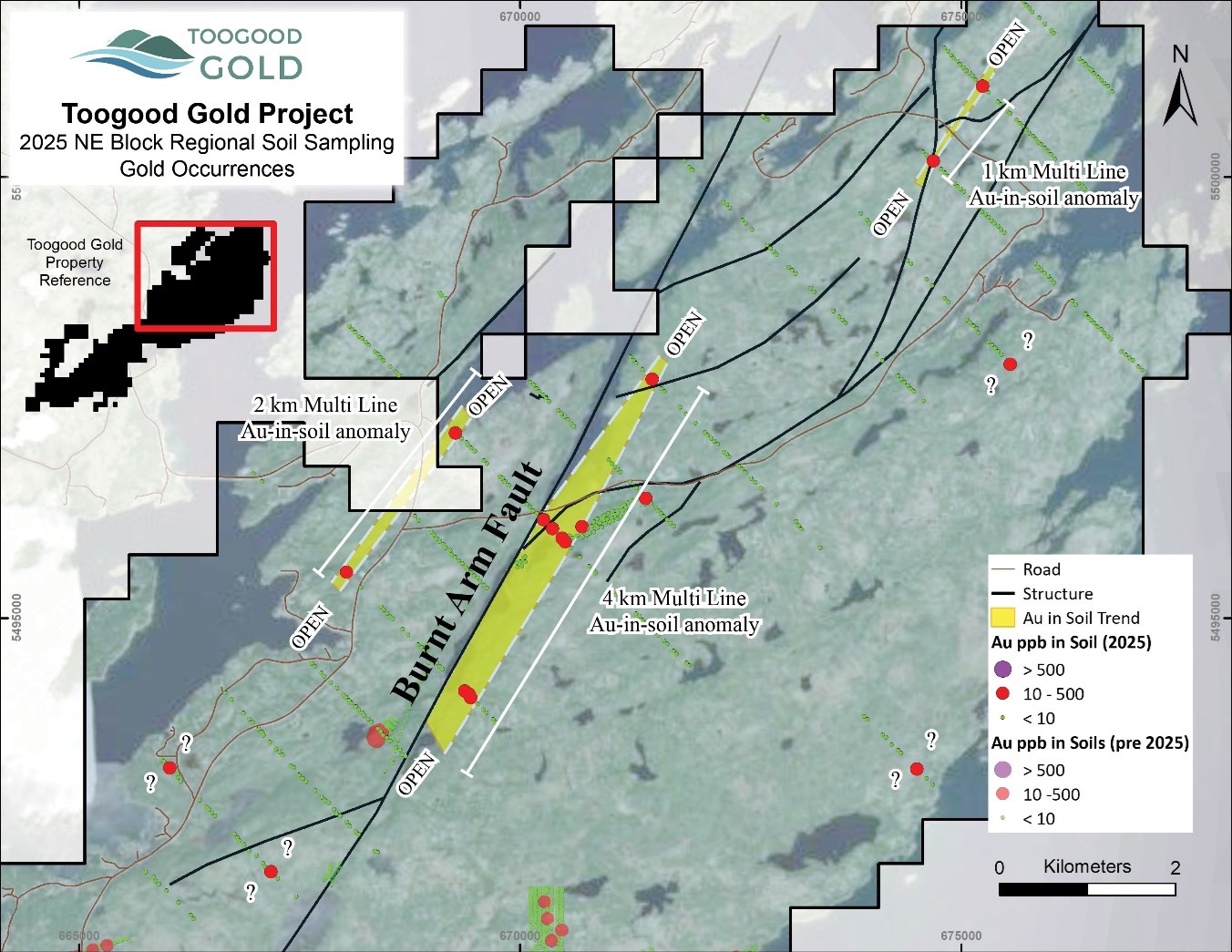
Figure 4: Kilometre-scale gold-in-soils anomalies, Toogood Gold Project, Newfoundland.
To view an enhanced version of this graphic, please visit:
https://images.newsfilecorp.com/files/11439/289809_c3086b80b4e3e8fc_005full.jpg
Analytical Procedure
All 2025 samples referenced in this release were prepared and analyzed by Eastern Analytical Limited (ISO/IEC 17025 accredited) in Springdale, Newfoundland. Gold analysis was completed by fire assay with an atomic absorption (AA) finish, and multi-element analysis was conducted using a 34-element ICP package.
Quality Assurance / Quality Control ("QA/QC")
The Company implemented standard industry QA/QC procedures for the 2025 program, including the insertion of certified reference materials and blank samples into the sample stream to monitor analytical accuracy and precision.
Qualified Person
Colin Smith, M.Sc., P.Geo., a Qualified Person under National Instrument 43-101, has reviewed and approved the scientific and technical information contained in this news release. Mr. Smith is not independent and serves as CEO and Director of Toogood Gold Corp. and owns securities of the Company.
The scientific and technical information disclosed herein includes historical exploration results that have not been independently verified by the Company; however, the Qualified Person considers such information to be relevant for the purposes of this disclosure. A Qualified Person has not completed sufficient work to verify the historical information, and it should not be relied upon for the purposes of defining mineral resources.
About Toogood Gold Corp.
Toogood Gold Corp. is a Canadian exploration company focused on the discovery and advancement of high-grade gold systems in tier-one mining jurisdictions. The Company has two core areas of focus: the Table Mountain Project in Nevada, a large, undrilled low-sulphidation epithermal system with extensive surface alteration and multiple mineralized vein exposures; and the
On Behalf of the Board of Directors
Colin Smith
Director & CEO
Toogood Gold Corp.
For further information contact:
Colin Smith, Director & CEO
+1 778 726-3356
info@toogoodgoldcorp.com
Additional information about Toogood Gold Corp. can be found at www.sedarplus.ca.
Forward-Looking Information
This press release contains "forward looking information" within the meaning of applicable Canadian securities legislation. Generally, forward looking information can be identified by the use of forward looking terminology such as "plans", "expects" or "does not expect", "is expected", "budget", "scheduled", "estimates", "forecasts", "intends", "anticipates" or "does not anticipate", or "believes", or variations of such words and phrases or state that certain acts, events or results "may", "could", "would", "might" or "will be taken", "occur" or "be achieved".
Forward-looking statements or information are subject to a variety of known and unknown risks, uncertainties and other factors that could cause actual events or results to differ from those reflected in the forward-looking statements or information, including, without limitation, the need for additional capital by the Company through financings, and the risk that such funds may not be raised; the speculative nature of exploration and the stages of the Company's properties; the effect of changes in commodity prices; regulatory risks that development of the Company's material properties will not be acceptable for social, environmental or other reasons; availability of equipment (including drills) and personnel to carry out work programs; and that each stage of work will be completed within expected time frames. This list is not exhaustive of the factors that may affect any of the Company's forward-looking statements or information. Although the Company has attempted to identify important factors that could cause actual results to differ materially, there may be other factors that cause results not to be as anticipated, estimated, described or intended. Accordingly, readers should not place undue reliance on forward-looking statements or information.
The Company's forward-looking statements and information are based on the assumptions, beliefs, expectations and opinions of management as of the date of this news release, and other than as required by applicable securities laws, the Company does not assume any obligation to update forward-looking statements and information if circumstances or management's assumptions, beliefs, expectations or opinions should change, or changes in any other events affecting such statements or information.
Neither the TSX Venture Exchange nor its Regulation Services Provider (as that term is defined in the policies of the TSX Venture Exchange) accepts responsibility for the adequacy or accuracy of this release.

To view the source version of this press release, please visit https://www.newsfilecorp.com/release/289809