
Talisker Reports Mustang Underground Face Sample Results Defining a 79-metre Strike Length High-grade Shoot Averaging 64.8 g/t on the 1030 Level
High-grade chip samples on the 1030 Level support Talisker’s view of strong grade continuity and depth potential at Bralorne’s Mustang Mine.
Sentiment and the balance of points
Rhea-AI Sentiment reads the wording of the document, how positive or negative its language is on a 1 to 5 scale. The balance of points shown with the takes weighs what the document actually discloses, so the two can disagree, for example when a trial that missed its main goal is described in upbeat language.
Rhea-AI Summary
Talisker Resources (TSKFF) reported high-grade underground face sampling results defining a 79-metre BK Vein ore shoot on the 1030 Level.
The banded quartz vein averages 64.84 g/t gold over an average estimated true width of 0.50 m, extending a previously reported high-grade shoot from the 1045 Level at the Mustang Mine, part of the Bralorne Gold Project in British Columbia.
Highlighted intercepts include 496 g/t over 0.51 m within 156.97 g/t over 1.64 m, 203 g/t over 0.54 m within 100.81 g/t over 1.09 m, and several other samples above 100 g/t Au. The BK structure has been delineated by drilling over more than 750 m of strike and remains open beyond 500 m depth.
Positive
- 79 m high-grade shoot on BK Vein averaging 64.84 g/t Au over 0.50 m true width on the 1030 Level
- Multiple ultra high-grade intervals, including 496 g/t Au over 0.51 m within 156.97 g/t over 1.64 m and other samples above 100 g/t Au
- BK structure traced by drilling over more than 750 m of strike and remaining open beyond 500 m depth
Negative
- None.
News Explained
The disclosure adds an operational milestone: Talisker says underground development on the 1030 Level has progressed continuously across the 79-metre strike, placing the reported high-grade zone in active mine development rather than describing assay results alone.
Details
News Market Reaction – TSKFF
On Sep 9, the day this news came out, TSKFF closed 0.40% above the previous close.
Data tracked by StockTitan Argus for the Sep 9 session.
AI-generated analysis. How Rhea-AI works. Not financial advice.




TORONTO, Sept. 09, 2026 (GLOBE NEWSWIRE) -- Talisker Resources Ltd. (“Talisker” or the “Company”) (TSX:TSK | OTCQB:TSKFF) is pleased to report continued success from underground development on the 1030 Level at the Mustang Mine, where the Company has successfully developed on a continuous 79-metre strike length of high-grade gold mineralization along the BK Vein. The zone comprises a well-defined banded quartz vein averaging 64.84 grams per tonne (g/t) gold across an average true width of 0.50 metres. These encouraging results extend the high-grade ore shoot from the 1045 Level, reported on April 15, 2026, and provide further validation of Talisker's geological model, with continued demonstration of increasing grade and improved continuity of mineralized structures with depth within the Mustang Mine at the Bralorne Gold Project, British Columbia, Canada.
Key Highlights:
- 496 g/t over 0.51 m within 156.97 g/t over 1.64 m from 1030 BK Vein, East Face No. 16
- 203 g/t over 0.54 m within 100.81 g/t over 1.09 m from 1030 BK Vein, East Face No. 18
- 167 g/t over 0.48 m within 61.27 g/t over 1.31 m from 1030 BK Vein, East Face No. 17
- 147 g/t over 0.35 m within 51.16 g/t over 1.21 m from 1030 BK Vein, East Face No. 22
- 114 g/t over 0.43 m within 43.58 g/t over 1.14 m from 1030 BK Vein, East Face No. 19
- 112 g/t over 0.47 m within 24.36 g/t over 2.39 m from 1030 BK Vein, East Face No. 28
- 74.7 g/t over 0.47 m within 37.53 g/t over 1.98 m from 1030 BK Vein, East Face No. 23
- 37.2 g/t over 0.80 m within 20.98 g/t over 1.50 m from 1030 BK Vein, East Face No. 28
Terry Harbort, CEO of Talisker commented, “These outstanding results from a well-defined ore shoot along the BK Vein demonstrate the remarkable structural and grade continuity of the auriferous quartz-vein systems across the Mustang Mine. With the BK structure delineated by diamond drilling over more than 750 metres of strike and remaining open beyond 500 metres depth, we see significant potential to extend known ore shoots and delineate additional high-grade shoots as mining advances. We look forward to reporting further results from our continued mining development and drilling at the Bralorne Gold Project.”
| Bralorne Gold Project Mustang Mine – 1030 Lateral Development Assay Results | |||||
| Face Name | From (m) | To (m) | Interval (m) | Au (g/t) | Sample # |
| M1030_BK_OD_E1_F3 | 0 | 0.8 | 0.8 | 37.2 | X003456 |
| M1030_BK_OD_E1_F3 | 0.8 | 1.5 | 0.7 | 2.44 | X003457 |
| M1030_BK_OD_E1_F3 | 1.5 | 2.37 | 0.87 | 0.62 | X003458 |
| M1030_BK_OD_E1_F3 | 2.37 | 3.21 | 0.84 | 0.01 | X003459 |
| M1030_BK_OD_E1_F16 | 0 | 0.99 | 0.99 | 0.09 | X003758 |
| M1030_BK_OD_E1_F16 | 0.99 | 1.4 | 0.41 | 10.5 | X003759 |
| M1030_BK_OD_E1_F16 | 1.4 | 1.91 | 0.51 | 496 | X003761 |
| M1030_BK_OD_E1_F16 | 1.91 | 2.63 | 0.72 | 0.23 | X003762 |
| M1030_BK_OD_E1_F16 | 2.63 | 3.43 | 0.8 | 0.08 | X003763 |
| M1030_BK_OD_E1_F17 | 0 | 1.08 | 1.08 | 0.03 | X003785 |
| M1030_BK_OD_E1_F17 | 1.08 | 1.56 | 0.48 | 167 | X003786 |
| M1030_BK_OD_E1_F17 | 1.56 | 2.39 | 0.83 | 0.12 | X003787 |
| M1030_BK_OD_E1_F17 | 2.39 | 3.19 | 0.8 | 0.05 | X003788 |
| M1030_BK_OD_E1_F18 | 0 | 0.81 | 0.81 | 0.97 | X003814 |
| M1030_BK_OD_E1_F18 | 0.81 | 1.36 | 0.55 | 0.47 | X003815 |
| M1030_BK_OD_E1_F18 | 1.36 | 1.9 | 0.54 | 203 | X003816 |
| M1030_BK_OD_E1_F18 | 1.9 | 3.33 | 1.43 | 5.56 | X003817 |
| M1030_BK_OD_E1_F19 | 0 | 0.5 | 0.5 | 0.01 | X003829 |
| M1030_BK_OD_E1_F19 | 0.5 | 1.42 | 0.92 | 0.005 | X003831 |
| M1030_BK_OD_E1_F19 | 1.42 | 1.78 | 0.36 | 0.37 | X003832 |
| M1030_BK_OD_E1_F19 | 1.78 | 2.21 | 0.43 | 114 | X003833 |
| M1030_BK_OD_E1_F19 | 2.21 | 2.56 | 0.35 | 1.5 | X003834 |
| M1030_BK_OD_E1_F19 | 2.56 | 3.52 | 0.96 | 0.09 | X003835 |
| M1030_BK_OD_E1_F22 | 0 | 0.86 | 0.86 | 0.04 | X003903 |
| M1030_BK_OD_E1_F22 | 0.86 | 1.29 | 0.43 | 20.1 | X003904 |
| M1030_BK_OD_E1_F22 | 1.29 | 1.64 | 0.35 | 147 | X003905 |
| M1030_BK_OD_E1_F22 | 1.64 | 2.07 | 0.43 | 4.22 | X003906 |
| M1030_BK_OD_E1_F22 | 2.07 | 3.46 | 1.39 | 0.09 | X003907 |
| M1030_BK_OD_E1_F23 | 0 | 0.92 | 0.92 | 41.2 | X003915 |
| M1030_BK_OD_E1_F23 | 0.92 | 1.39 | 0.47 | 74.7 | X003916 |
| M1030_BK_OD_E1_F23 | 1.39 | 1.98 | 0.59 | 2.2 | X003917 |
| M1030_BK_OD_E1_F23 | 1.98 | 2.93 | 0.95 | 0.26 | X003918 |
| M1030_BK_OD_E1_F23 | 2.93 | 3.86 | 0.93 | 0.37 | X003919 |
| M1030_BK_OD_E1_F28 | 0 | 0.85 | 0.85 | 0.97 | X004118 |
| M1030_BK_OD_E1_F28 | 0.85 | 1.32 | 0.47 | 112 | X004119 |
| M1030_BK_OD_E1_F28 | 1.32 | 1.93 | 0.61 | 2.35 | X004121 |
| M1030_BK_OD_E1_F28 | 1.93 | 3.24 | 1.31 | 3.17 | X004122 |
| *Estimated true widths are between | |||||
| Bralorne Gold Project – Chip Collar Locations Table (values rounded to nearest metre) | |||
| Face Name | UTM Easting | UTM Northing | Elevation (m) |
| M1030_BK_OD_E1_F3 | 5625457 | 513383 | 1031.44 |
| M1030_BK_OD_E1_F16 | 5625456 | 513422 | 1032.45 |
| M1030_BK_OD_E1_F17 | 5625456 | 513425 | 1032.05 |
| M1030_BK_OD_E1_F18 | 5625456 | 513428 | 1032.08 |
| M1030_BK_OD_E1_F19 | 5625457 | 513431 | 1032.43 |
| M1030_BK_OD_E1_F22 | 5625455 | 513438 | 1031.83 |
| M1030_BK_OD_E1_F23 | 5625454 | 513441 | 1032.17 |
| M1030_BK_OD_E1_F28 | 5625452 | 513457 | 1033.29 |
| Bralorne Gold Project – Chip Collar Orientations | |||
| Face Name | Azimuth (°) | Dip (°) | Total Length (m) |
| M1030_BK_OD_E1_F3 | 166 | 0 | 3.21 |
| M1030_BK_OD_E1_F16 | 183 | 0 | 3.43 |
| M1030_BK_OD_E1_F17 | 181.5 | 0 | 3.19 |
| M1030_BK_OD_E1_F18 | 181 | 0 | 3.33 |
| M1030_BK_OD_E1_F19 | 175 | 0 | 3.52 |
| M1030_BK_OD_E1_F22 | 195 | 0 | 3.46 |
| M1030_BK_OD_E1_F23 | 192 | 0 | 3.86 |
| M1030_BK_OD_E1_F28 | 188 | 0 | 3.24 |
For further information, please contact:
Lindsay Dunlop
Vice President, Investor Relations
lindsay.dunlop@taliskerresources.com
+1 647 274 8975
Qualified Person
The technical information contained in this news release has been reviewed and approved by Patrick Weaver, P.Geo., Talisker’s Chief Production Geologist, who is a Qualified Person as defined under Canadian National Instrument 43-101, Standards of Disclosure for Mineral Projects. Mr. Weaver is not independent of the Company in accordance with NI 43-101.
About Talisker Resources Ltd.
Talisker (taliskerresources.com) is a junior resource company involved in the exploration and development of gold projects in British Columbia, Canada. Talisker’s flagship asset is the high-grade, fully permitted Bralorne Gold Project where the Company is producing at the Mustang Mine. Talisker projects also include the Ladner Gold Project, an historic high-grade gold mine near Hope, British Columbia, with significant exploration potential, and the Spences Bridge Project, where the Company has a significant landholding in the emerging Spences Bridge Gold Belt, as well as several other early-stage Greenfields projects.
Sample Preparation and QAQC
Chip sampling of underground ore headings at the Bralorne Gold Project is conducted by geologists using industry standard practices to sample across a horizontal 5 cm × 5 cm × up to 3.0 m zone across the entire face of the drift at a height of approximately 1.2 m above the sill/floor. Under the current protocol, individual chip samples range from 0.35 m to 1.50 m in length and are selected to best represent identified geological structures, sulphide mineralization, or hydrothermal alteration suspected to bracket gold concentrations. Where vein or mineralized zones are wide, consecutive samples are collected across the structure to preserve geological resolution. Lithological breaks are avoided within a single sample wherever possible.
Quality assurance and quality control (QAQC) procedures include regular insertion of certified reference materials, blanks, and field duplicates into the sample stream at a rate of approximately
All preparation and analytical work is performed by Activation Laboratories Ltd. (Actlabs) in Kamloops, British Columbia, Canada. Sample preparation follows Actlabs code RX1, involving crushing the entire sample (<7 kg) to at least
Gold is analyzed by fire assay with an atomic absorption spectroscopy (AAS) finish (Actlabs code 1A2-50 ORE), in which a 50 g pulp is fused with fire assay fluxes, preheated at 850 °C, heated further at 950 °C, and finished at 1,060 °C over a 60-minute fusion cycle. The resulting lead button is cupelled at 950 °C to produce a doré bead containing Au and Ag, which is then dissolved in aqua regia and analyzed by AAS. This method has a detection range of 0.01 to 100 g/t Au.
Samples returning gold grades of ≥100 g/t Au are re-analyzed by fire assay with gravimetric finish (Actlabs code 1A3-50). In this process, gold is separated from silver in the doré bead by parting with nitric acid, and the gold residue is weighed gravimetrically on a microbalance. The 1A3-50 method has a detection range of 0.02 to 10,000 g/t Au.
Caution Regarding Forward Looking Statements
Certain statements contained in this press release constitute forward-looking information. The use of any of the words “could”, “intend”, “expect”, “believe”, “will”, “projected”, “estimated” and similar expressions and statements relating to matters that are not historical facts are intended to identify forward-looking information and are based on Talisker’s current belief or assumptions as to the outcome and timing of such future events. Various assumptions or factors are typically applied in drawing conclusions or making the forecasts or projections set out in forward-looking information. Those assumptions and factors are based on information currently available to Talisker. Although such statements are based on reasonable assumptions of Talisker’s management, there can be no assurance that any conclusions or forecasts will prove to be accurate.
Forward looking information involves known and unknown risks, uncertainties and other factors which may cause the actual results, performance, or achievements to be materially different from any future results, performance or achievements expressed or implied by the forward-looking information. Such factors include risks inherent in the exploration and development of mineral deposits, including risks relating to changes in project parameters as plans continue to be redefined, risks relating to variations in grade or recovery rates, risks relating to changes in mineral prices and the worldwide demand for and supply of minerals, risks related to increased competition and current global financial conditions, access and supply risks, reliance on key personnel, operational risks, regulatory risks, including risks relating to the acquisition of the necessary licenses and permits, financing, capitalization and liquidity risks, title and environmental risks and risks relating to the failure to receive all requisite shareholder and regulatory approvals.
The forward-looking information contained in this release is made as of the date hereof, and Talisker is not obligated to update or revise any forward-looking information, whether as a result of new information, future events or otherwise, except as required by applicable securities laws. Because of the risks, uncertainties and assumptions contained herein, investors should not place undue reliance on forward-looking information. The foregoing statements expressly qualify any forward-looking information contained herein.
Figure 1: Bralorne Gold Project – Location Map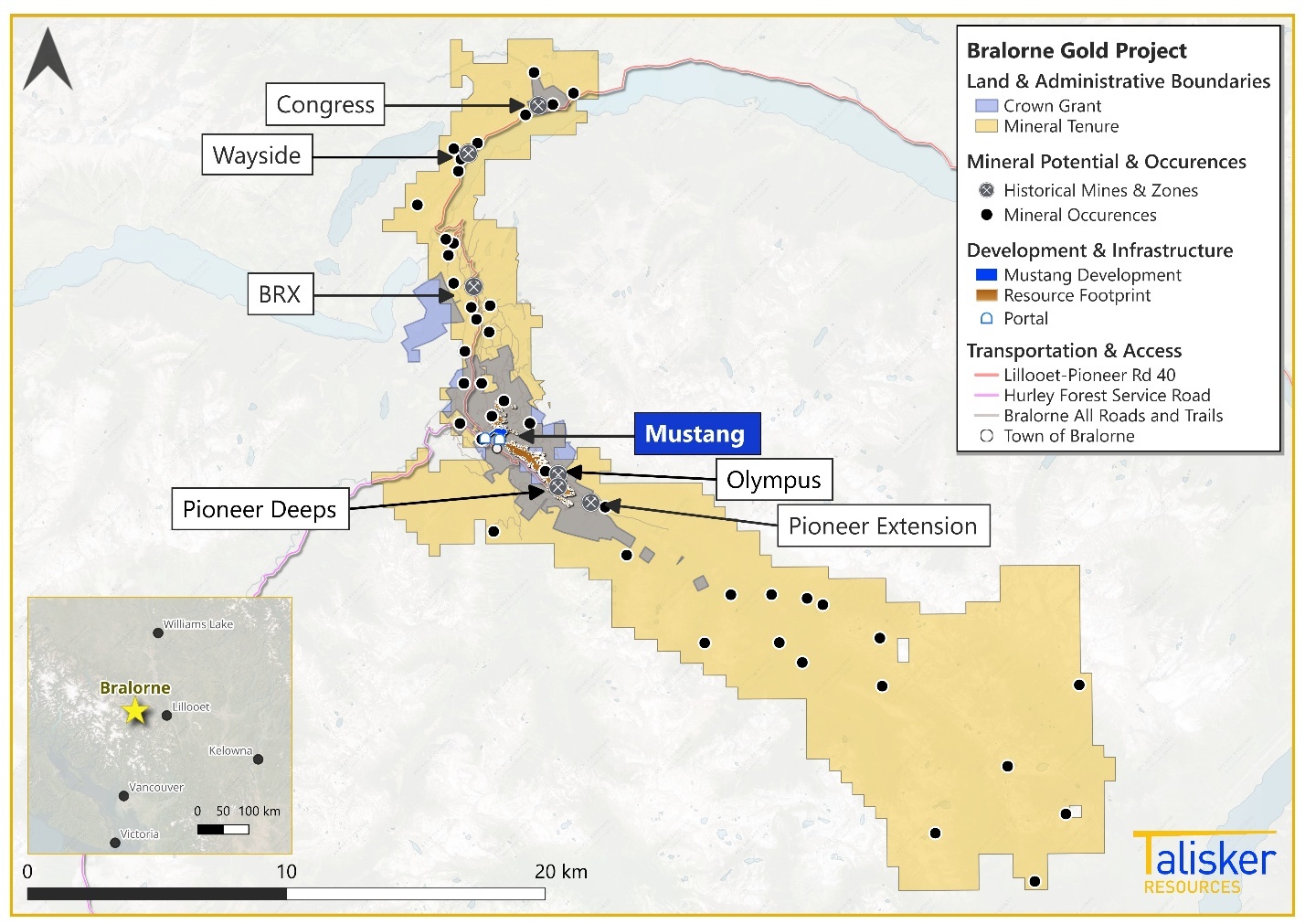
Figure 2: Mustang Mine plan view of 1030 level lateral development.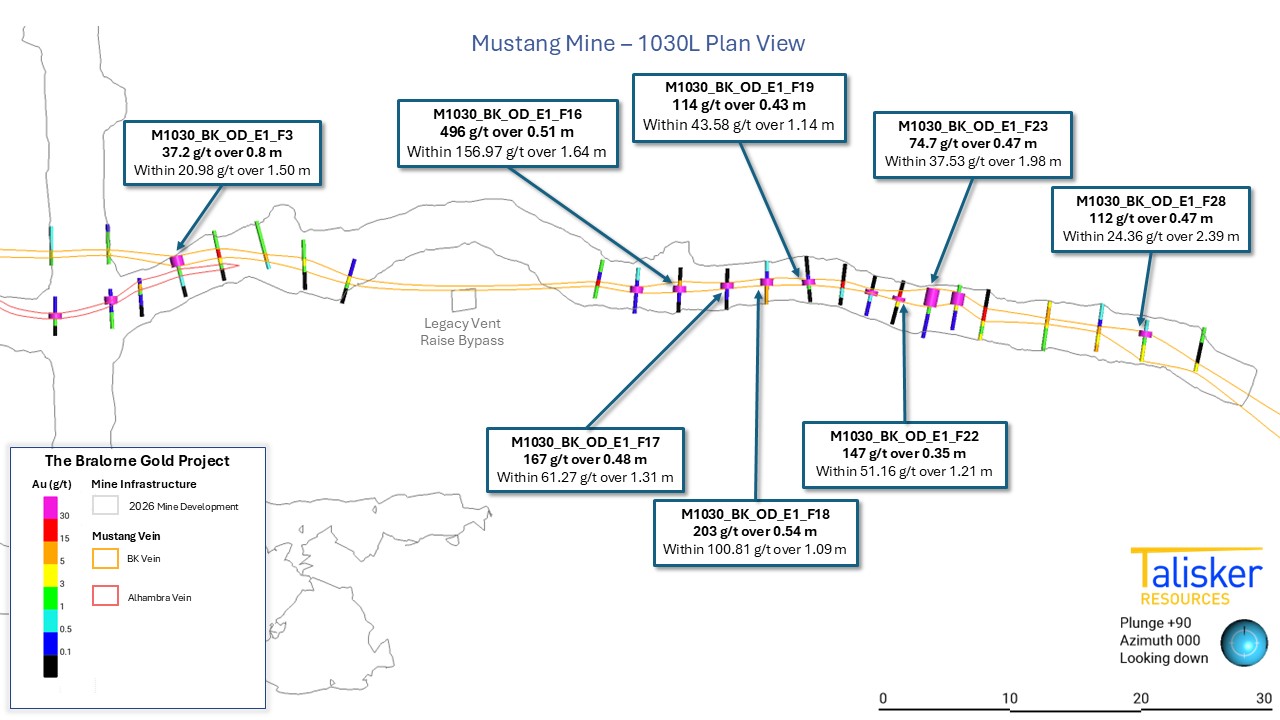
Figure 3: Face sample from 1030 level BK Vein east face No. 3.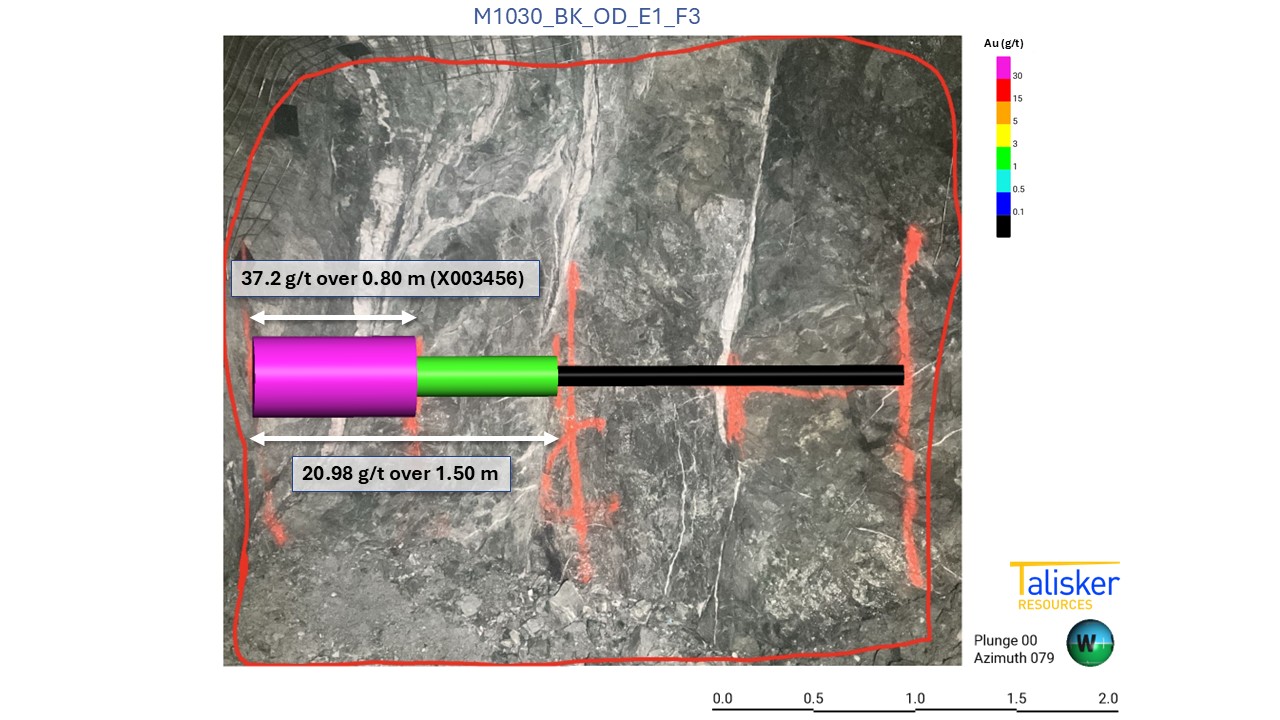
Figure 4: Face sample from 1030 level BK Vein east face No. 16.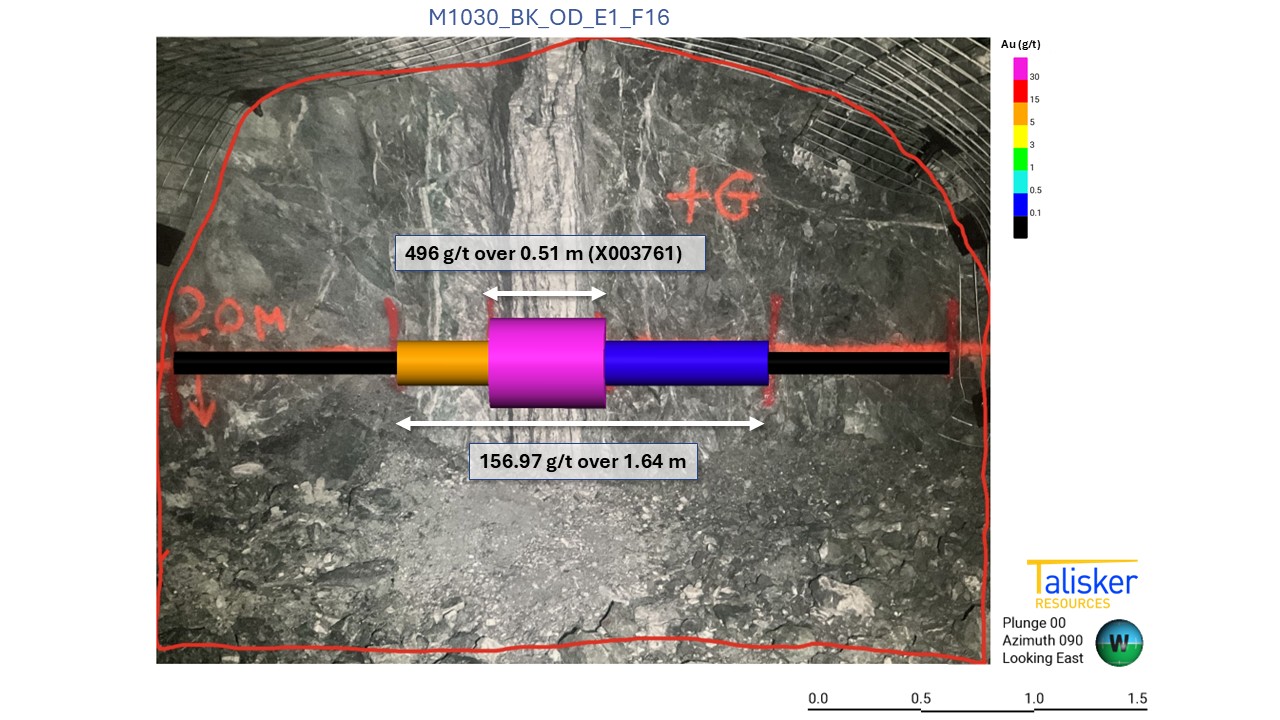
Figure 5: Face sample from 1030 level BK Vein east face No. 17.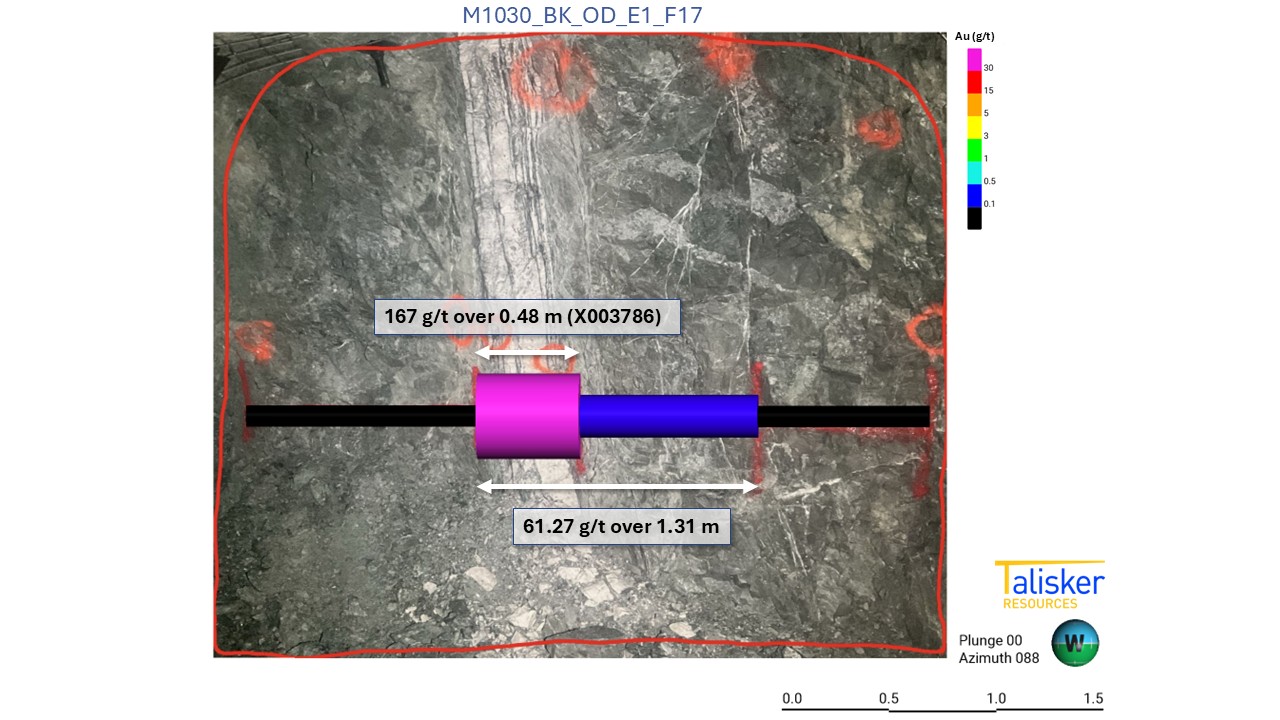
Figure 6: Face sample from 1030 level BK Vein east face No. 18.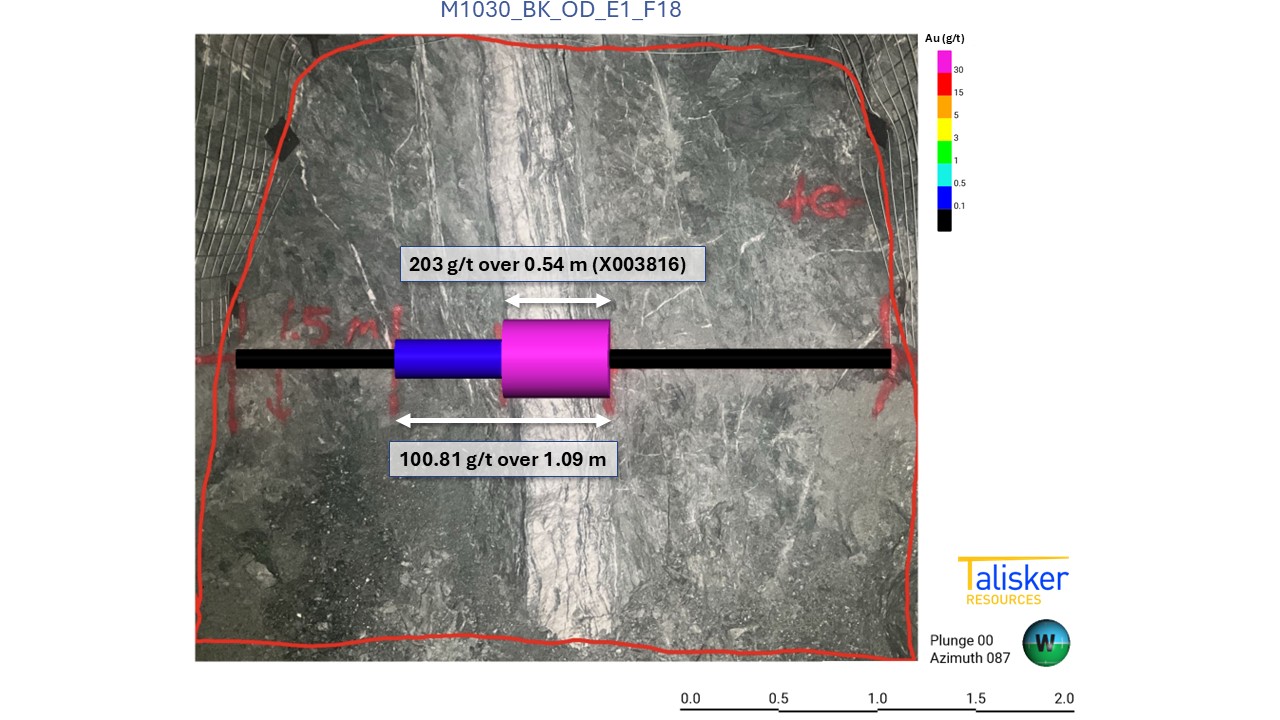
Figure 7: Face sample from 1030 level BK Vein east face No. 19.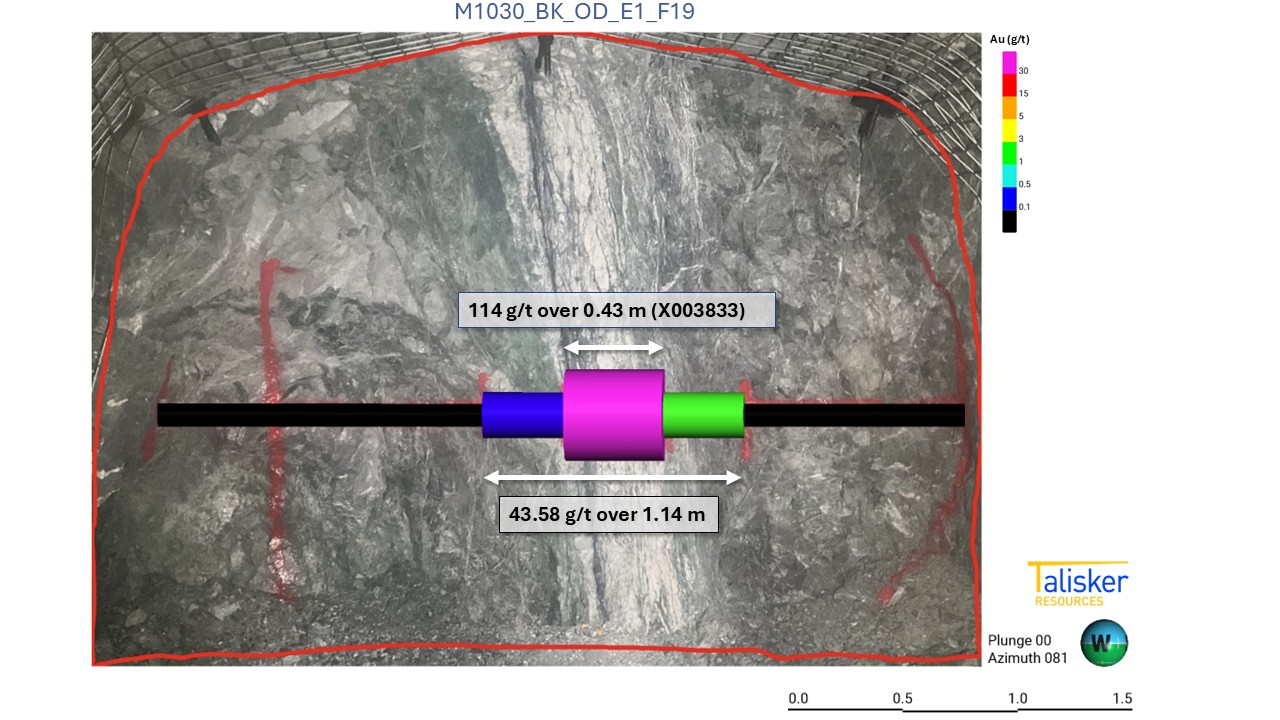
Figure 8: Face sample from 1030 level BK Vein east face No. 22.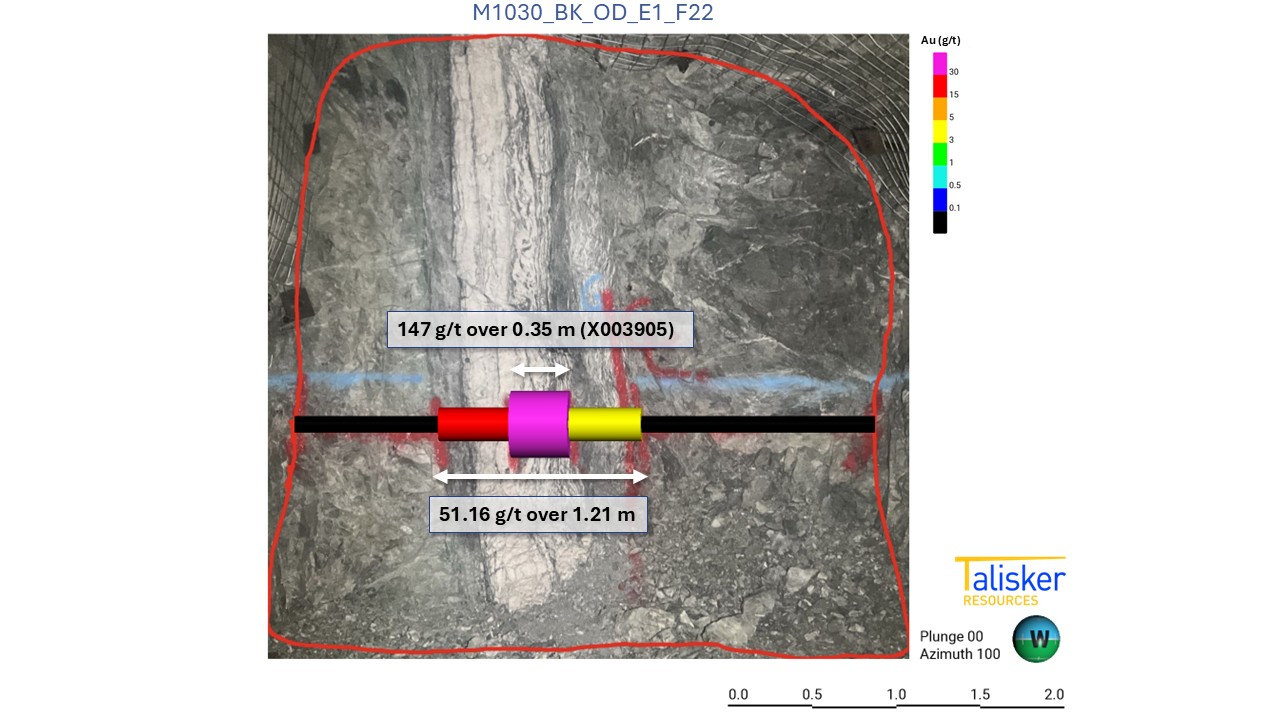
Figure 9: Face sample from 1030 level BK Vein east face No. 23.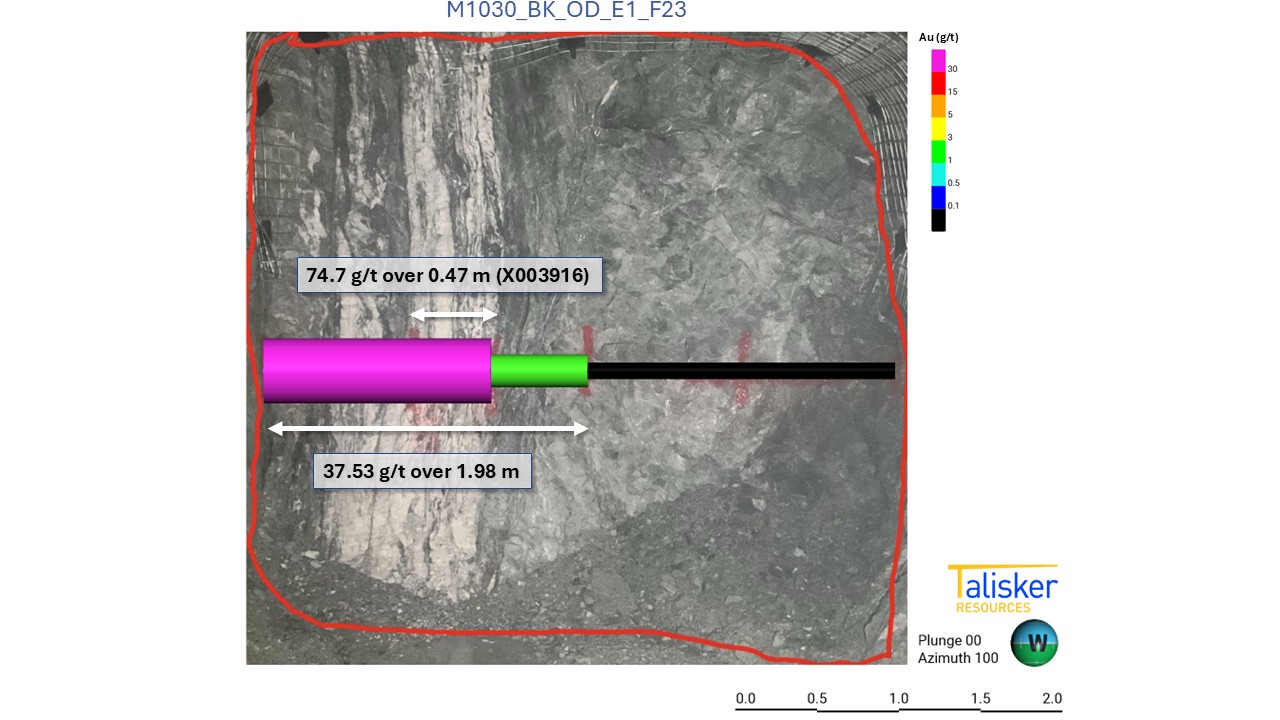
Figure 10: Face sample from 1030 level BK Vein east face No. 28.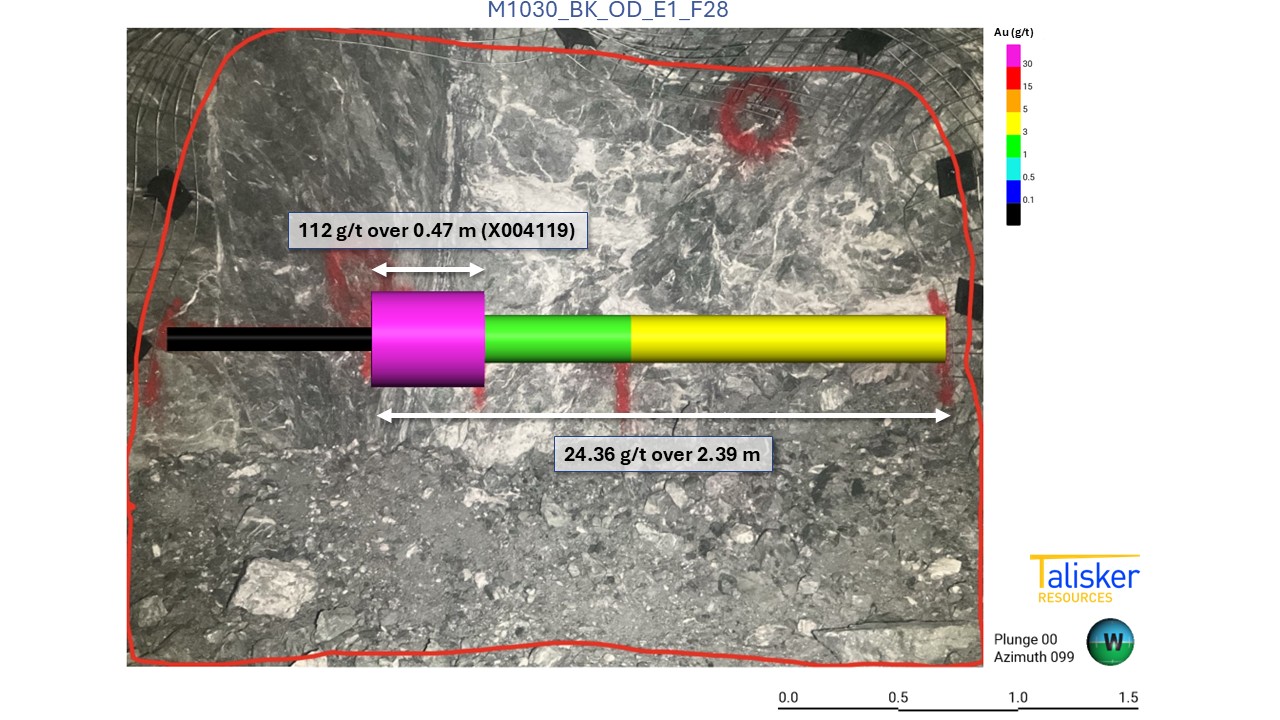
Photos accompanying this announcement are available at:
https://www.globenewswire.com/NewsRoom/AttachmentNg/0175c361-cccb-49bf-baa7-437423221683
https://www.globenewswire.com/NewsRoom/AttachmentNg/c5591b76-3bf6-4f67-965d-931399340798
https://www.globenewswire.com/NewsRoom/AttachmentNg/325e3a41-e67e-4407-924f-467f5d4a2e13
https://www.globenewswire.com/NewsRoom/AttachmentNg/049820d7-5384-4144-9926-a8755cabf033
https://www.globenewswire.com/NewsRoom/AttachmentNg/81870f1c-8d9f-422e-83c7-2b4166070958
https://www.globenewswire.com/NewsRoom/AttachmentNg/d1b630b3-4251-4966-8d95-fbae9da63f67
https://www.globenewswire.com/NewsRoom/AttachmentNg/8111a4c5-7ac8-4dc2-89cf-1a5243661d18
https://www.globenewswire.com/NewsRoom/AttachmentNg/ee148e8d-b1d2-48ef-92d2-7b37b138b97e
https://www.globenewswire.com/NewsRoom/AttachmentNg/f01b3a0f-41f6-472b-aa3f-06ed588cb846
https://www.globenewswire.com/NewsRoom/AttachmentNg/e86a60f9-c085-40f3-8f51-e2961be3eda0

FAQ
AI-generated questions and answers. How Rhea-AI works. Not financial advice.
How were the underground chip samples collected at the Mustang Mine?
Chip sampling is completed across a horizontal 5 cm × 5 cm × up to 3.0 m zone across the entire drift face at about 1.2 m above the floor. Individual samples range from 0.35 m to 1.50 m and are selected to represent geological structures, sulphide mineralization, or alteration thought to host gold. Consecutive samples are taken across wider mineralized zones to preserve geological detail, and lithological breaks are avoided within a single sample where possible.
What QAQC procedures support the reliability of these assay results?
Quality assurance and quality control include regular insertion of certified reference materials, blanks, and field duplicates at a rate of about 9% of total samples in this release. Crushing and pulverizing quality is monitored through the laboratory’s internal QAQC protocols.
Which laboratory analyzed the gold assays and what methods were used?
All preparation and analytical work was performed by Activation Laboratories (Actlabs) in Kamloops, British Columbia. Gold was analyzed primarily by fire assay with an atomic absorption spectroscopy finish using a 50 g pulp and a detection range of 0.01 to 100 g/t Au. Samples returning ≥100 g/t Au were re-analyzed by fire assay with gravimetric finish, which has a detection range of 0.02 to 10,000 g/t Au.
Who is the Qualified Person responsible for the technical information?
The technical information was reviewed and approved by Patrick Weaver, P.Geo., Talisker’s Chief Production Geologist, who is a Qualified Person as defined under Canadian National Instrument 43-101 and is not independent of the company.