
Starlab Space Announces Partnership with Helogen to Advance Life Sciences Research in Microgravity
Starlab (OTC:VOYG) announced a partnership with Helogen on February 18, 2026 to integrate Helogen's HEL-IOS™ orbital biomedical operating system into the Starlab station.
Sentiment and the balance of points
Rhea-AI Sentiment reads the wording of the document, how positive or negative its language is on a 1 to 5 scale. The balance of points shown with the takes weighs what the document actually discloses, so the two can disagree, for example when a trial that missed its main goal is described in upbeat language.




The Helogen HEL-IOS™ orbital biomedical operating system will be integrated in the Starlab space station to enable continuous, autonomous biological discovery in low Earth orbit.
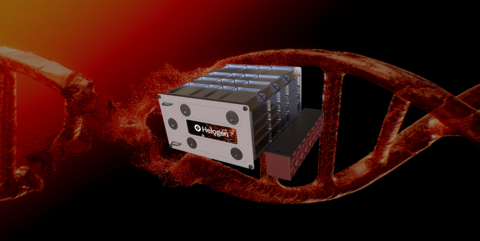
HEL-IOS™ enables fully autonomous, regulatory-grade manufacturing of high-value biomaterials in orbit by integrating biological cultivation, processing, sequencing and in-line analytics into a single closed-loop system that operates without continuous crew intervention. By embedding end-to-end automation directly into the station infrastructure, HEL-IOS™ will transform Starlab from a strictly lab environment into a scalable production facility.
Through the partnership, Helogen will integrate HEL-IOS™, the world’s first orbital biomedical operating system, into the Starlab ecosystem. HEL-IOS™ enables fully autonomous regulatory-grade manufacturing of high-value biomaterials in orbit by integrating biological cultivation, processing, sequencing and in-line analytics into a single closed-loop system that operates without continuous crew intervention. By embedding end-to-end automation directly into station infrastructure, HEL-IOS™ transforms orbital platforms from experimental environments into scalable production facilities. Commercial partners can scale industrial output with fewer flights and reduced operational overhead, while researchers gain continuous, automated workflows that accelerate discovery without dependence on crew-tended operations or frequent sample return. The result is a persistent manufacturing capability in orbit, positioning Starlab as an industrial node in the emerging space economy rather than a destination for isolated missions.
“Microgravity is not just a research environment. It’s a fundamentally new manufacturing and discovery regime,” said Shishir Bankapur, CEO of Helogen. “At Helogen, our mission is to unlock biological processes that Earth’s gravity suppresses and translate them into scalable breakthroughs in medicine and materials. Starlab’s globally accessible orbital platform, combined with HEL-IOS™, allows researchers to run, iterate and scale biology in space faster than ever before, shifting from one-off experiments to continuous, high-throughput discovery.”
“This partnership reflects exactly how we envision life sciences operating in low Earth orbit,” said Marshall Smith, CEO of Starlab. “By integrating autonomous biological systems like HEL-IOS™ into Starlab, we’re enabling researchers to move beyond short-duration experiments and toward sustained discovery and manufacturing workflows that can deliver real impact on Earth.”
The announcement builds on Starlab’s growing capabilities in biopharmaceutical and life sciences research in orbit. Microgravity offers conditions that cannot be replicated on Earth, allowing for improved protein crystallization to support drug development, 3D cell growth and disease models that more closely mimic human biology, and advanced stem cell research with potential applications for treating conditions such as Parkinson’s disease, diabetes and Alzheimer’s.
Starlab’s market-driven business model is designed to reduce cost, complexity and risk for researchers and commercial partners. Its single-launch, no-assembly-required architecture enables full certification and operational readiness within weeks from launch, minimizing delays and maximizing efficiency for payload customers. Through its joint venture partners, customers can conduct research aboard the International Space Station today, ensuring a seamless transition to Starlab as its next-generation capabilities come online.
About Starlab
Starlab Space is a
About Helogen
Helogen is an American orbital industrial automation platform. The company is industrializing space by enabling scalable, regulatory-grade manufacturing of high-value biomaterials that achieve performance advantages over terrestrial production.
Helogen deploys autonomous orbital automation systems powered by its proprietary operating system, HEL-IOS™, integrating biological cultivation, processing, and real-time analytics into a continuous in-space workflow. This infrastructure supports industrial-scale biomaterial production while allowing researchers to run end-to-end automated experiments in orbit with fewer flights and minimal crew intervention.
By embedding persistent automation into next-generation space infrastructure, Helogen transforms orbital platforms into scalable industrial facilities that accelerate both commercial manufacturing and breakthrough discovery. For more information, visit www.helogen.com.
View source version on businesswire.com: https://www.businesswire.com/news/home/20260218414892/en/
MEDIA CONTACT:
Starlab Space
Melissa Price, melissaprice@griffincg.com
Helogen Corporation
Janelle Classen, janelle.classen@helogen.com
Source: Starlab Space LLC