
Aztec Minerals Stock Price, News & Analysis
Company Description
Aztec Minerals Corp (OTCQB: AZZTF) is a mineral exploration company in the mining sector, focused on advancing precious and base metal projects in North America. According to company disclosures in multiple news releases, Aztec is centered on two emerging discoveries: the Tombstone gold-silver & CRD project in southeastern Arizona, USA, and the Cervantes porphyry gold-copper project in Sonora, Mexico.
Core Exploration Focus
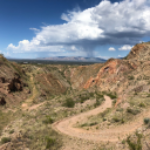
Aztec states that the Tombstone project is an emerging gold-silver discovery with high grade carbonate replacement deposit (CRD) silver-lead-zinc potential in southern Arizona. The project covers much of the historic Tombstone silver district, which is described as renowned for high grade, oxidized silver-gold(-lead-zinc-copper) mesothermal stringer lode veins, hydrothermal breccias and manto CRD orebodies mined in the late 1800s and early 1900s. Historic silver production in the district from 1878 to 1939 is reported as tens of millions of ounces of silver and hundreds of thousands of ounces of gold.
The company reports that its work at Tombstone has outlined shallow, broad, oxidized gold-silver mineralization around and below the historic Contention open pit. Aztec’s drilling since 2020 has intersected wide zones of oxide Au-Ag mineralization, and the company repeatedly notes that mineralization in the Contention area remains open laterally and to depth. Exploration has also identified multiple mineralization styles at Tombstone, including bulk-tonnage oxide gold-silver associated with felsic dikes and hydrothermal breccias, high-grade silver-gold-lead quartz stringer lodes, and silver-gold rich CRD bodies in carbonate rocks.
Tombstone Project and Joint Venture Structure
Aztec reports that it holds a majority interest in the Tombstone Property Joint Venture, which includes most of the original patented mining claims in the main district and additional properties. In one update, Aztec states it holds a 75% interest in the Tombstone JV with Dragoon Resources LLC holding 25%. In a later Tombstone overview, Aztec states it holds an 85% interest in the Tombstone Property Joint Venture. Across these disclosures, the company consistently describes Tombstone as a joint venture vehicle used to advance exploration.
The Tombstone project area is described as being located approximately 100 kilometers southeast of Tucson, Arizona, with road access, local town infrastructure, and services. Aztec’s technical updates emphasize that drilling and surface work have been guided by detailed geological mapping, multi-element geochemistry, geophysical surveys (including NSAMT and IP), and a 3D model of historic mine workings and geology. The company highlights multiple RC and core drilling campaigns since 2020 that have intersected near-surface oxidized Au-Ag mineralization and encountered historic underground workings beneath and adjacent to the Contention pit.
Recent Tombstone Exploration Programs
In its 2024 and 2025–2026 news releases, Aztec describes an ongoing, multi-phase exploration program at Tombstone. The company reports:
- Extensive reverse circulation (RC) drilling in the Contention pit area, Southern Extension, Westside area and Head Center area, with dozens of holes drilled in fan grid patterns to test lateral and down-dip extensions of oxide gold-silver mineralization.
- Multiple RC holes intersecting broad intervals of Ag-Au mineralization from surface or shallow depths, often with apparent widths of tens to more than one hundred meters, and with mineralization remaining open in several directions.
- Core drilling (e.g., holes TC25-03 and TC25-04) targeting deeper CRD-style and AMT geophysical targets beneath the Bisbee Formation and into Paleozoic carbonate formations, guided by NSAMT anomalies that indicate large, conductive bodies below the historic district.
- Detailed descriptions of mineralized lithologies, including oxidized, hematite-rich, silicified hydrothermal breccias composed of quartz-feldspar porphyry dike and Bisbee Group sedimentary fragments, manganese replacements in limestone, skarns, quartz veinlets, oxidized sulfide relicts, and silicified hornfels.
Aztec also reports a 2024 surface exploration program at Tombstone involving rock chip channel sampling, reconnaissance sampling, and detailed geological mapping in and around the Contention pit. Initial channel sampling results are described as confirming near-surface, broad, high-grade gold and silver oxide mineralization and providing a roadmap for potential expansion drilling, particularly toward the western side of the pit and the Westside target area.
Cervantes Porphyry Gold-Copper Project
Alongside Tombstone, Aztec highlights the Cervantes project in Sonora, Mexico as an emerging porphyry gold-copper discovery. The company describes Cervantes as a highly prospective porphyry Au-Cu project within the Laramide porphyry copper belt, with good infrastructure, road access, private land, water wells on the property, and nearby grid power.
Aztec reports that Cervantes hosts multiple mineralized zones along a several-kilometer corridor, with the California zone as the primary focus. According to company releases, drilling at California has consistently intersected near-surface, oxidized gold mineralization associated with a porphyry intrusive complex of quartz-feldspar porphyry, feldspar porphyry stocks and related hydrothermal breccias. Aztec states that:
- Every hole except one drilled at the California zone and adjoining California Norte target has intersected near-surface oxidized gold mineralization with minor copper values.
- Successive drilling phases (core and RC) have expanded the California zone to an area on the order of hundreds of meters in length and width, with continuous anomalous mineralization to depths of more than one hundred meters, and the zone remains open in several directions.
- Multi-element ICP results show positive relationships between gold and elements such as copper, bismuth, silver, arsenic, tungsten and potassium, supporting a porphyry-style mineralization model.
- Preliminary metallurgical bottle-roll tests on California drill core have shown oxide gold recoveries that Aztec characterizes as favorable for heap leach scenarios.
Aztec’s technical updates describe ongoing work at Cervantes to refine the porphyry model, including mapping alteration zoning, integrating aeromagnetic and IP chargeability data, and planning further drilling to test for deeper gold-copper porphyry sulfide mineralization and extensions of the oxide cap.
Capital Markets and Corporate Positioning
Aztec Minerals’ shares trade on the TSX Venture Exchange under the symbol AZT and on the OTCQB under the symbol AZZTF. The company has announced non-brokered private placements to fund exploration, including a 2024 financing intended for Tombstone exploration and general working capital. Aztec also participates in mining-focused investor events and virtual webinars to present corporate updates and exploration results.
Business Model and Sector Role
Based on its disclosures, Aztec’s business model is that of a junior exploration company focused on discovering and advancing mineral deposits rather than operating mines. The company concentrates on generating exploration targets, drilling to define mineralized footprints, and building geological and geophysical models at its Tombstone and Cervantes projects. Aztec’s news releases emphasize the potential for bulk-tonnage oxide gold-silver at Tombstone and porphyry-style gold-copper at Cervantes, along with CRD-style targets at depth in Tombstone’s carbonate stratigraphy.
FAQs
Stock Performance
Aztec Minerals (AZZTF) stock last traded at $0.1700, up 1.71% from the previous close. Over the past 12 months, the stock has gained 23.2%. At a market capitalization of $35.4M, AZZTF is classified as a micro-cap stock with approximately 188.8M shares outstanding.
Latest News
Aztec Minerals has 10 recent news articles. Of the recent coverage, 5 articles coincided with positive price movement and 5 with negative movement. View all AZZTF news →
SEC Filings
Financial Highlights
Upcoming Events
Options and RSUs vest
Aztec Minerals has 1 upcoming scheduled event. The next event, "Options and RSUs vest", is scheduled for March 1, 2028 (in 709 days). 1 of the upcoming events are financial in nature, such as earnings calls or quarterly results. Investors can track these dates to stay informed about potential catalysts that may affect the AZZTF stock price.
Short Interest History
Short interest in Aztec Minerals (AZZTF) currently stands at 151.2 thousand shares, up 779.6% from the previous reporting period, representing 0.1% of the float. Over the past 12 months, short interest has increased by 161.7%. This relatively low short interest suggests limited bearish sentiment.
Days to Cover History
Days to cover for Aztec Minerals (AZZTF) currently stands at 1.0 days. This low days-to-cover ratio indicates high liquidity, allowing short sellers to quickly exit positions if needed.





AZZTF Company Profile & Sector Positioning
Aztec Minerals (AZZTF) operates in the Other Industrial Metals & Mining industry within the broader Basic Materials sector and is listed on the OTC Link.
Investors comparing AZZTF often look at related companies in the same sector, including Kingsmen Res (KNGRF), Sun Summit Minerals Corp (SMREF), LAFLEUR MINERALS INC (LFLRF), Max Power Mining (MAXXF), and Gpm Metals Inc (GPMTF). Comparing financial metrics, valuation ratios, and stock performance across these peers can help investors evaluate AZZTF's relative position within its industry.