
Bewhere Hldgs Stock Price, News & Analysis
Company Description
BeWhere Holdings Inc. (OTCQB: BEWFF) is a Mobile Internet of Things (M‑IoT) and software-focused company that specializes in low-power 5G IoT wide-area tracking technology. Traded on the TSX Venture Exchange under the symbol BEW and on the OTCQB under BEWFF, the company develops asset tracking and remote monitoring solutions that address cost, power, and environmental challenges for organizations that manage dispersed equipment and fleets.
According to its public disclosures, BeWhere has experienced rapid growth over several years by collaborating with Fortune 500 companies, top resellers, and installers. The company reports that it has deployed hundreds of thousands of trackers across sectors such as transportation, construction, logistics, utilities, health, and government. These deployments support use cases where organizations need real-time visibility into the location and condition of assets that may be mobile, unpowered, or located in challenging environments.
Core business and technology focus
BeWhere positions itself as a low-power IoT tracking solutions provider, with a focus on 5G and LTE-M connectivity. Its tracking devices are described as being designed to be cost-effective and simple to implement, which allows customers to connect a broader range of assets than traditional telematics systems typically cover. The company states that its devices are optimized for extended coverage, reliability, and security, making them suitable for industries including public safety, utilities, transportation, essential asset monitoring, and municipal services.
The company emphasizes that these connected devices generate data used by AI management platforms. By increasing the number of connected devices in the field, BeWhere aims to enhance the capabilities and growth potential of AI-driven asset management and logistics solutions. Its disclosures describe hardware, middleware, firmware, and applications that the company designs, develops, and manufactures itself, which it views as a way to respond to macro-economic and geopolitical factors affecting supply chains and tariffs.
Products, platforms, and use cases
BeWhere’s public communications reference several device families and platforms that illustrate its operating model:
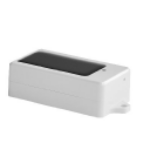
- BeMini: Described as the company’s smallest and most power-efficient tracker, BeMini is used for asset tracking in demanding environments. It has been integrated into the FirstNet Embedded IoT Program, enabling connectivity on FirstNet, Built with AT&T, for public safety and extended public safety users. The company highlights BeMini’s suitability for tracking smaller, handheld assets such as medical kits, stretchers, communications caches, and other high-value equipment used in emergency and utility operations.
- BeSol and BeSol+: These are solar-powered asset trackers used in logistics and fleet management. Case studies describe BeSol and BeSol+ deployed on semi-tankers and trailer fleets to monitor asset location, movement, and condition in real time. The devices leverage LTE-M connectivity and are presented as suitable for long-term deployment, with solar-rechargeable batteries and rugged construction for harsh weather and long-haul transport conditions.
- BeWhere Web App: The company provides a web-based application that delivers real-time operational data for tracked assets. Public materials describe the app as offering trailer and asset insights and integrating with existing telematics and supply chain logistics platforms through an API, enabling customers to incorporate BeWhere’s tracking data into their broader operational systems.
These solutions are used in multiple documented scenarios, including trailer fleet management, tanker tracking, and emergency medical services equipment tracking. Reported benefits for customers include improved customer service through real-time data, reduced asset loss, enhanced load management with condition monitoring, faster incident resolution supported by live visibility, and support for regulatory compliance through accurate, cloud-based logs.
Industry sectors and partnerships
BeWhere’s trackers and platforms are deployed across a range of sectors explicitly cited in its disclosures: transportation, construction, logistics, utilities, health, and government. Case studies highlight logistics carriers managing large trailer fleets across North America, semi-tanker operators transporting food-grade liquids, and emergency medical services organizations tracking defibrillators, stretchers, and CPR units.
The company’s technology is also positioned within broader connectivity ecosystems. It has reported:
- Integration of BeMini trackers into the FirstNet Embedded IoT Program, enabling FirstNet Ready devices for public safety and related users.
- Collaboration with AT&T for LTE-M connectivity supporting logistics and emergency services use cases.
- A successful test of a standard BeWhere LTE IoT tracking device connecting directly to an AST SpaceMobile satellite and routing data through Bell’s terrestrial network, demonstrating direct-to-device satellite connectivity for IoT trackers.
These collaborations are presented as ways to extend coverage for asset tracking into areas where terrestrial networks may be limited, including remote or geographically challenging regions.
Business model characteristics
BeWhere describes itself as a Mobile Internet of Things (M‑IoT) company and a provider of low-power IoT tracking solutions. Its financial disclosures distinguish between product revenue and recurring revenue, and they refer to Annual Recurring Revenue (ARR). This indicates a model that combines device sales with ongoing service or connectivity-based revenue streams. The company reports recurring revenue growth and highlights ARR as a key performance indicator in its quarterly and annual results.
The company also reports investments in research and development for its next generation of M‑IoT sensors and solutions. It uses non-IFRS measures such as Adjusted EBITDA to discuss operating performance, and it provides reconciliations in its Management’s Discussion and Analysis documents filed on SEDAR+.
Geographic and market context
BeWhere is described in its news releases as a Canadian company with shares listed on the TSX Venture Exchange. Its case studies and announcements reference deployments across North America, including Canada and the United States. The company notes that it has deployed hundreds of thousands of trackers globally, but specific regions beyond those mentioned in its releases are not detailed.
Within the information sector and the software publishers industry classification, BeWhere’s activities center on the intersection of IoT hardware, connectivity, and software platforms. Its focus on low-power, wide-area tracking technology and integration with cellular and satellite networks positions it in the asset tracking and remote monitoring segment of the broader IoT market.
Financial reporting and investor information
BeWhere regularly publishes quarterly and annual financial results, highlighting metrics such as total revenue, recurring revenue, gross profit, net income, and working capital. The company emphasizes growth in total revenue and recurring revenue, as well as improvements in gross profit and net income over time. It also reports on cash balances and working capital while noting continued spending on research and development.
Non-IFRS measures, particularly Adjusted EBITDA, are used to discuss operating performance. The company defines Adjusted EBITDA as earnings before interest income, taxes, depreciation and amortization, share-based compensation, and other non-recurring gains and losses, and it states that this measure is intended to facilitate period-to-period operating comparisons. It cautions that Adjusted EBITDA does not have a standardized meaning and may not be comparable to similar measures used by other issuers.
Audited consolidated financial statements and related Management’s Discussion and Analysis are made available under the company’s profile on SEDAR or SEDAR+, as referenced in its news releases.
Stock information and classification
BeWhere Holdings Inc. trades on the TSX Venture Exchange under the ticker BEW and on the OTCQB market under the symbol BEWFF. Within sector classifications, it is associated with the Information sector and the Software Publishers industry. The company’s disclosures present it as a growth-oriented M‑IoT and IoT tracking business that combines device hardware, connectivity, and software platforms to support recurring revenue from asset tracking and remote monitoring services.
Stock Performance
Bewhere Hldgs (BEWFF) stock last traded at $0.6066, down 2.74% from the previous close. Over the past 12 months, the stock has gained 37.0%. At a market capitalization of $55.1M, BEWFF is classified as a micro-cap stock with approximately 97.0M shares outstanding.
Latest News
Bewhere Hldgs has 10 recent news articles. Of the recent coverage, 7 articles coincided with positive price movement and 3 with negative movement. Key topics include earnings. View all BEWFF news →
SEC Filings
Financial Highlights
Upcoming Events
Bewhere Hldgs has 1 upcoming scheduled event. The next event, "Stock option expiration", is scheduled for July 16, 2030 (in 1579 days). Investors can track these dates to stay informed about potential catalysts that may affect the BEWFF stock price.
Short Interest History
Short interest in Bewhere Hldgs (BEWFF) currently stands at 19.1 thousand shares, down 19.8% from the previous reporting period, representing 0.0% of the float. Over the past 12 months, short interest has increased by 989.5%. This relatively low short interest suggests limited bearish sentiment.
Days to Cover History
Days to cover for Bewhere Hldgs (BEWFF) currently stands at 1.0 days, down 12.3% from the previous period. This low days-to-cover ratio indicates high liquidity, allowing short sellers to quickly exit positions if needed. The ratio has shown significant volatility over the period, ranging from 1.0 to 2.6 days.







BEWFF Company Profile & Sector Positioning
Bewhere Hldgs (BEWFF) operates in the Communication Equipment industry within the broader Technology sector and is listed on the OTC Link.
Investors comparing BEWFF often look at related companies in the same sector, including Vemanti Group Inc (VMNT), C-Com Satellite (CYSNF), Enablence Technologies Inc (ENAFF), Aerkomm (AKOM), and Edgewater Wireless Sys Inc (KPIFF). Comparing financial metrics, valuation ratios, and stock performance across these peers can help investors evaluate BEWFF's relative position within its industry.