
TÜV SÜD and Accenture Accelerate Certification of Physical AI in Automated Factories and Warehouses with NVIDIA Technologies to Drive Manufacturing Productivity
TÜV SÜD retains responsibility for certification and provides independent assessment and assurance.
Sentiment and the balance of points
Rhea-AI Sentiment reads the wording of the document, how positive or negative its language is on a 1 to 5 scale. The balance of points shown with the takes weighs what the document actually discloses, so the two can disagree, for example when a trial that missed its main goal is described in upbeat language.


Companies present concept of new “Physical AI Safety Suite” at NVIDIA GTC Berlin 2026*
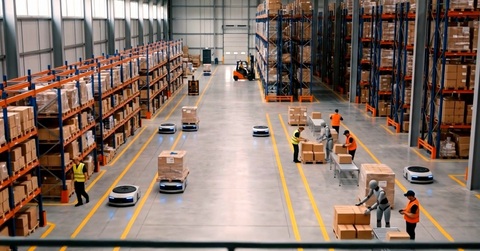
Using digital twins, AI agents and simulations, TÜV SÜD and Accenture’s Physical AI Safety Suite is designed to speed up the automation of factories and warehouses.
At NVIDIA GTC Berlin 2026, the companies are presenting a joint concept of a “Physical AI Safety Suite” to help companies safely deploy physical AI equipment such as Autonomous Mobile Robots (AMR) alongside human workers faster. Using digital twins, AI agents and simulations, the Physical AI Safety Suite is designed to speed up the automation of factories and warehouses required to increase manufacturing productivity.
Established industry standards provide the basis for ensuring that automated facilities are designed and operated safely. An example is ISO 3691-4, which specifies safety requirements for driverless industrial trucks and systems, including AMRs. In many industrial countries, certification against such norms is mandatory before companies can commission automated facilities and deploy new physical AI equipment. Even in markets where certification is voluntary, following industry-specific standards issued by recognized standards bodies is considered best practice.
But navigating the intricate web of standards can slow down the adoption of physical AI-enabled automation solutions. At a medium-sized production plant, the iterative coordination, validation and acceptance of safety concepts can take several weeks.
From manual to simulation testing
Presented at NVIDIA GTC Berlin, the Physical AI Safety Suite partially digitizes the manual assessment of facilities, equipment and preparation of certification packages, using digital twins and AI-powered simulations. TÜV SÜD estimates that the digital process could bring production online up to
“Physical AI enables robotic systems to become increasingly adaptive while also paving the way for an independent, evidence-based digital certification process,” said Patrick Vollmer, CEO and Chairman of the Board at TÜV SÜD AG. “Through our Physical AI Safety Suite, which leverages simulation-generated evidence, we can support compliance-readiness much earlier in the engineering lifecycle without compromising the rigor safety standards require. Assessing automation concepts before the first robot is deployed reduces uncertainty in live operations and helps drive higher levels of safety, efficiency and performance across production and logistics.”
“Too often, companies test automation concepts against industry standards after the equipment, layouts and workflows have already been established,” said Sarat Maitin, Supply Chain and Engineering Lead for Accenture in Central and
Connected checks on three layers
The Physical AI Safety Suite concept assesses automation on three connected layers, with TÜV SÜD providing independent assessment and assurance, and retaining responsibility for certification:
Layer 1: Simulating industrial layouts – Where can companies deploy physical AI safely?
Using NVIDIA Omniverse libraries, the open Cosmos world model platform and the NVIDIA Isaac Sim open robotics framework, the Physical AI Safety Suite virtually assess routes, clearances, mixed-use zones and collaboration areas before robots are deployed or layouts are reconfigured. Then it generates a structured evidence package for TÜV SÜD review, covering operating-zone requirements, hazard and risk reduction standards, robot integration norms and control-system safety standards.
Layer 2: Adding robotic fleets – How does Physical AI operate safely?
Using NVIDIA Omniverse, Cosmos and Isaac Sim, the Physical AI Safety Suite simulates robotic fleets and their behaviors to identify operational constraints and potential hazards, such as workers becoming trapped by AMRs, before deployment. During operation, the layer uses the NVIDIA Halos safety platform and the NVIDIA IGX Thor edge AI platform to identify potentially hazardous situations beyond an individual robot’s view. AI agents built with the NVIDIA Halos Outside-In Safety Blueprint extend a robot’s perception to reason and act autonomously with facility-mounted cameras. This allows fleet management systems to respond earlier to improve safety and operational efficiency.
Layer 3: Individual robots – What is Physical AI allowed to do?
Even equipment complying with all applicable product regulations must be tested under its intended site-specific conditions, such as load, speed, floor conditions and lighting. Using Isaac Sim and Cosmos, the Physical AI Safety Suite creates and tests a long tail of certification-relevant scenarios that real-world testing could never practically cover. This, for example, allows engineering teams to find the best placement for safety sensors well before a physical prototype exists.
Physical AI describes a mix of technologies, including digital twins, simulations, sensors, robots and AI models, which enables robots and machines to sense, decide, act and improve constantly under changing conditions and operate more autonomously in real environments. Accenture recently established a Center of Excellence that incubates, builds, scales and deploys physical AI solutions for warehouses and production facilities.
* Accenture, NVIDIA and TÜV SÜD are demonstrating the Physical AI Safety Suite at NVIDIA GTC Berlin at the Accenture booth (#3056) and in a joint speaking session by Patrick Vollmer (TÜV SÜD) and Sarat Maitin (Accenture) on the main stage (Exhibit Hall Theater) on October 22, 9:20 AM CEST. Journalists interested in scheduling a demo presentation and/or briefing can contact thomas.wittek@accenture.com, +49 152 5250 7486
About TÜV SÜD
Founded in 1866 as a steam boiler inspection association, the TÜV SÜD Group has evolved into a global enterprise. More than 30,000 employees work at over 1,000 locations in about 50 countries to continually improve technology, systems and expertise. They contribute significantly to making technical innovations such as Industry 4.0, autonomous driving and renewable energy safe and reliable.
About Accenture
Accenture is a business reinvention and technology company. Our ambition is to be the reinvention partner of choice for our clients and lead in the safe, widespread adoption of AI, and to be the most client-focused, AI-enabled, great place to work in the world. Our approximately 814,000 people bring deep insights across industries and functions, with capabilities spanning strategy, process, operating model, change management, talent, data, technology and AI. We deliver this expertise through consulting, managed services, proprietary assets and platforms, and increasingly, software. We bring innovation and new solutions informed by our experience across industries, enabling us to apply relevant insights, capabilities and leading practices from adjacent sectors to address emerging business challenges and opportunities. We serve more than 9,000 clients and generated revenues of approximately
View source version on businesswire.com: https://www.businesswire.com/news/home/20261021229164/en/
Alem Tedeneke
Accenture
+1 646 204 9191
alem.tedeneke@accenture.com
Dr. Thomas Wittek
Accenture
+49 152 5250 7486
Thomas.wittek@accenture.com
Source: Accenture