
Aduro Signs Offtake LOI for Hydrochemolytic™ Oil with Pilot-to-FOAK Validation Program
Rhea-AI Summary
Aduro (Nasdaq: ADUR) signed a non-binding Letter of Intent on March 12, 2026 to evaluate and qualify Hydrochemolytic™ oil with a leading commodities trading company and to establish a Pilot-to-FOAK validation program.
The LOI includes a committed purchase of the initial production parcel from Aduro’s planned FOAK Industrial Plant at Chemelot, Geleen, Netherlands, while remaining non-exclusive and subject to definitive agreements.
Positive
- Committed purchase of initial FOAK production parcel
- Pilot-to-FOAK validation program to confirm specifications and reproducibility
- Pilot steam-cracking tests previously showed stable cracking performance
- Non-exclusive LOI preserves ability to secure additional offtake partners
Negative
- Most terms non-binding, leaving commercial scale terms and pricing uncertain
Key Figures
Key Terms
offtake financial
first-of-a-kind technical
pilot plant technical
steam cracking technical
polyolefin medical
mass balance technical
iscc plus regulatory
chemical recycling technical
AI-generated analysis. How Rhea-AI works. Not financial advice.




LONDON, Ontario, March 12, 2026 (GLOBE NEWSWIRE) -- Aduro Clean Technologies Inc. (“Aduro” or the “Company”) (Nasdaq: ADUR) (CSE: ACT) (FSE: 9D5), a clean technology company using the power of chemistry to transform lower value feedstocks, like waste plastics, heavy bitumen, and renewable oils, into resources for the 21st century, announces that it has signed a non-binding Letter of Intent (“LOI”) with a leading independent international commodities trading company active in the sourcing, logistics, and marketing of naphtha and certified circular hydrocarbon streams. The LOI establishes a framework to evaluate and qualify Hydrochemolytic™ oil produced by the Company for future offtake agreements.
The LOI includes a committed offtake arrangement for the initial production parcel tied to the Company’s First-of-a-Kind (“FOAK”) Industrial Plant planned for construction at Chemelot Industrial Park in Geleen, Netherlands. It establishes a structured Pilot-to-FOAK validation program intended to determine product value, confirm specification alignment, and evaluate reproducibility of Hydrochemolytic™ oil while supporting downstream market positioning as part of the circular hydrocarbon markets.
Under Phase 1 of the engagement, Aduro will provide samples of Hydrochemolytic™ oil produced at its Next Generation Process (“NGP”) Pilot Plant. This work will focus on product characterization, including contaminant profiling, boiling range distribution, and alignment to downstream upgrading and steam-cracking requirements. Testing and analytics will primarily be conducted by Aduro, incorporating technical input and commercial feedback from the trading company to establish product specifications, assess reproducibility, and determine commercial value. Phase 1 is non-commercial in nature and is intended to advance the technical and economic characterization of industrial-scale production.
Phase 2 establishes a commercial validation step upon commissioning of the FOAK Industrial Plant. The trading company has committed to purchase the initial production parcel of Hydrochemolytic™ oil produced at the FOAK facility. This parcel is intended to support downstream customer qualification, market development activities, and demonstration of production reliability and reproducibility at industrial scale. Following completion of this initial parcel, the parties intend to engage in discussions toward a longer-term commercial framework aligned with full FOAK production capacity. The arrangement is non-exclusive and preserves the Company’s ability to engage additional offtake partners as production scales. Except for the commitment to purchase the initial production parcel, the LOI is non-binding and subject to the negotiation and execution of definitive agreements.
Policy developments are expected to increase demand for certified circular hydrocarbon feedstocks within the petrochemical sector. The European Union’s Packaging and Packaging Waste Regulation (“PPWR”) introduces progressively tightening recycled content targets for plastic packaging beginning in 2030, reinforcing the need for traceable, mass balance certified inputs. Steam crackers consume tens of millions of tonnes of hydrocarbon feedstock annually to produce the building blocks of new plastics. Even limited substitution with certified circular hydrocarbons represents a meaningful opportunity to increase circular content within existing petrochemical supply chains.
According to industry research published by MarkNtel Advisors, the global chemical recycling market was valued at approximately USD 15.5 billion in 2024 and is projected to grow at a compound annual growth rate of approximately 9.8 percent through 2030. In response, polymer producers, petrochemical companies, and commodity traders are working to secure feedstock streams that offer traceability, consistent quality, recognized sustainability certifications such as ISCC Plus, and a credible pathway to industrial scale. Structured offtake arrangements are therefore an important step toward broader market adoption.
Hydrochemolytic™ Technology converts polyolefin waste into a circular hydrocarbon product intended for integration into conventional petrochemical upgrading and steam-cracking infrastructure. The product is characterized by low concentrations of olefins and heteroatoms, properties that are expected to support processing with minimal additional treatment relative to many conventional chemical recycling outputs. Pilot-scale steam cracking tests previously conducted with an industry partner demonstrated stable cracking performance under pilot operating conditions.
“This LOI brings together two important elements for us, technical validation and an initial commercial framework,” said Eric Appelman, Chief Revenue Officer at Aduro. “The pilot stage work allows us to establish product specifications and determine commercial value of Hydrochemolytic™ oil with a global trading partner while the commitment to purchase the first FOAK production parcel establishes the product’s initial commercial pathway.”
“Securing a structured offtake commitment at the FOAK stage reflects our effort to align technology validation and market demand,” said Ofer Vicus, Chief Executive Officer of Aduro. “Circular feedstocks must meet the requirements of existing petrochemical infrastructure while also satisfying regulatory and certification standards. This LOI links our Pilot validation work directly to industrial production and marks an important step in our milestone-driven commercialization pathway.”
About Aduro Clean Technologies
Aduro Clean Technologies is a developer of patented water-based technologies to chemically recycle waste plastics; convert heavy crude and bitumen into lighter, more valuable oil; and transform renewable oils into higher-value fuels or renewable chemicals. The Company’s Hydrochemolytic™ technology relies on water as a critical agent in a chemistry platform that operates at relatively low temperatures and cost, a game-changing approach that converts low-value feedstocks into resources for the 21st century.
For further information, please contact:
Abe Dyck, Head of Corporate Development / Investor Relations
ir@adurocleantech.com
+1 226 784 8889
KCSA Strategic Communications
Jack Perkins, Senior Vice President
aduro@kcsa.com
Forward-Looking Statements
This news release contains forward-looking statements within the meaning of applicable Canadian and U.S. securities laws, including the U.S. Private Securities Litigation Reform Act of 1995. Forward-looking statements in this release include, but are not limited to, statements regarding the progression from Pilot Plant evaluation to FOAK Industrial Plant construction, commissioning, and operation; the timing, scope, and results of the Pilot‑to‑FOAK validation program; anticipated production volumes, quality, and market introduction of Hydrochemolytic™ oil; the ability to qualify Hydrochemolytic™ oil for downstream petrochemical applications, including steam cracking; the execution, timing, and terms of definitive offtake or commercial agreements; the purchase of an initial production parcel and the potential for subsequent commercial arrangements; integration of Hydrochemolytic™ oil into existing petrochemical infrastructure; regulatory drivers, including the expected impact of the European Union’s Packaging and Packaging Waste Regulation (PPWR), supporting demand for certified circular hydrocarbon feedstocks; the availability and acceptance of sustainability certifications such as ISCC Plus; and the Company’s broader milestone‑driven commercialization and market adoption pathway. Forward-looking statements are based on management’s current expectations and assumptions, including, without limitation, assumptions regarding the technical performance and reproducibility of the Company’s Hydrochemolytic™ Technology at pilot and industrial scale; the successful scale‑up from pilot operations to FOAK production; the availability of feedstock and utilities on acceptable terms; the timely construction, commissioning, and operation of the FOAK Industrial Plant; the willingness of commercial counterparties to participate in validation, qualification, and offtake activities; the ability to negotiate and execute definitive commercial agreements on acceptable terms; the availability of financing to support construction and commercialization activities; the continued development of regulatory frameworks supporting circular hydrocarbons; and the absence of material adverse changes in market, economic, or regulatory conditions. Forward-looking statements are subject to risks and uncertainties that may cause actual results to differ materially from those expressed or implied by such statements. These risks and uncertainties include, without limitation, risks related to the scale‑up and industrial performance of the Company’s technology; delays, cost overruns, or technical challenges associated with FOAK plant construction and commissioning; the risk that pilot‑scale results may not be replicated at industrial scale; variability in product quality, specifications, or yields; the risk that Hydrochemolytic™ oil may not meet downstream customer, regulatory, or certification requirements; the non‑binding nature of the LOI (other than the limited commitment to purchase an initial production parcel) and the risk that definitive agreements may not be executed or may be executed on terms less favorable than anticipated; uncertainty regarding the size, pricing, timing, and economics of any initial or future offtake volumes; dependence on third‑party partners, contractors, and service providers; changes in market demand for circular hydrocarbon feedstocks; competition from alternative recycling or conversion technologies; changes or delays in regulatory policies, including PPWR implementation or certification frameworks; availability and cost of capital; and other risks and uncertainties described in the Company’s public filings available on SEDAR+ at www.sedarplus.ca and with the U.S. Securities and Exchange Commission. Readers are cautioned not to place undue reliance on forward-looking statements. The Company undertakes no obligation to update or revise any forward‑looking statements, whether as a result of new information, future events, or otherwise, except as required by applicable law.
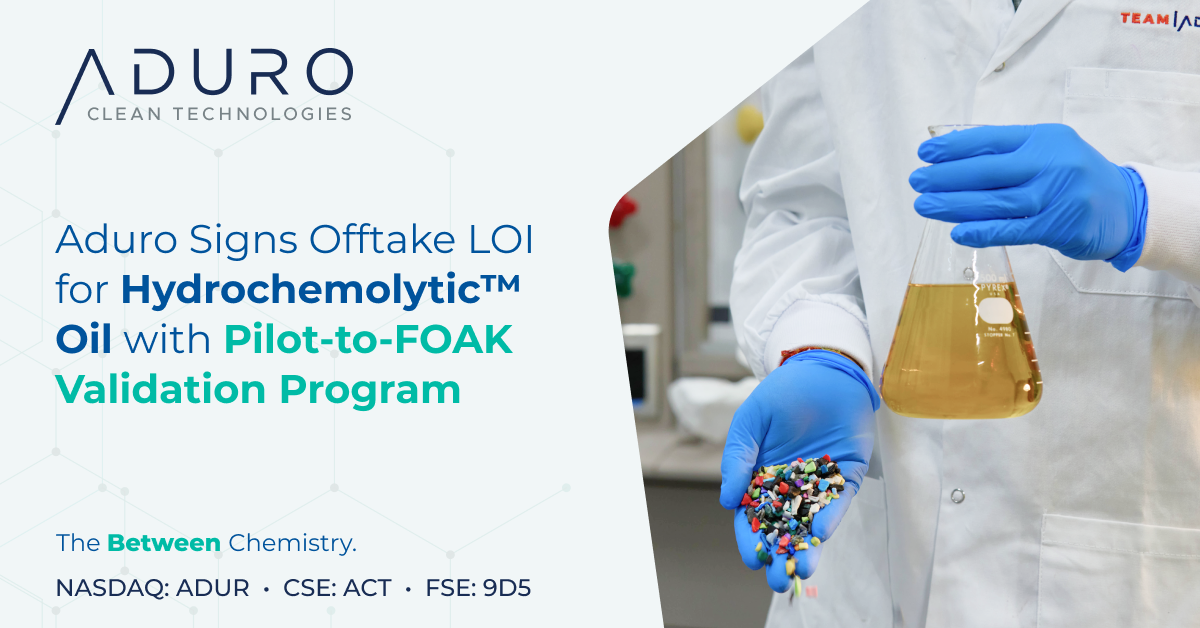
A photo accompanying this announcement is available at https://www.globenewswire.com/NewsRoom/AttachmentNg/7809ce78-333d-4b72-9302-dd304686e959
