
Moët Hennessy, Analog Devices and UC Davis Join Forces to Advance Wine Production Through Breakthrough Chemical Signature Detection Technology Leveraging AI
Researchers identified samples at elevated risk of Fresh Mushroom Aroma before the wine defect would traditionally be detected.
Sentiment and the balance of points
Rhea-AI Sentiment reads the wording of the document, how positive or negative its language is on a 1 to 5 scale. The balance of points shown with the takes weighs what the document actually discloses, so the two can disagree, for example when a trial that missed its main goal is described in upbeat language.
Rhea-AI Summary
Analog Devices (ADI) joined Moët Hennessy and UC Davis to develop AI-enabled chemical sensing for grape and wine quality monitoring. The collaboration uses ADI's sensing and machine learning platform to analyze chemical signatures emitted by grapevines, juice and wine.
Researchers successfully identified samples at elevated risk of developing Fresh Mushroom Aroma, a wine quality defect, before it would traditionally be detected. Additional applications under research include early detection of vine diseases, soil assessment and other defects, including those linked to wildfires. The tools are designed to support, rather than replace, growers' and winemakers' judgment. ADI intends to make the technology broadly available for future industrial applications; Moët Hennessy and UC Davis are exploring shared reference libraries for the wider wine industry.
Positive
- Minor pointADI's platform enabled early identification of samples at elevated risk of developing Fresh Mushroom Aroma.
- Minor point. Forward-looking: it has not happened yet and may not happen.ADI intends to make the technology broadly available for future industrial applications.
Negative
- None.
AI-generated analysis. How Rhea-AI works. Not financial advice.




Researchers have demonstrated the ability to identify the complex chemical signatures emitted from grapes and wine to predict quality risks in wine production faster and more affordably than conventional methods.
The collaboration builds on a breakthrough technology that has its roots in early research at the Massachusetts Institute of Technology (MIT). Today, ADI continues to advance this technology platform for analyzing chemical signatures across a broad range of applications and, together with teams from Moët Hennessy and UC Davis, is exploring its use in viticulture and winemaking. The joint effort aims to detect and interpret volatile chemical signatures emitted by grapevines, juice, and wine, giving viticulture and winemaking teams much earlier insights into biological processes and potential quality risks.
A world first demonstration: predicting Fresh Mushroom Aroma before it develops
The collaboration's first major achievement addresses one of the wine industry's most complex quality challenges: Fresh Mushroom Aroma (FMA). Researchers at Moët Hennessy's Robert-Jean de Vogüé Research Center have built a unique library of samples and associated data to train machine learning algorithms to recognize the chemical signatures associated with this quality risk.
For the first time, the technology successfully identified samples presenting an elevated risk of developing FMA at an early stage, well before the defect would traditionally be detected. This breakthrough creates entirely new possibilities for proactive quality management, enabling earlier interventions and fundamentally changing how quality risks may be monitored throughout the winemaking process.
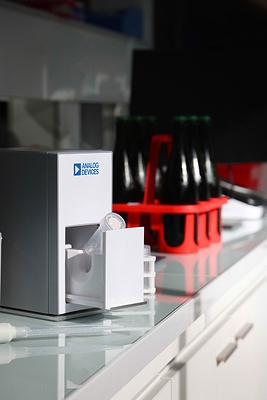
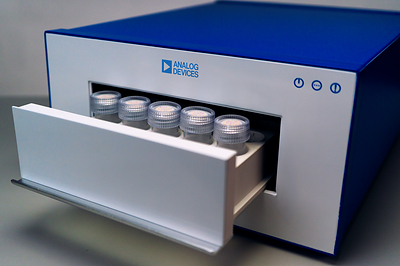
Powered by ADI's sensing and machine learning platform, the system analyzes a broad spectrum of chemical information and uses AI to identify which signals matter most, revealing patterns that may otherwise go undetected. Rather than looking only for predefined conditions, the platform continuously learns from complex chemical data, enabling a deeper understanding of biological activity and emerging quality risks.
A technology platform with multiple future applications
Beyond FMA, the organizations view this technology as a scalable platform for living systems analysis, with potential applications wherever biological processes generate meaningful chemical signatures that can be measured, interpreted and acted upon. Additional applications being researched include early detection of vine diseases, soil assessment, and identification of other defects, especially those linked to climate change and related events (e.g., wildfires).
The goal is to support, not replace, human expertise by equipping researchers, viticulturists, and winemakers with decision-support tools for earlier detection and deeper insights. The technology is designed to augment the expertise of growers and winemakers, providing additional information and context while preserving the craftsmanship, experience, and judgment that remain central to exceptional winemaking.
An international collaboration uniting technology, AI and life sciences
The effort combines complementary expertise from:
- Moët Hennessy, the world leader in premium and super-premium wines and spirits
- ADI, a global semiconductor leader that bridges the physical and digital worlds to enable breakthroughs at the Intelligent Edge; ADI Health Solutions, ADI's business unit focused on developing AI-driven solutions that contribute to the health of people and the planet
- UC Davis, internationally recognized as a global leader in viticulture and enology
Together, the organizations aim to unlock new capabilities for observing, understanding and interpreting the complex grape and wine matrix in support of quality and resilience across the wine industry. Beyond this initial collaboration, ADI intends to make this technology broadly available for future industrial applications, while Moët Hennessy and UC Davis are exploring how shared reference libraries could benefit the wider grape and wine industry.
Manuel Reman, member of the Moët Hennessy Executive Committee, overseeing R&D, and Member of the Comité Champagne: "This breakthrough marks the beginning of a new chapter for viticulture and winemaking. We can rapidly detect and interpret the chemical language of grapes and wine to anticipate quality risks before they become visible. Beyond a technological achievement, this opens an entirely new way of understanding and working, one that will help us produce exceptional wines while building greater resilience for the future."
Max Shulaker, Chief of ADI's Health Solutions Business Unit: "This collaboration unites world-class expertise in cutting-edge AI-enabled sensing systems and viticulture to accomplish something previously impossible: reading the chemical language that living systems emit themselves. By recognizing these signatures before conventional methods can, this technology can help winemakers shift from reacting to quality risks to anticipating them. Our first breakthrough addresses Fresh Mushroom Aroma, but it marks the beginning of a much broader platform for understanding living systems, one that can improve quality and resilience in ways that are just now being explored and unlocked."
Ben Montpetit, Ph.D, UC Davis: "In the face of major global challenges, the continued advancement and resilience of the grape and wine sectors will depend on two things: better knowledge and people equipped to put that knowledge into practice. What is especially powerful about this collaboration is that we are advancing both. We are developing technology that can give viticulturists and winemakers the right information at the right time to make informed decisions, while also training the next generation of experts who will know how to interpret and act on those insights."
About Moët Hennessy
Moët Hennessy is the wines and spirits division of the LVMH group, which also owns renowned vineyards grouped under the "LVMH Vins d'Exceptions" entity. Comprising twenty-five Maisons, internationally recognized for their rich terroirs, the quality of their products, and the artisanal expertise they embody, Moët Hennessy has been committed for many years to an environmental and social program, "Living Soils Living Together."
About Analog Devices, Inc.
Analog Devices, Inc. (NASDAQ: ADI) is a global semiconductor leader that bridges the physical and digital worlds to enable breakthroughs at the Intelligent Edge. ADI combines analog, digital, AI, and software technologies into solutions that combat climate change, reliably connect humans and the world, and help drive advancements in automation and robotics, mobility, healthcare, energy and data centers. With revenue of more than
About UC Davis
Established in 1908, UC Davis has continually branched out, challenged the way things are done, and gained recognition for solving complex problems related to health, environment, culture and society. Our 5,300-acre campus borders the city of Davis, a vibrant college town of about 68,000 people. UC Davis is among the most comprehensive campuses in the University of California system, with four colleges and six professional schools that offer over 100 undergraduate majors and more than 100 graduate and professional degrees. UC Davis enrolls about 40,000 students from over 110 countries and contributes at least
PRESS & MEDIA
Moët Hennessy
Quentin DURAND
Head of Corporate Communications
qdurand@moethennessy.com
+33 7 84 28 01 43
Analog Devices
Ferda Millan
Global PR and External Communications
CorpComm@analog.com
+1 (408) 373-1854
Jeff Ambrosi
Senior Director, Investor Relations
Investor.Relations@analog.com
+1 (781) 461-3282
UC Davis
Ben Montpetit, Ph.D
Professor and Chair, Department of Viticulture and Enology
benmontpetit@ucdavis.edu

 View original content to download multimedia:https://www.prnewswire.com/news-releases/moet-hennessy-analog-devices-and-uc-davis-join-forces-to-advance-wine-production-through-breakthrough-chemical-signature-detection-technology-leveraging-ai-302901173.html
SOURCE Analog Devices, Inc.
FAQ
AI-generated questions and answers. How Rhea-AI works. Not financial advice.
What did Analog Devices' wine research collaboration demonstrate?
Researchers used ADI's sensing and machine learning platform to identify samples at elevated risk of developing Fresh Mushroom Aroma before the defect would traditionally be detected. The collaboration involves Moët Hennessy and UC Davis.
How were the algorithms trained in Analog Devices' wine sensing collaboration?
Researchers at Moët Hennessy's Robert-Jean de Vogüé Research Center built a library of samples and associated data to train machine learning algorithms to recognize chemical signatures associated with Fresh Mushroom Aroma risk.