
Amprius and Matternet Partner to Advance Drone Delivery
Amprius (NYSE:AMPX) announced a strategic collaboration with Matternet, the FAA Type Certified drone delivery company, to use high-energy-density silicon anode cells in Matternet’s M2 aircraft and future platforms.
Sentiment and the balance of points
Rhea-AI Sentiment reads the wording of the document, how positive or negative its language is on a 1 to 5 scale. The balance of points shown with the takes weighs what the document actually discloses, so the two can disagree, for example when a trial that missed its main goal is described in upbeat language.




Amprius cells now power Matternet’s M2 aircraft; partnership extends to Matternet’s next-generation platform
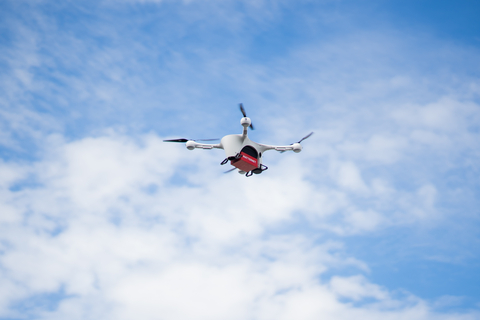
Matternet M2 in
As physical AI moves into the real world — with small, electric autonomous aircraft transporting goods through cities — batteries are becoming a strategic driver of platform performance. In drone delivery, battery performance shapes not only aircraft capability, but also network design, asset utilization, and cost per delivery.
“As the world's leading urban drone delivery player, we partner with the best technology companies in the world to push what's possible,” said Andreas Raptopoulos, Founder and CEO of Matternet. “Amprius delivers best-in-class battery performance, and in drone delivery that translates directly into commercial advantage. Every additional mile of range expands our network coverage. Every minute saved in charging increases fleet utilization. And every gram saved can translate into greater payload capacity. With Amprius, we have the opportunity to engineer that technology around our aircraft, our network model, and our cost-per-delivery targets.”
High-Energy Density Cells for Commercial Drone Delivery
Amprius’ silicon anode cells deliver up to twice the energy density of conventional graphite-based batteries, a critical advantage in aviation, where battery weight directly constrains range, payload, and economics.
For Matternet, this partnership is focused on translating battery performance into commercial operating advantage. Amprius and Matternet will work together to optimize cell selection, form factor, thermal performance, charge rate, and cycle life for Matternet’s next-generation aircraft.
The goal is to go beyond cell-level performance and tune the battery system around Matternet’s aircraft architecture and delivery network, improving aircraft availability, expanding service areas, and reducing cost per delivery as Matternet scales commercial operations.
“At Amprius, we are focused on partnering with category leaders in applications where battery performance changes what is possible,” said Tom Stepien, CEO of Amprius Technologies. “Matternet is exactly that kind of partner, a company with a proven certified platform, real commercial operations, and a clear path to scale. By working closely with Matternet’s engineering team, we can optimize our silicon anode technology for their aircraft, operating models, and cost-per-delivery objectives. That kind of alignment is how battery innovation translates into real-world commercial advantage.”
With Amprius cells already flying in Matternet’s M2 fleet, the companies are now focused on deeper integration for Matternet’s next-generation platform, with Amprius targeting volume production readiness aligned with Matternet’s fleet expansion plans beginning in early 2027.
About Amprius Technologies, Inc.
Amprius Technologies, Inc. is a leader in advanced lithium-ion battery technology, delivering high-energy and high-power silicon-anode batteries with up to twice the energy density, range, and flight time of conventional graphite-based cells. Headquartered in
About Matternet
Matternet is a leading commercial drone delivery platform for urban and suburban environments. The company builds the Matternet M2 drone, the Matternet Station, and the Matternet Software Platform and operates its technology directly for customers or in partnership with logistics organizations such as UPS. Matternet has achieved many industry firsts, including being the first company authorized for commercial Beyond Visual Line of Sight (BVLOS) drone delivery operations over cities in
Forward-Looking Statements
This press release includes “forward-looking statements” within the meaning of Section 27A of the Securities Act of 1933 and Section 21E of the Securities Exchange Act of 1934, each as amended. Forward-looking statements may be identified by the use of words such as “estimate,” “plan,” “project,” “forecast,” “intend,” “expect,” “anticipate,” “believe,” “seek,” “will” or other similar expressions that predict or indicate future events or trends or that are not statements of historical matters. These forward-looking statements include, but are not limited to, statements regarding the performance of Amprius’ products, the benefits of Amprius’ products to its customers and the industry, the potential applications and addressable markets of Amprius’ products, the ability of Amprius to meet its customers’ demand through its contract manufacturers, the demand for Amprius’ products, the ability of Amprius to expand its global business, the prospects of the drone delivery market, the ability of Amprius to meet the demand of the drone delivery market and the ability of Amprius’ contract manufacturers to produce high-performance batteries, and the anticipated collaboration milestones with Matternet. These statements are based on various assumptions, whether or not identified in this press release, and on the current expectations of Amprius’ management and are not predictions of actual performance. Actual results could differ materially from these forward-looking statements as a result of certain risks and uncertainties, including Amprius’ liquidity position; risks related to the rollout of Amprius’ business and the timing of expected business milestones; Amprius’ ability to commercially produce high-performing batteries through its contract manufacturers; the effects of competition on Amprius’ business; supply shortages in the materials necessary for the production of Amprius’ products; and changes in domestic and foreign business, market, financial, political, and legal conditions. More information on these risks and uncertainties can be found in the documents we filed from time to time with the Securities and Exchange Commission (the “SEC”), all of which are available on the SEC’s website at www.sec.gov. There may be additional risks that Amprius does not presently know or that Amprius currently believes are immaterial that could also cause actual results to differ from those contained in the forward-looking statements. Except as required by law, Amprius specifically disclaims any obligation to update any forward-looking statements.
View source version on businesswire.com: https://www.businesswire.com/news/home/20260519470257/en/
Amprius
Investors
Tom Colton, Greg Bradbury
Gateway Group, Inc.
949-574-3860
IR@amprius.com
Media
Zach Kadletz, Brenlyn Motlagh
Gateway Group, Inc.
949-574-3860
Amprius@Gateway-grp.com
Matternet
For media inquiries, please contact: press@matternet.com
For business inquiries, please contact: business@matternet.com
For investor inquiries, please contact: investors@matternet.com
Source: Amprius Technologies, Inc.