
AV’s LOCUST Demonstrates Landmark Capability at White Sands with JIATF-401 and FAA
Sentiment and the balance of points
Rhea-AI Sentiment reads the wording of the document, how positive or negative its language is on a 1 to 5 scale. The balance of points shown with the takes weighs what the document actually discloses, so the two can disagree, for example when a trial that missed its main goal is described in upbeat language.




Coordinated test confirms safe, controlled laser engagement of drone targets in complex national airspace
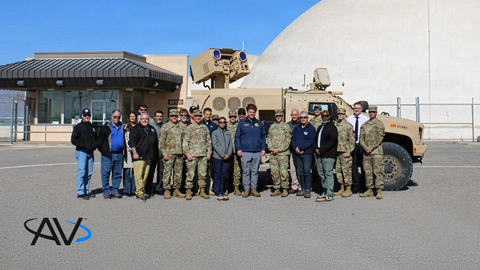
AV’s LOCUST® high-energy laser system undergoes testing at White Sands Missile Range, demonstrating safe, precise counter-drone capability in coordination with DOW–FAA national airspace validation efforts. (Photo Courtesy of the
During an early March test event at White Sands Missile Range (WSMR), led by Joint Interagency Task Force 401 (JIATF-401), AV’s LOCUST® high-energy laser system demonstrated its ability to safely and effectively defend
“This is a defining moment for directed energy and for the future of homeland defense,” said John Garrity, Vice President for Directed Energy Systems at AV. “LOCUST has now proven its ability to operate safely and effectively in the most complex airspace environment in the world. This achievement accelerates the transition of directed energy from experimentation to operational deployment—delivering a scalable, cost-effective solution to counter the rapidly growing drone threat.”
The test at WSMR demonstrated automated safety shut-off capabilities that ensure the system only engages validated targets, among other safety features. The testing also showed no adverse impact to civilian aircraft during controlled evaluation scenarios and showed precision engagement through strict positive identification protocols.
AV’s LOCUST also showed the ability to hit both stationary and airborne targets to demonstrate accuracy, persistence, and operational realism.
"This successful test showcases the significant advancements we’re making in counter-drone technology to ensure that our warfighters have the most advanced tools to defend the homeland,"
The demonstration at WSMR comes amid increasing urgency to address drone incursions across
“The FAA’s top priority is protecting the safety of the American flying public, and we value the collaboration with the Department of War in that effort,” FAA Administrator Bryan Bedford said in the release. “Following a thorough, data-informed Safety Risk Assessment, we determined that these systems do not present an increased risk to the flying public. We will continue working with our interagency partners to ensure the National Airspace System remains safe while addressing emerging drone threats.”
AV recently announced LOCUST as a key offering in its new rollout of Halo_Shield™, —a layered, tile-based defense architecture that integrates sensors, battle management, and effectors to identify, detect, track, and defeat evolving aerial threats—positioning the company to help defend critical infrastructure, secure borders, and protect the American public as drone incursions continue to rise across
“JIATF-401’s coordination across federal partners was instrumental in aligning operational, safety and regulatory stakeholders for this unprecedented test,” said Mary Clum, President of Space, Cyber and Directed Energy at AV. “PEO Missiles & Space – PAE Fires continues to drive directed energy innovation and fielding, while the FAA’s rigorous safety oversight is enabling the responsible integration of these capabilities into national airspace.”
About AV
AeroVironment (“AV”) (NASDAQ: AVAV) is a defense technology leader delivering integrated capabilities across air, land, sea, space, and cyber. The Company develops and deploys autonomous systems, loitering munitions, counter-UAS technologies, space-based platforms, directed energy systems, and cyber and electronic warfare capabilities—built to meet the mission needs of today’s warfighter and tomorrow’s conflicts. At the core of these technologies lies AV_Halo™, a modular, mission-ready suite of AI-powered software tools that empowers warfighters and enables full-battlefield dominance: detect, decide, deliver. With a national manufacturing footprint and a deep innovation pipeline, AV delivers proven systems and future-defining capabilities at speed, scale, and operational relevance. For more information, visit www.avinc.com.
Safe Harbor Statement
Certain statements in this press release may constitute "forward-looking statements" as defined in the Private Securities Litigation Reform Act of 1995. These statements are based on current expectations, forecasts, and assumptions that involve risks and uncertainties, which could cause actual results to differ materially. Factors that may cause such differences include, but are not limited to, our ability to perform under existing contracts and obtain new ones; regulatory changes; competitor activities; market growth; product development challenges; and general economic conditions. For a more detailed discussion of these risks, please refer to AeroVironment’s filings with the Securities and Exchange Commission. We undertake no obligation to update forward-looking statements as a result of new information or future events.
View source version on businesswire.com: https://www.businesswire.com/news/home/20260506975335/en/
Media Contact:
BJ Koubaroulis
pr@avinc.com
703.718.4060
Investor Contact:
Denise Pacioni
ir@avinc.com
805.795.4108
Source: AeroVironment, Inc.