
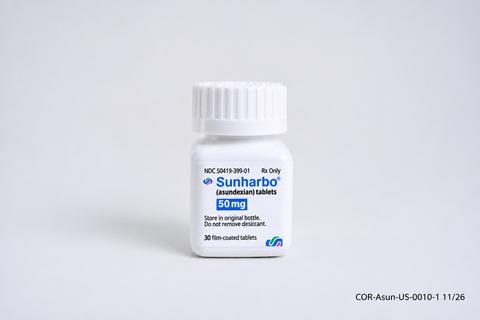
Bayer’s SUNHARBO® (asundexian), 50 mg tablets, the First and Only Factor XIa Inhibitor, Approved by the U.S. FDA to Reduce the Risk of Stroke in Adults With Recent Non-Cardioembolic Ischemic Stroke or High-Risk Transient Ischemic Attack...
The approval follows a Phase 3 study showing a 26% reduction in ischemic stroke versus placebo alongside antiplatelet therapy.
Sentiment and the balance of points
Rhea-AI Sentiment reads the wording of the document, how positive or negative its language is on a 1 to 5 scale. The balance of points shown with the takes weighs what the document actually discloses, so the two can disagree, for example when a trial that missed its main goal is described in upbeat language.


KEY FACTS
- The full indication for SUNHARBO® (asundexian) is to reduce the risk of stroke in adults with recent non-cardioembolic ischemic stroke (National Institutes of Health Stroke Scale [NIHSS] ≤15) or high-risk transient ischemic attack (TIA) in combination with antiplatelet therapy.1
- SUNHARBO is a first-in-class, once daily, Factor XIa inhibitor for secondary stroke prevention.1
- Approximately one in five people who had a stroke will have another stroke within five years, and secondary strokes often cause more devastating outcomes than first strokes.2
Bayer
Bayer’s SUNHARBO® (asundexian), 50 mg tablets, the First and Only Factor XIa Inhibitor, Approved by the
Bayer announced today that the
SUNHARBO is an inhibitor of Factor XIa. Factor XIa inhibition reduces amplification of thrombin generation. In preclinical models, Factor XIa inhibition targets more pathological clotting (thrombosis) with lesser impact on normal clotting response (hemostasis).1
BAYER EXECUTIVE COMMENTARY
"For decades, Bayer has worked to advance care in cardiovascular and cerebrovascular diseases. Today’s approval offers stroke patients a novel treatment option to reduce their risk of stroke, building on our company’s legacy to develop first-in-class products that address significant health challenges,” said Nelson Ambrogio, President of Bayer
WHY SECONDARY STROKE RISK REDUCTION MATTERS
-
Stroke is the fifth leading cause of death in the
U.S .3 -
Each year, approximately 795,000 people in the
U.S . will experience a stroke. Of these, approximately87% are ischemic and23% are recurrent.3 - Approximately one in 10 stroke survivors will have another stroke within one year, and one in five will have another stroke within five years.2
EXPERT COMMENTARY
“For those who survive a stroke, the risk of another potentially devastating event is highest in the days and weeks after the initial event, and that risk persists over time,” said Ashkan Shoamanesh, M.D., Co-principal Investigator of the OCEANIC-STROKE clinical study and Senior Scientist at Population Health Research Institute (PHRI), a joint institute of Hamilton Health Sciences and McMaster University (
OCEANIC-STROKE CLINICAL TRIAL RESULTS
SUNHARBO was approved based on results from the pivotal Phase 3 OCEANIC-STROKE study where SUNHARBO was studied versus placebo in adults after a non-cardioembolic ischemic stroke (NIHSS ≤15) or high-risk transient ischemic attack, both in combination with antiplatelet therapy. The study randomized 12,327 patients to receive either SUNHARBO (N=6,162), or placebo (N=6,165). The mean age at enrollment was 68 years. The primary endpoint was time to first occurrence of ischemic stroke.1
-
SUNHARBO significantly reduced ischemic stroke by
26% compared to placebo (6.2% vs.8.4% ; HR 0.74;95% CI, 0.65–0.84; P<0.0001).4 -
The rate of major bleeding was similar for SUNHARBO compared to placebo (1.6 vs. 1.5 per 100-person years; HR 1.1;
95% CI, 0.8–1.4).1 -
SUNHARBO also significantly reduced the risk of all strokes (ischemic and hemorrhagic) versus placebo (
6.6% vs.8.8% ; HR 0.74;95% CI, 0.65–0.84; P<0.0001). The result of this secondary endpoint was primarily driven by reduction of ischemic stroke.1 -
SUNHARBO reduced the composite of cardiovascular death, myocardial infarction (MI) or stroke (
9.2% vs.11.1% ; HR 0.83;95% CI, 0.74–0.92). The result of this secondary endpoint was primarily driven by reduction of ischemic stroke.1 -
The most frequently reported (>
3% ) adverse reaction in the SUNHARBO treated patients was diarrhea (3.4% vs.2.8% in the SUNHARBO and placebo groups, respectively).1 -
The rate of gastrointestinal bleeding was higher in the SUNHARBO group compared to placebo (2.7 vs 2.1 per 100 patient-years; HR 1.3;
95% CI, 1.0–1.6).1 -
Clinical data indicate that SUNHARBO is associated with elevated hepatic enzymes. The majority (
74% ) of the hepatic enzyme increased events were reported as mild in severity.1
This approval marks the first for a Factor XIa inhibitor in the
Bayer is committed to making SUNHARBO accessible. If a patient cannot afford their prescription, Bayer may be able to help. Eligible patients may receive their Bayer prescription medicine at no cost through the Bayer
As of November 2026, SUNHARBO is currently under review by the European Medicines Agency (EMA) and
About SUNHARBO® (asundexian)
SUNHARBO is a once-daily, first-in-class, oral Factor XIa inhibitor approved by the
SUNHARBO was approved based on results from the pivotal Phase 3 OCEANIC-STROKE study where SUNHARBO significantly reduced ischemic stroke in patients after a recent non-cardioembolic ischemic stroke or high-risk transient ischemic attack compared to placebo (
For additional information about SUNHARBO, healthcare professionals may visit SUNHARBOhcp.com. Please see the full prescribing information.
INDICATION
SUNHARBO® is indicated in combination with antiplatelet therapy to reduce the risk of stroke in adults with recent non-cardioembolic ischemic stroke (NIH Stroke Scale ≤ 15) or high-risk transient ischemic attack (TIA).
IMPORTANT SAFETY INFORMATION
CONTRAINDICATIONS and WARNINGS & PRECAUTIONS
None.
ADVERSE REACTIONS
Bleeding
- The rate of International Society on Thrombosis and Haemostasis (ISTH) major bleeding was similar between SUNHARBO and placebo groups (1.6 vs. 1.5 per 100 patient-years).
- The rate of ISTH major bleeding events within 90 days of treatment initiation was 4.5 vs. 3.1 per 100 patient-years in the SUNHARBO and placebo groups, respectively.
- In patients planned to receive DAPT, the rate of ISTH major bleeding events was 1.9 vs. 1.5 per 100 patient-years in the SUNHARBO and placebo groups, respectively.
- Among patients older than 75 years, the rate of ISTH major bleeding was 2.6 vs. 1.7 per 100 patient-years in the SUNHARBO and placebo groups, respectively.
- In the high-risk TIA subgroup, the rate of ISTH major bleeding was 2.9 vs. 1.0 per 100 patient-years in the SUNHARBO and placebo groups, respectively.
-
The rate of gastrointestinal (GI) bleeding was higher in the SUNHARBO compared to placebo group (2.7 vs. 2.1 per 100 patient-years). The majority of GI bleeding events in the SUNHARBO group (
74% ) were clinically relevant non-major or minor bleeding, and the most frequent bleeding site was of rectal origin.
Diarrhea
-
The most frequently reported (>
3% ) adverse reaction in SUNHARBO-treated patients was diarrhea.
Hepatic Enzyme Increased
-
SUNHARBO is associated with elevated hepatic enzymes. Substantial cholestatic liver injury or serious liver injury with jaundice were each reported in less than
0.02% of SUNHARBO-treated patients.
DRUG INTERACTIONS
- P-glycoprotein (P-gp) substrates - Concomitant use of SUNHARBO increased the exposure to digoxin. For digoxin and sensitive P-gp substrates where minimal concentration changes may increase the risk of adverse reactions, follow the recommendation in their approved product labeling.
- Combined P-gp and strong CYP3A4 inducers - Avoid concomitant use with combined P-gp and strong CYP3A4 inducers, which decreases SUNHARBO exposure and may lead to loss of efficacy.
USE IN SPECIFIC POPULATIONS
Pregnancy
- There are risks to the mother associated with untreated non-cardioembolic ischemic stroke or TIA and risk of bleeding in the mother and fetus or neonate associated with use of anticoagulants during pregnancy.
Lactation
- Breastfeeding is not recommended during treatment with SUNHARBO and for 5 days after the last dose due to the potential for serious adverse reactions in nursing infants, including bleeding.
Hepatic Impairment
- Patients with moderate to severe hepatic impairment (Child-Pugh B and C) may have intrinsic coagulation abnormalities and use of SUNHARBO in these patients is not recommended.
For additional important risk and use information, please see the full Prescribing Information.
You are encouraged to report side effects or quality complaints of prescription drugs to the FDA. Visit www.fda.gov/medwatch or call 1-800-FDA-1088.
About Bayer’s Stroke Franchise
Bayer is a leader in cardiovascular (CV) and cerebrovascular diseases, with a longstanding legacy of scientific innovation in the prevention and treatment of thrombotic conditions. Building on this heritage, Bayer is advancing innovative approaches to help address unmet needs in stroke, with a focus on the area of secondary stroke prevention and research into new pathways, including Factor XIa. Bayer aims to help shape the future of stroke care with products strategically positioned to help address critical unmet needs and drive significant long-term value. Bayer is working alongside the stroke community to better understand unmet needs and support patients and care partners across the stroke journey.
About Bayer
Bayer is a global enterprise with core competencies in the life science fields of health care and nutrition. In line with its mission, “Health for all, Hunger for none,” the company’s products and services are designed to support efforts to master major challenges presented by a growing and aging global population and create value through innovation and growth. The Bayer brand stands for trust, reliability and quality throughout the world. In fiscal 2025, the Group employed around 88,000 people and had sales of 45.6 billion euros. R&D expenses amounted to 5.8 billion euros.
Find more information at: Health for all, Hunger for none | Bayer United States
Follow us on Facebook: Bayer
Follow us on LinkedIn: Bayer | Pharmaceuticals
Follow us on X: BayerUS
Follow us on Instagram: BayerUS
Forward-Looking Statements
This release may contain forward-looking statements based on current assumptions and forecasts made by Bayer management. Various known and unknown risks, uncertainties and other factors could lead to material differences between the actual future results, financial situation, development or performance of the company and the estimates given here. These factors include those discussed in Bayer’s public reports which are available on the Bayer website at www.bayer.com. The company assumes no liability whatsoever to update these forward-looking statements or to conform them to future events or developments.
References:
- SUNHARBO® (asundexian) [Prescribing Information]. Whippany, NJ: Bayer HealthCare Pharmaceuticals, Inc.; October 2026.
- Kolmos M, et al. Recurrent ischemic stroke–a systematic review and meta-analysis. Journal of Stroke and Cerebrovascular Diseases. 2021 Aug 1;30(8):105935.
- Martin SS, et al. Circulation. 2024;149(8):e347-e913.
- Sharma M, Dong Q, Hirano T, et al. Asundexian for secondary stroke prevention. N Engl J Med. 2026;394:1467-1479. doi:10.1056/NEJMoa2513880.
View source version on businesswire.com: https://www.businesswire.com/news/home/20261021770347/en/
Contact for U.S. media inquiries:
Sarra Herzog, phone +1 862-460-8764
Email: sarra.herzog@bayer.com
Contact for investor inquiries:
Bayer Investor Relations Team, phone +49 214 30-72704
Email: ir@bayer.com
www.bayer.com/en/investors/ir-team
Source: Bayer