
Bristol Myers Squibb Teams Up with Kasey Keller to Share His Lymphoma Journey with Breyanzi
Sentiment and the balance of points
Rhea-AI Sentiment reads the wording of the document, how positive or negative its language is on a 1 to 5 scale. The balance of points shown with the takes weighs what the document actually discloses, so the two can disagree, for example when a trial that missed its main goal is described in upbeat language.




Soccer Hall-of-Famer is speaking out for the first time about his private battle with lymphoma and treatment with Breyanzi in honor of World Cancer Day
Breyanzi is a personalized, CD19-directed CAR T cell therapy made from a patient’s own T cells and is FDA-approved for five different cancer types, the broadest set of indications of any CD19-directed CAR T cell therapy
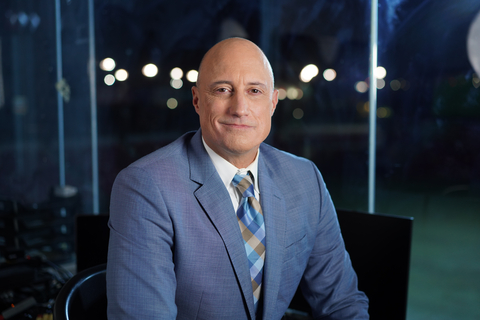
Kasey Keller Photo: Axel Alarcon and Alan Alarcon
Please see the Important Safety Information section below, including Boxed WARNINGS for Breyanzi regarding Cytokine Release Syndrome (CRS), Neurologic Toxicities, and Secondary Hematological Malignancies.
Kasey Keller is a former
After being diagnosed with cancer in 2010, Kasey cycled through several treatments over the years, often finding only temporary relief. It wasn’t until after receiving one-time treatment* Breyanzi under the recommendation of his doctor that his outcome shifted. Finding a treatment that worked allowed him to reflect on the decade of uncertainty he had been navigating. Throughout this journey, he kept his experience private, sharing updates only with close friends and family as he focused on managing each new step. He is now choosing to speak openly about this experience through a new collaboration with Bristol Myers Squibb and Breyanzi. Kasey hopes his story helps others feel more prepared to engage in conversations about their own care.
“Throughout my career, I was trained to stay focused, stay ready, and never give up. But when I was diagnosed with lymphoma, I had to find a whole new kind of resilience,” said Keller. “Going through lymphoma and treatment with Breyanzi was unfamiliar territory, and I leaned heavily on my doctors, my family, and the mindset I’ve carried my entire life. I’m sharing my story because no one should have to navigate this alone. If hearing what I went through helps someone else feel empowered to take their next step, then it’s worth it.”
This partnership launches on World Cancer Day, a moment that highlights the experiences of people living with cancer and the importance of understanding available treatment options. NHL is a type of blood cancer that starts in the lymphatic system, which is a key part of the body's immune system. It is one of the most common cancers worldwide, accounting for about
“Every day we see the strength and resilience of those living with blood cancer. We are grateful to Kasey for sharing his story, which reflects the experience of so many patients affected by lymphoma,” said Lynelle B. Hoch, president, Cell Therapy Organization, Bristol Myers Squibb. “Kasey’s story underscores the importance of helping patients better understand the potential promise of CAR T cell therapy. Knowing cure is the goal, we hope to inspire patients to talk to their doctors and explore treatment options that would best work for them.”
Learn more about Kasey’s story at BreyanziWithin.com and how he worked with his doctors to turn the tables on lymphoma — because, with Breyanzi, Cure is The Goal**.
*The treatment process includes blood collection, CAR T cell creation, potential bridging therapy, lymphodepletion, administration, and side-effect monitoring.
**At a 3-year follow-up, Breyanzi reduced the risk of events on average by
About Breyanzi
Breyanzi is a chimeric antigen receptor (CAR) T cell therapy. In certain types of lymphoma, Breyanzi may be used after a person’s initial treatment has not worked, or their cancer has returned. Breyanzi is different from other cancer medicines because it is made from a person’s own T cells, which are collected and genetically modified to become CAR T cells that recognize and attack your lymphoma.
Breyanzi is approved in the
Bristol Myers Squibb’s clinical development program for Breyanzi includes clinical studies in several types of lymphoma. For more information, visit clinicaltrials.gov.
Breyanzi
BREYANZI is a prescription medicine used to treat certain types of non-Hodgkin lymphoma:
-
Large B cell lymphoma, when:
- your first treatment has not worked or your cancer returned within a year of your first treatment, OR
- your first treatment has not worked or your cancer returned after the first treatment, and you are not eligible for hematopoietic stem cell transplantation because of medical conditions or age, OR
- two or more kinds of treatment have not worked or stopped working.
BREYANZI is different than other cancer medicines because it is made from your own white blood cells, which have been genetically modified to recognize and attack your lymphoma cells.
Breyanzi
What is the most important information I should know about BREYANZI?
BREYANZI may cause side effects that are life-threatening and can lead to death. Call your healthcare provider or get emergency help right away if you get any of the following:
- difficulty breathing
- fever (100.4°F/38°C or higher)
- chills/shaking chills
- confusion
- severe nausea, vomiting, diarrhea
- fast or irregular heartbeat
- dizziness/lightheadedness
- severe fatigue or weakness
It is important that you tell your healthcare providers that you have received BREYANZI and to show them your BREYANZI Patient Wallet Card. Your healthcare provider may give you other medicines to treat your side effects.
Before getting BREYANZI, tell your healthcare provider about all your medical problems, including if you have or have had:
- Neurologic problems (such as seizures, stroke, or memory loss)
- Lung or breathing problems
- Heart problems
- Liver problems
- Kidney problems
- A recent or active infection
Tell your healthcare provider about all the medications you take, including prescription and over-the-counter medicines, vitamins, and herbal supplements.
How will I receive BREYANZI?
- BREYANZI is made from your own white blood cells, so your blood will be collected by a process called leukapheresis.
- It takes about 3-4 weeks from the time your cells are received at the manufacturing site and are available to be shipped back to your healthcare provider, but the time may vary.
- Before you get BREYANZI, you will get 3 days of chemotherapy to prepare your body.
-
When your BREYANZI is ready, your healthcare provider will give it to you through a catheter placed into your vein (intravenous infusion). BREYANZI is given as infusions of 2 different cell types.
- You will receive infusions of one cell type, immediately followed by the other cell type.
- The time for infusion will vary but will usually be less than 15 minutes for each of the 2 cell types.
- During the first week, you will be monitored daily.
- You should plan to stay close to a healthcare facility for at least 2 weeks after getting BREYANZI. Your healthcare provider will check to see that your treatment is working and help you with any side effects that may occur.
- You may be hospitalized for side effects. Your healthcare provider will discharge you if your side effects are under control, and it is safe for you to leave the hospital.
- Your healthcare provider will want to do blood tests to follow your progress. It is important that you do have your blood tested. If you miss an appointment, call your healthcare provider as soon as possible to reschedule.
What should I avoid after receiving BREYANZI?
- Avoid driving for at least 2 weeks after you get BREYANZI.
- Do not donate blood, organs, tissues, or cells for transplantation.
What are the possible or reasonably likely side effects of BREYANZI?
The most common side effects of BREYANZI are:
- fatigue
- difficulty breathing
- fever (100.4°F/38°C or higher)
- chills/shaking chills
- confusion
- difficulty speaking or slurred speech
- severe nausea, vomiting, diarrhea
- headache
- dizziness/lightheadedness
- fast or irregular heartbeat
- swelling
- low blood pressure
- muscle pain
BREYANZI can increase the risk of life-threatening infections that may lead to death. Tell your healthcare provider right away if you develop fever, chills, or any signs or symptoms of an infection.
BREYANZI can lower one or more types of your blood cells (red blood cells, white blood cells, or platelets). After treatment, your healthcare provider will test your blood to check for this. Tell your healthcare provider right away if you get a fever, are feeling tired, or have bruising or bleeding.
BREYANZI may increase your risk of getting cancers including certain types of blood cancers. Your healthcare provider should monitor you for this.
Having BREYANZI in your blood may cause a false-positive HIV test result by some commercial tests.
These are not all the possible side effects of BREYANZI. Call your doctor for medical advice about side effects. For more information, go to BREYANZI.com or call 1-888-805-4555. You may report side effects to the FDA. Visit www.fda.gov/medwatch or call 1-800-FDA-1088.
Please see full Prescribing Information, including Boxed WARNINGS and Medication Guide.
Bristol Myers Squibb: Unlocking the Full Potential of Cell Therapy
A pioneer in harnessing the immune system to fight cancer and an established leader in cell therapy, Bristol Myers Squibb is uniquely positioned to unlock the full potential of this technology across blood cancers and within new frontiers, including autoimmune disease.
Bristol Myers Squibb is currently the only company with two approved CAR T cell therapies with two distinct targets, available in major markets around the world. Our bold vision for the future is one in which hundreds of thousands of patients can be treated with cell therapy’s transformational potential.
The building blocks to realize this ambition—a promising and differentiated pipeline, extensive translational and clinical data sets, a deep bench of talent, and robust manufacturing capabilities—are in our cells. We are laser-focused on advancing the field of cell therapy toward a true revolution for patients. Learn more about the science behind cell therapy and ongoing progress at Bristol Myers Squibb here.
About Bristol Myers Squibb
Bristol Myers Squibb is a global biopharmaceutical company whose mission is to discover, develop and deliver innovative medicines that help patients prevail over serious diseases. For more information about Bristol Myers Squibb, visit us at BMS.com or follow us on LinkedIn, X, YouTube, Facebook and Instagram.
corporatefinancial-news
View source version on businesswire.com: https://www.businesswire.com/news/home/20260202949740/en/
Bristol Myers Squibb
Media Inquiries:
media@bms.com
Source: Bristol Myers Squibb