
Untargeted timsTOF Mass Spectrometry Enables Discovery and Mapping of Draft Atlas of the Human Plasma Proteome at Proteoform Resolution
Bruker (BRKR) announced a research preprint describing a draft atlas of human plasma protein variants mapped using its timsTOF systems.
Sentiment and the balance of points
Rhea-AI Sentiment reads the wording of the document, how positive or negative its language is on a 1 to 5 scale. The balance of points shown with the takes weighs what the document actually discloses, so the two can disagree, for example when a trial that missed its main goal is described in upbeat language.




Charité principal investigator Markus Ralser and colleagues discover and map 179,000 plasma proteoforms, revealing a vast molecular landscape for functional proteomics in biomedical research, drug discovery and biomarker discovery
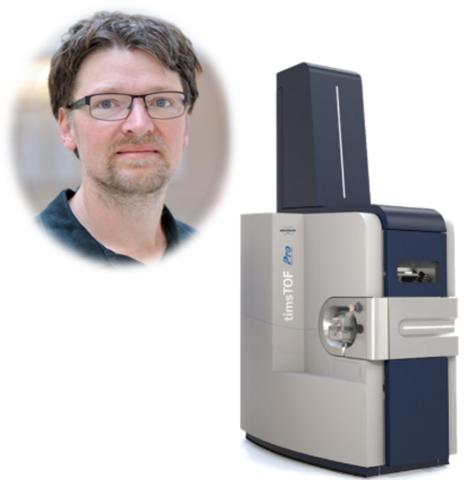
Markus Ralser of Charité – Universitätsmedizin
By combining intact protein fractionation with diaPASEF mass spectrometry on Bruker timsTOF mass spectrometry systems, the researchers detected 5,077 plasma protein groups across 179,049 distinct proteoforms. A high-confidence map comprised 44,083 proteoforms, with a median of eleven proteoforms per protein. The study indicates that canonical proteins account only for a fraction of protein diversity in the blood stream, and they may constitute less than half of total protein content.
The atlas reveals extensive proteoform diversity among abundant plasma proteins involved in molecular transport, complement activity and coagulation. It provides a framework for understanding why protein measurements by affinity and mass spec-based proteomics technologies diverge, particularly for low-abundance proteins and for proteins occurring in many molecular isoforms. The workflow did not use nanoparticle-based enrichment, instead combining intact-protein fractionation with sensitive, high-throughput mass spectrometry to resolve and discover plasma proteoform diversity at an unprecedented scale.
“Human plasma contains far more molecular diversity than conventional protein lists suggest,” said Dr. Markus Ralser, Einstein Professor of Biochemistry and Head of the Institute of Biochemistry at Charité – Universitätsmedizin
“This landmark discovery moves plasma proteomics beyond counting protein groups toward resolving the molecular isoforms that actually carry biological and ultimately biomedical function,” said Dr. Daniel Hornburg, Bruker Vice President, Biomarkers & Precision Medicine. “The combination of protein separation, diaPASEF and sensitive timsTOF mass spectrometry provides a powerful foundation for studying proteoform-specific biology and for developing the next generation of more specific drug targets and biomarkers.”
The draft isoform atlas is intended as a starting point for future proteoform in-depth studies across individuals, physiological states and diseases.
“Resolving protein isoforms and their modifications is fundamental to understanding the molecular drivers of disease,” said Dr. Rohan A. Thakur, Bruker Daltonics EVP and President of TofWerk. “The breakthrough timsOmni platform now enables deep top-down sequencing with near-complete sequence coverage on many proteoforms, combined with PTM localization and quantitation for in-depth functional proteome studies.”
About Bruker Corporation – Leader of the Post-Genomic Era (Nasdaq: BRKR)
Bruker is enabling scientists and engineers to make breakthrough post-genomic discoveries and develop new applications that improve the quality of human life. Bruker’s high-performance scientific instruments and high value analytical and diagnostic solutions enable scientists to explore life and materials at molecular, cellular, and microscopic levels. In close cooperation with our customers, Bruker is enabling innovation, improved productivity, and customer success in post-genomic life science molecular and cell biology research, in applied and biopharma applications, in microscopy and nano-analysis, as well as in industrial and cleantech research, and next-gen semiconductor metrology in support of AI. Bruker offers differentiated, high-value life science and diagnostics systems and solutions in preclinical imaging, clinical phenomics research, proteomics and multiomics, spatial and single-cell biology, functional structural and condensate biology, as well as in clinical microbiology and molecular diagnostics. For more information, please visit www.bruker.com.
View source version on businesswire.com: https://www.businesswire.com/news/home/20261006333194/en/
Media Contact
Nora Williams
Bruker Daltonics Marketing Communications
T: +49 (421) 2205-2843
E: nora.williams@bruker.com
Investor Relations Contact
Joe Kostka
Director, Investor Relations
T: +1 (978) 313-5800
E: Investor.Relations@bruker.com
Source: Bruker Corporation