
Bruker Receives Order for High-Field NMR Systems for Major Upgrade of Magnetic Resonance Research Infrastructure at UC Berkeley
Bruker secures a NMR equipment order of over $6 million from UC Berkeley, with delivery of multiple advanced systems expected in 2027.




New high-field NMR instrumentation strengthens biomolecular and materials science research at the UC Berkeley Pines Magnetic Resonance Center
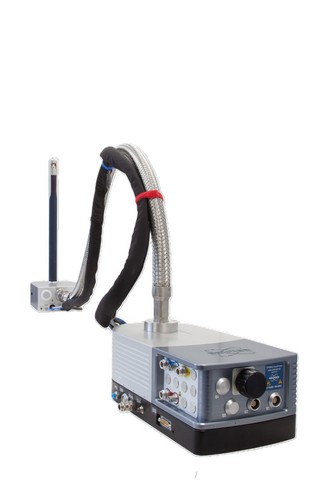
Bruker MAS CryoProbe for high-sensitivity solid-state NMR research
The Pines Magnetic Resonance Center (PMRC) comprises faculty, technical staff, and postdoctoral researchers. The PMRC Core NMR facility is a leading shared NMR resource, offering 24/7 access to researchers from academia, national laboratories, and industry. By integrating high-performance instrumentation with method development, training, and analytical services, the facility enables multidisciplinary studies of molecular structure, dynamics, and function.
The investment is centered on a Bruker AV NEO-X 800 MHz spectrometer equipped with a cryogenically cooled MAS CryoProbe, complemented by several additional NMR systems and upgrades supporting solid-state, solution-state and Dynamic Nuclear Polarization (DNP) research.
“This expansion will propel UC Berkeley, an institution with an exceptionally strong tradition in magnetic resonance, to the forefront of high-impact innovation for years to come,” said Professor Tatyana Polenova, Director of the Pines Magnetic Resonance Center. “By integrating next-generation NMR and DNP with advanced methodologies, including fast magic-angle spinning, MAS CryoProbes, computational analysis, and quantum sensing and control, we are opening new avenues to address previously inaccessible structural and mechanistic questions across a broad range of systems, including intact cells and organisms, macromolecular assemblies, bio-inspired materials, inorganic materials, and molecules at interfaces and surfaces.”
“Translating cutting-edge NMR technologies into robust, reproducible workflows is critical,” said Dr. Patrick Wikus, Head of Product Management at Bruker BioSpin. “The AV NEO-X platform provides a robust foundation for advanced solid-state, solution-state, and DNP NMR experiments, combining highest performance and enabling new capabilities with reliable day-to-day operation.”
The UC Berkeley NMR order exceeds
About Bruker Corporation – Leader of the Post-Genomic Era (Nasdaq: BRKR)
Bruker is enabling scientists and engineers to make breakthrough post-genomic discoveries and develop new applications that improve the quality of human life. Bruker’s high-performance scientific instruments and high-value analytical and diagnostic solutions enable scientists to explore life and materials at molecular, cellular, and microscopic levels. In close cooperation with our customers, Bruker is enabling innovation, improved productivity, and customer success in post-genomic life science molecular and cell biology research, in applied and biopharma applications, in microscopy, as well as in industrial and cleantech research, and semiconductor metrology in support of AI. Bruker offers differentiated, high-value life science and diagnostics systems and solutions in preclinical imaging, proteomics and multiomics, spatial and single-cell biology, structural and condensate biology, as well as in clinical microbiology and molecular diagnostics. For more information, please visit www.bruker.com.
View source version on businesswire.com: https://www.businesswire.com/news/home/20260921533654/en/
Investor Contact:
Joe Kostka
Director, Investor Relations
Bruker Corporation
T: +1 978 313-5800
E: Investor.Relations@bruker.com
Media Contact:
Markus Ziegler
Sr. Director and Head of Group Marketing
Bruker BioSpin Division
T: +49 172 3733531
E: pr@bruker.com
Source: Bruker Corporation