
BorgWarner Wins Three Conquest Turbo Business Awards with Global Powertrain Leader
The awards add business for both turbocharger types, with production scheduled to begin in 2027.
Sentiment and the balance of points
Rhea-AI Sentiment reads the wording of the document, how positive or negative its language is on a 1 to 5 scale. The balance of points shown with the takes weighs what the document actually discloses, so the two can disagree, for example when a trial that missed its main goal is described in upbeat language.
Rhea-AI Summary
BorgWarner (BWA) has won three turbocharger contracts with a global powertrain technology customer for its light-vehicle gasoline platforms.
The awards cover one variable turbine geometry turbocharger contract and two wastegate turbocharger contracts. The technology will be used in South America and Europe, with production for all three turbochargers scheduled for 2027.
How this balance works
Rhea-AI gives every point it takes from this document a weight. Minor counts 1, Moderate 3 and Major 9, so one Major point outweighs several Minor ones. The bar adds up the weights on each side, and when neither side holds more than 65% of the total the balance reads Mixed.
It reads the document as published, with the same rules for every company, and it does not look at what the market expected or at how the stock traded, so a point can be objectively good on a day the stock falls.
Rhea-AI Sentiment measures something else, the tone of the wording.
Hollow bars mark forward-looking points. How the balance works
Positive
- Moderate pointThree contract wins cover one variable turbine geometry turbocharger and two wastegate turbochargers.
- Minor pointCustomer deployment spans South America and Europe for light-vehicle gasoline platforms.
- Minor point. Forward-looking: it has not happened yet and may not happen.Production for all three turbochargers is scheduled for 2027.
Negative
- None.
Key Figures
- Business wins
- 3 wins
- One VTG turbocharger contract and two wastegate turbocharger contracts
- Exhaust-temperature capability
- Up to 1050°C
- Gasoline VTG turbocharger technology
- Production start
- 2027
- Scheduled start for all three turbochargers
Key Terms
variable turbine geometry technical
wastegate turbocharger technical
miller-cycle technical
noise, vibration and harshness technical
AI-generated analysis. How Rhea-AI works. Not financial advice.


- Wins include both variable turbine geometry (VTG) and wastegate turbochargers
- Technology to deploy in customer's light-vehicle gasoline platforms
- Turbochargers help reduce emissions and improve fuel efficiency
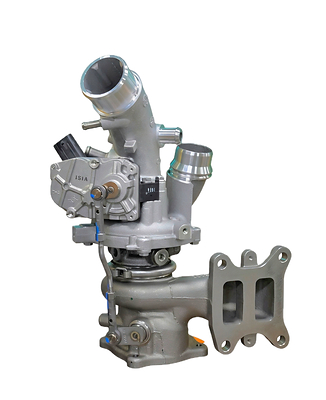
BorgWarner's VTG turbochargers for gasoline applications are designed to provide reliable operation under demanding operating conditions while meeting high-boost pressure requirements. Engineered for excellent thermodynamic adaptation to Miller-cycle gasoline engines and exhaust temperatures of up to 1050°C, the technology improves thermodynamic efficiency while delivering strong engine response at lower RPMs for nearly instant acceleration and optimum power output. Additionally, the technology helps reduce emissions, improve fuel efficiency and enhance transient performance.
"We value our longstanding relationship with this global leader in powertrain technology and the opportunity to support its evolving business and broader commodity strategy," said Dr. Volker Weng, Vice President of BorgWarner Inc. and President and General Manager, Turbos and Thermal Technologies. "These contracts reflect the trust we have established with the customer and the strength of our offerings, including competitive solutions and deep technical expertise. We look forward to continuing to support the customer with innovations that deliver lasting value."
Meeting the highest quality standards, BorgWarner's wastegate turbochargers feature scalable compressor and turbine stages that can be tailored to individual customer requirements. Designed for gasoline applications, the turbochargers deliver excellent response and power density, improved noise, vibration and harshness (NVH), enhanced fuel economy and reduced emissions. Offering many of the same advanced features as the VTG turbocharger, the wastegate turbocharger is available with single- and twin-scroll, as well as dual-volute turbine designs. It provides both pneumatic and electric actuation for the wastegate and integrated compressor recirculation valve and has a dedicated compressor and turbine stages.
Start of production for all three turbochargers is scheduled for 2027.
About BorgWarner
For more than 130 years, BorgWarner has been a transformative global product leader bringing successful mobility innovation to market. With a focus on sustainability, we're helping to build a cleaner, healthier, safer future for all.
Forward Looking Statements: This release may contain forward-looking statements as contemplated by the 1995 Private Securities Litigation Reform Act that are based on management's current outlook, expectations, estimates and projections. Words such as "anticipates," "believes," "continues," "could," "designed," "effect," "estimates," "evaluates," "expects," "forecasts," "goal," "guidance," "initiative," "intends," "may," "outlook," "plans," "potential," "predicts," "project," "pursue," "seek," "should ," "target," "when," "will," "would," and variations of such words and similar expressions are intended to identify such forward-looking statements. Further, all statements, other than statements of historical fact, contained or incorporated by reference in this release that we expect or anticipate will or may occur in the future regarding our business strategy, competitive strengths, goals, plans, references to future success and other such matters, are forward-looking statements. All forward-looking statements are based on assumptions and analyses made by us in light of our experience and our perception of historical trends, current conditions and expected future developments, as well as other factors we believe are appropriate under the circumstances. Forward-looking statements are not guarantees of performance, and the Company's actual results may differ materially from those expressed, projected or implied in or by the forward-looking statements.
You should not place undue reliance on these forward-looking statements, which speak only as of the date of this release. Forward-looking statements are subject to risks and uncertainties, many of which are difficult to predict and generally beyond our control, that could cause actual results to differ materially from those expressed, projected or implied in or by the forward-looking statements. These risks and uncertainties, among others, include: the possibility that our turbochargers may not achieve their intended benefits; the supply disruptions impacting us or our customers; commodity availability and pricing; conditions in the automotive industry; competitive challenges from existing and new competitors, including original equipment manufacturer ("OEM") customers; the challenges associated with rapidly changing technologies, including artificial intelligence, and our ability to innovate in response; potential future changes in laws and regulations, including, by way of example, taxes and tariffs, in the countries in which we operate; potential disruptions in the global economy caused by wars or other geopolitical conflicts; our dependence on automotive and truck production, which is highly cyclical and subject to disruptions; our reliance on major OEM customers; impacts of any future strikes involving any of our OEM customers and any actions such OEM customers take in response; fluctuations in interest rates and foreign currency exchange rates; our dependence on information systems; the uncertainty of the global economic environment; the uncertainty surrounding global trade policies, including tariffs and export restrictions, and their impacts on the Company, its customers and its suppliers; the outcome of existing or any future legal proceedings, including litigation with respect to various claims, or governmental investigations, including related litigations; impacts from any potential future acquisition or disposition transactions; and the other risks discussed in reports that we file with the Securities and Exchange Commission, including in Item 1A, "Risk Factors" in our most recently-filed Annual Report on Form 10-K and/or Quarterly Report on Form 10-Q. We do not undertake any obligation to update or announce publicly any updates to or revisions to any of the forward-looking statements in this release to reflect any change in our expectations or any change in events, conditions, circumstances, or assumptions underlying the statements.

 View original content to download multimedia:https://www.prnewswire.com/news-releases/borgwarner-wins-three-conquest-turbo-business-awards-with-global-powertrain-leader-302923851.html
SOURCE BorgWarner
FAQ
AI-generated questions and answers. How Rhea-AI works. Not financial advice.
What turbocharger contracts did BorgWarner win?
BorgWarner won three contracts with a global powertrain technology customer: one for a variable turbine geometry turbocharger and two for wastegate turbochargers. The technology will serve the customer's light-vehicle gasoline platforms in South America and Europe.
When will production begin for BorgWarner's three turbocharger awards?
Production for all three turbochargers is scheduled for 2027.